
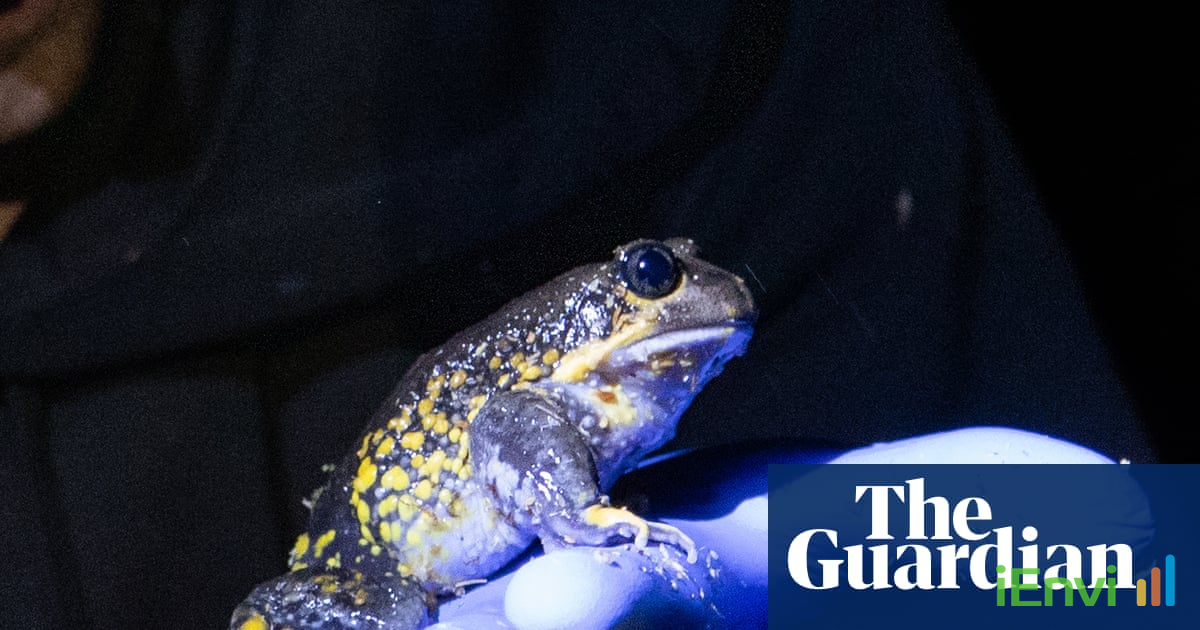
Southern giant burrowing frog release in East Gippsland
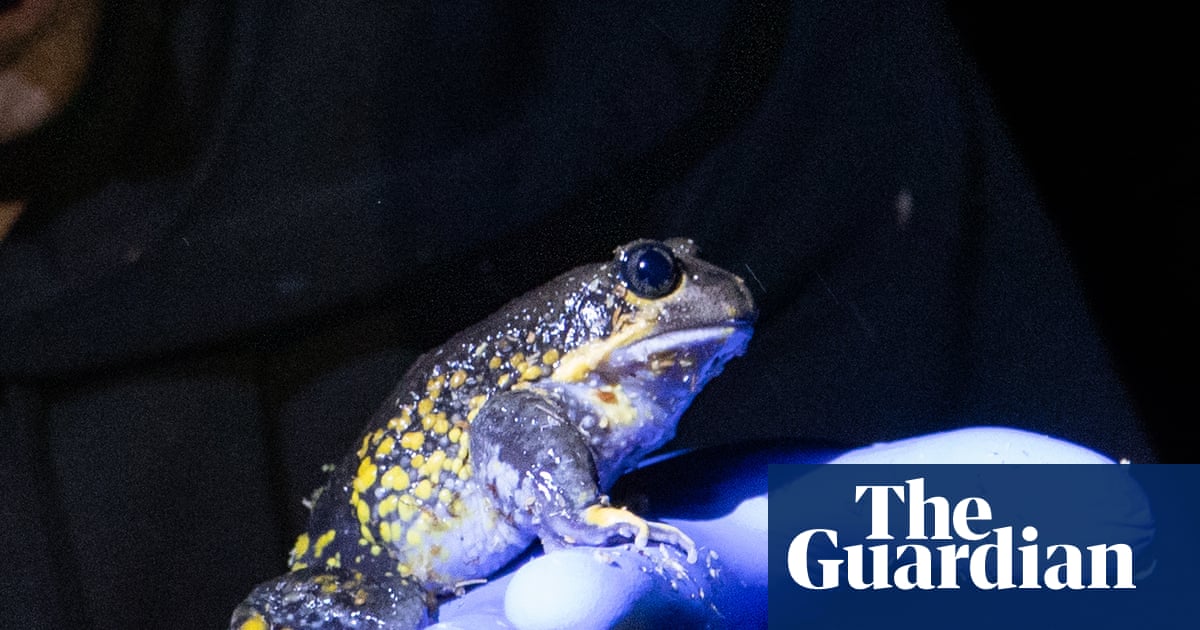
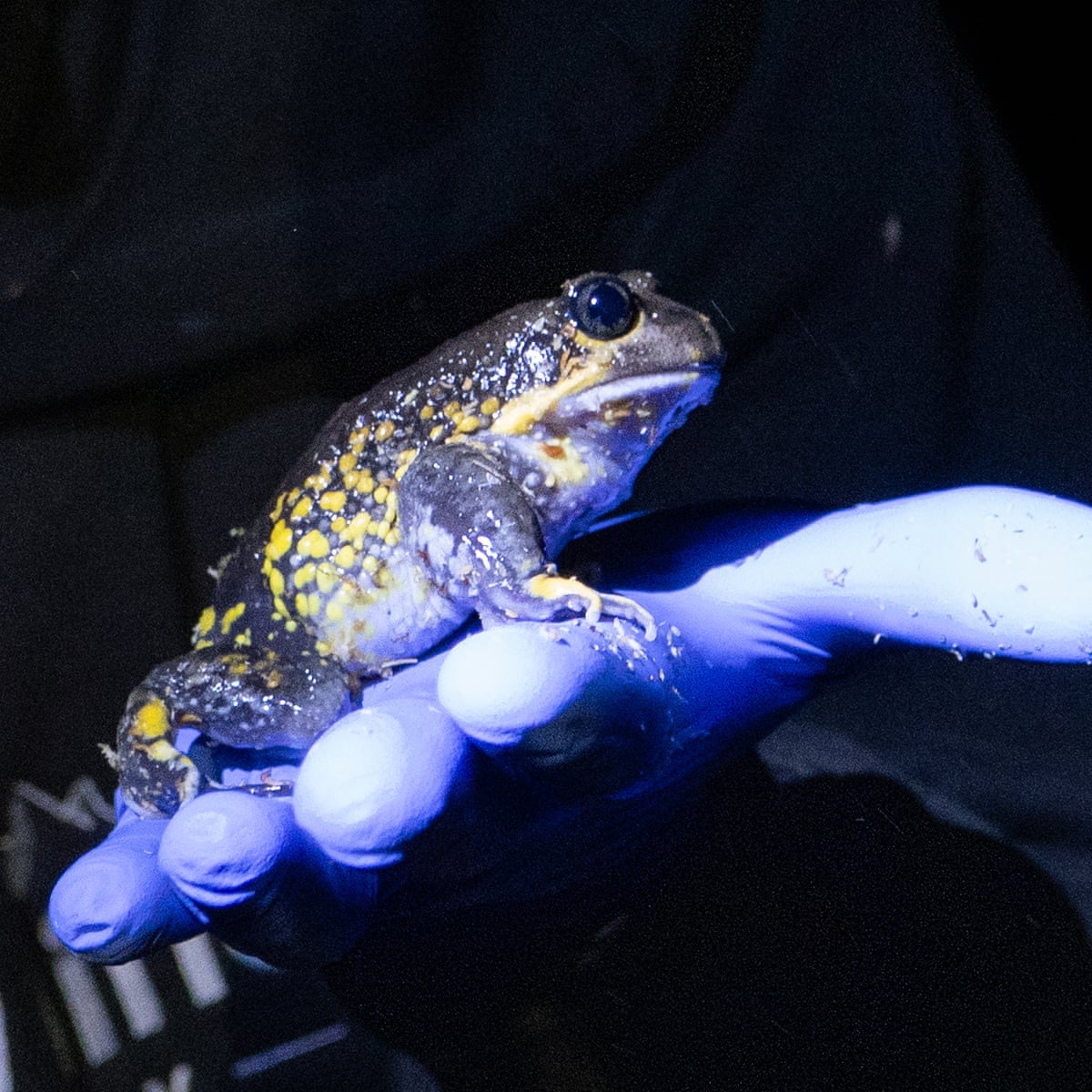
Fifty-three adult male southern giant burrowing frogs (Heleioporus australiacus) have been released into remote bushland in East Gippsland, Victoria. They were rescued as tadpoles from ash-choked puddles after the 2019-20 Black Summer bushfires. The Guardian reported the release on 5 November 2026. The frogs were raised at Zoos Victoria’s Melbourne Zoo, where the program also achieved what is reported as the world’s first successful captive breeding of the species. The frogs, now fully grown, are reportedly about the size of a cricket ball.
The species is listed as Vulnerable under the Commonwealth Environment Protection and Biodiversity Conservation Act 1999 (EPBC Act) and as Critically Endangered in Victoria under the Flora and Fauna Guarantee Act 1988 (FFG Act). That dual listing matters well beyond the conservation sector. Developers, infrastructure proponents, councils and their legal advisers working in eastern Victoria and south-east New South Wales should treat this frog as a live approvals constraint. It is a cryptic animal that standard survey methods often miss, and its presence or likely presence can trigger Commonwealth and state assessment obligations.
This article sets out the reported facts of the release and the ecological traits that make the species hard to detect. It then covers the legislative framework that applies across Victoria and New South Wales, and the changes project teams should consider in survey design, construction planning and due diligence.
Rescue, captive breeding and release
About 160 southern giant burrowing frog tadpoles were collected from fire-affected pools in East Gippsland after the 2019-20 Black Summer bushfires. They were transferred to Zoos Victoria at Melbourne Zoo, where specialist staff raised them through metamorphosis to adulthood. Of that rescued cohort, 53 adult males have now been returned to the wild. The release site is described as remote habitat in eastern Victoria.
The program did more than hold animals until conditions improved. Zoos Victoria reportedly achieved the first successful captive breeding of Heleioporus australiacus, which had not previously been done anywhere. An insurance population remains in captivity, and the released frogs are being followed by ongoing wild monitoring. The program therefore covers emergency salvage, captive rearing, captive breeding and reintroduction for a single threatened species. That gives regulators and recovery teams a documented model to refer to after future fire events.
Why the frog is hard to detect
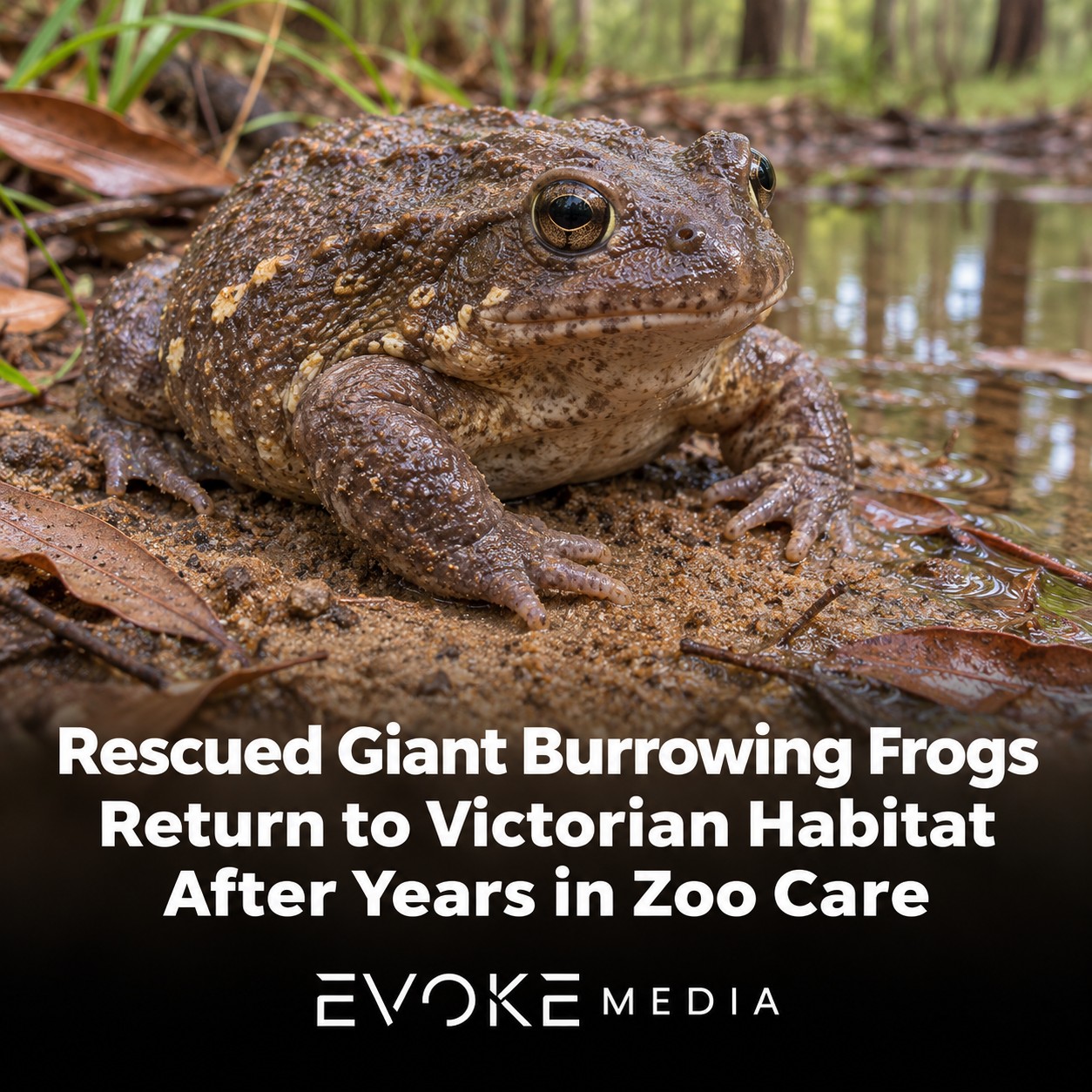
The southern giant burrowing frog spends long periods buried underground in deep sandy soils within forested country. It emerges mainly during or after heavy rain to forage and to breed in ephemeral waterways and slow-flowing drainage lines. In practice, the frog may be absent from the surface for most of the year. Diurnal searches and dry-weather site inspections are therefore unlikely to detect it, even where a resident population is present below ground.
EPBC Act and FFG Act listing
Several instruments govern the species. It is listed Vulnerable under the EPBC Act and Critically Endangered under the FFG Act. In Victoria, the Wildlife Act 1975 provides the permit framework for handling, research, salvage and translocation of protected wildlife, which covers the rescue, captive management and release activities in this program. Recovery actions are guided by the National Recovery Plan for the Giant Burrowing Frog (Heleioporus australiacus). Practitioners should confirm current listing categories, Conservation Advice and recovery plan status through the Commonwealth Species Profile and Threats (SPRAT) database and the Victorian FFG Threatened List before relying on them in an assessment.
At the Commonwealth level, the Vulnerable listing makes the southern giant burrowing frog a matter of national environmental significance under the EPBC Act. Any action likely to have a significant impact on the species requires referral and may be declared a controlled action needing Commonwealth approval. Proponents test that likelihood against the Matters of National Environmental Significance: Significant Impact Guidelines 1.1. For a Vulnerable species, those guidelines focus on impacts to an important population, including loss of habitat critical to survival, fragmentation and interference with recovery. The Survey guidelines for Australia’s threatened frogs (2010) remain the Commonwealth baseline for survey effort and timing. Survey that falls short of them is a common reason for requests for further information during referral.
Survey and approval obligations in Victoria and NSW
In Victoria, the Critically Endangered FFG Act listing sits alongside several other processes. Since the 2019 amendments to the FFG Act, public authorities have a duty to give proper consideration to the objectives of the Act when performing their functions. That duty is relevant to councils, water corporations and state agencies delivering or approving works in East Gippsland. Native vegetation removal is regulated through clause 52.17 of the Victoria Planning Provisions. Larger projects may be referred for assessment under the Environment Effects Act 1978. Any salvage, relocation or handling of frogs during works requires authorisation under the Wildlife Act 1975.
The species also occurs in south-east New South Wales, where it is listed Vulnerable under the Biodiversity Conservation Act 2016 (NSW). Development assessed under Part 4 of the Environmental Planning and Assessment Act 1979 must address the species. Below the Biodiversity Offsets Scheme thresholds, that means a test of significance under section 7.3 of the BC Act. Above them, the Biodiversity Assessment Method applies, which carries survey requirements for candidate species credit species. Cross-border linear projects running from East Gippsland into south-east NSW therefore face three overlapping frameworks: Commonwealth approval under the EPBC Act, Victorian controls under the FFG Act, planning provisions and the Wildlife Act, and NSW assessment under the EP&A Act and BC Act. Survey effort, timing and reporting need to satisfy all three, and data collected for one jurisdiction will not always meet the requirements of another.
Survey design for a cryptic burrowing frog
Detection of this species depends heavily on weather. Surveys should be timed for nights during or soon after heavy rain, when frogs are most likely to be on the surface or calling. Nocturnal searches along tracks, drainage lines and around ephemeral pools, combined with call surveys, are far more likely to record the species than daytime habitat walks. Automated acoustic recorders left in place across a season can capture calling on nights when field teams are not on site. Searches for tadpoles in suitable pools and drainage lines add a further line of evidence.
Habitat mapping is as important as animal records. Deep sandy soils in forested country, ephemeral drainage lines and potential breeding pools should be mapped early, so that survey effort can be targeted and any later impacts on habitat can be quantified. Survey effort should be checked against the Commonwealth frog survey guidelines and, for NSW sites, the BAM and any species-specific survey guidance in force at the time.
Where surveys cannot be timed to suitable conditions within the project schedule, proponents may need to assume presence. Under the BAM, an assessor can assume a candidate species credit species is present instead of surveying for it. That removes the survey risk but brings the associated offset liability. Negative results from dry-weather surveys should not be presented as evidence that the species is absent.
Construction planning
Because the frog can stay buried for long periods, clearing and earthworks can harm animals that no survey has recorded. Project teams working in or near suitable habitat should consider the following measures:
- Ecologist supervision of vegetation clearing and topsoil stripping in mapped habitat, with salvage and relocation procedures authorised before works start. In Victoria this requires authorisation under the Wildlife Act 1975. In NSW it requires a biodiversity conservation licence under the BC Act.
- Protection of drainage lines and ephemeral pools from sediment, fill and changes to surface flows, as these are the breeding sites the species relies on.
- Controls on vehicle movements on wet nights, when frogs are most likely to be crossing tracks and access roads.
- Frog hygiene protocols for staff, vehicles and equipment to limit the spread of amphibian chytrid fungus, which is listed as a key threatening process under the EPBC Act.
- Care with post-fire works such as control line rehabilitation, track grading and hazard tree removal. The East Gippsland rescue shows that populations can persist in burnt country, and recovery works in the months after a fire can affect them.
Due diligence for projects in eastern Victoria and south-east NSW
Early desktop checks should include the EPBC Protected Matters Search Tool, the Victorian Biodiversity Atlas and the NSW BioNet Atlas. Records of this species are sparse because it is so hard to detect, so a lack of records near a site does not mean the frog is absent. The location of reintroduced populations, including the East Gippsland release site, is unlikely to be published. Proponents working in the region should contact the relevant state agency about sensitive species data before finalising route options or site layouts.
Seasonal survey windows should be built into project schedules from the start. A missed rainfall window can push survey into the following year, with flow-on effects for approvals, land access and construction contracts. Purchasers and lenders assessing land in eastern Victoria or south-east NSW should also ask whether the species has been considered in any existing approvals, and whether the survey behind those approvals would meet current guidelines.
Listing categories and guidance for the species may change as monitoring of the released frogs continues and recovery planning is updated. Project teams should confirm the current position through SPRAT and the state threatened species lists at each stage of assessment, not only at the start.
References and related sources
- Primary source: www.theguardian.com
- theguardian.com
- evokemedia.io
- theguardian.com
- EPBC Act
How iEnvi can help
iEnvi provides specialist consulting services relevant to this topic. Our team includes CEnvP Site Contamination Specialists with experience across contaminated land, groundwater, remediation, ecology, and regulatory compliance.
- iEnvi ecology services
- iEnvi contaminated land investigation services
- iEnvi remediation and validation services
- iEnvi expert services and independent review services
This is an iEnvi Machete news summary. Prepared by iEnvi to summarise the source article for contaminated land, groundwater, remediation, approvals and site risk professionals.
Published: 05 Nov 2026
Need advice on this topic? Speak to an iEnvi expert at info@ienvi.com.au or 1300 043 684, or contact us online.
Need advice on this issue? iEnvi provides practical, senior-led environmental consulting across contaminated land, remediation, ecology and environmental risk.
Team credentials Flora and fauna assessment Contaminated land services Remediation services Talk to iEnvi