
Overview
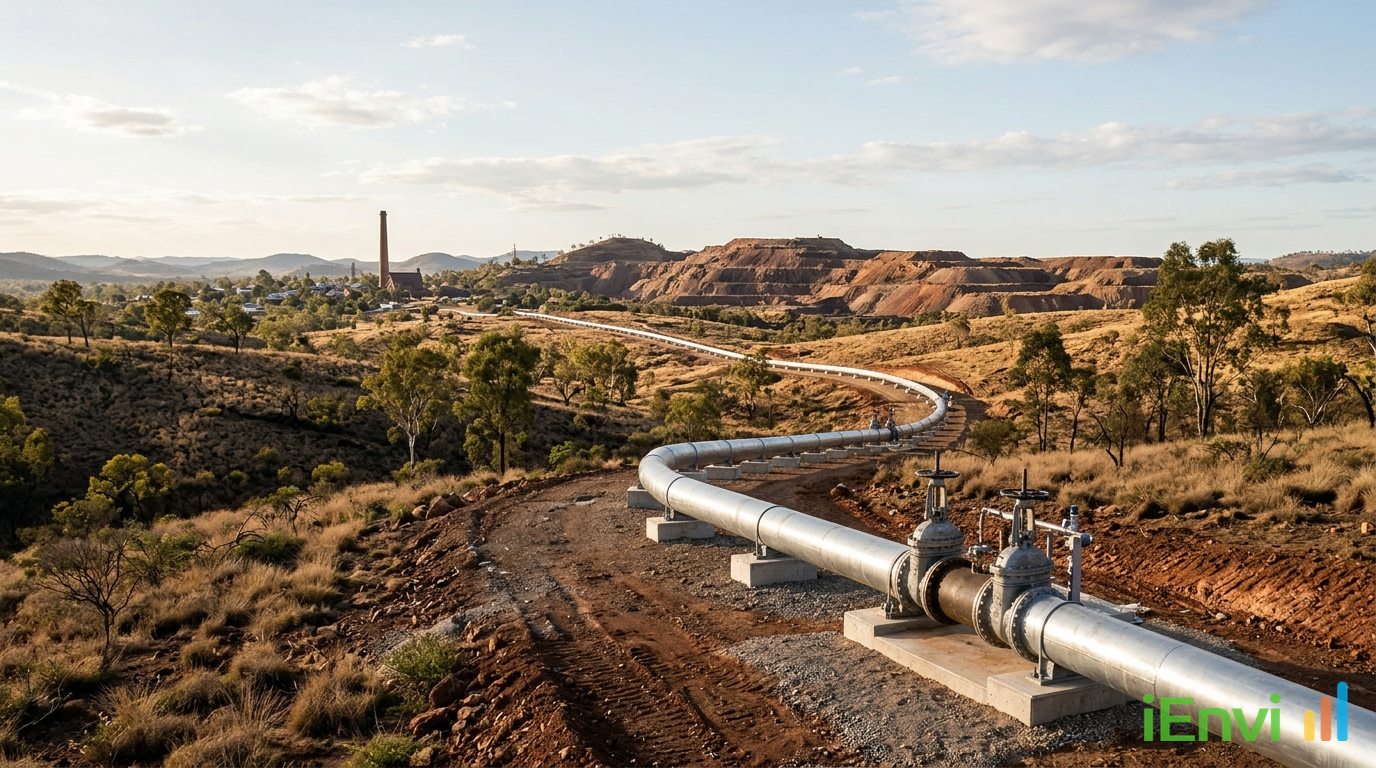
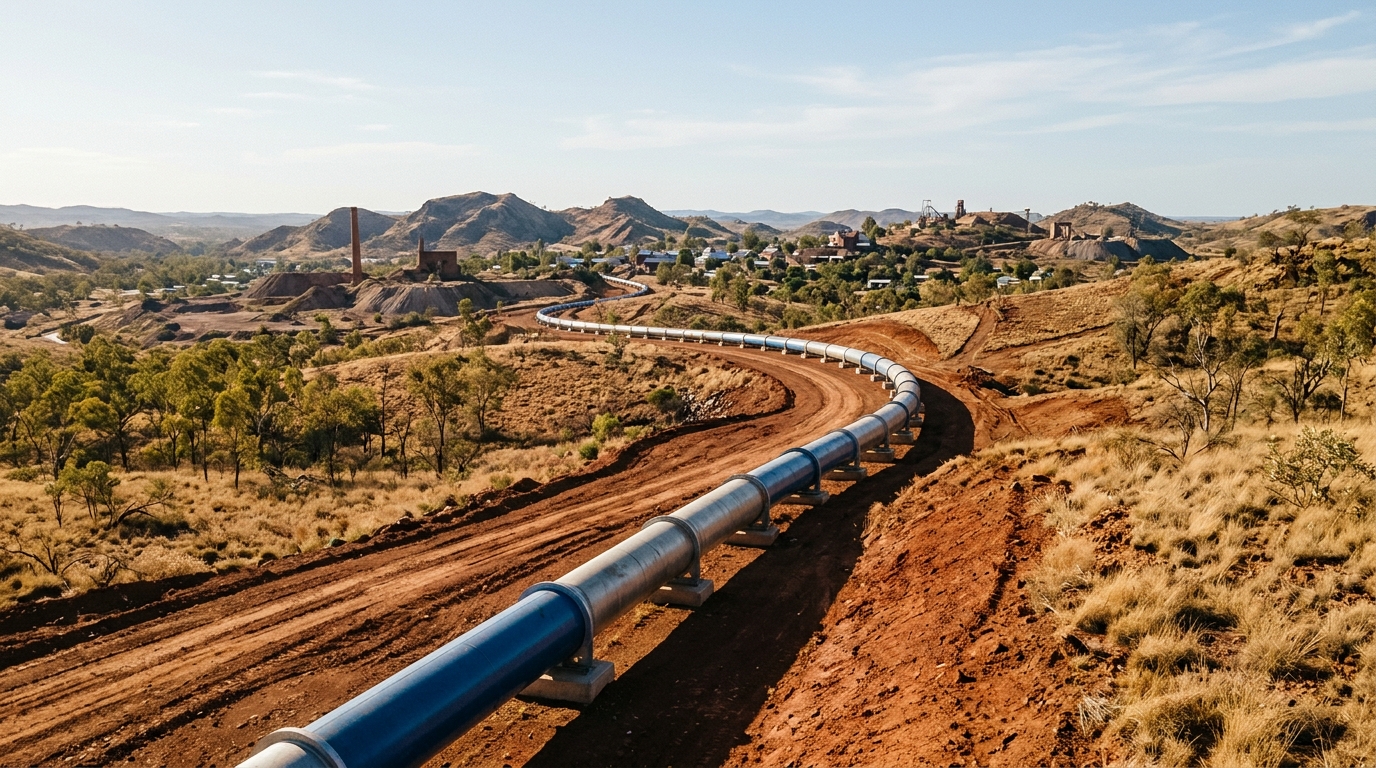
The Australian and Queensland Governments and Rockhampton Regional Council have commissioned the $88.2 million Mount Morgan Water Supply Pipeline. The pipeline is a 28 km potable water main that connects the Central Queensland township of Mount Morgan to Rockhampton’s Fitzroy River Barrage supply by way of Gracemere. The joint media release, published on 4 November 2026, states that the project ends Mount Morgan’s dependence on a single small surface reservoir, the No. 7 Dam, which fell below 10% capacity during the severe drought of 2021.
The drought crisis was acute and long-running. The fall in storage at the No. 7 Dam triggered Level 6 water restrictions. Water then had to be carted from Rockhampton for three years, from 2021 to 2024, with the Queensland Government providing $10.8 million in emergency relief to keep the town supplied. The new pipeline replaces that arrangement with a permanent trunk connection to a larger regional source.
For environmental professionals and their clients, the project is relevant for a reason beyond water security. Mount Morgan is the site of one of Australia’s best-known historical gold, copper and silver mines. Legacy acid and metalliferous drainage (AMD) and tailings in the Dee River catchment are well documented, and they are a separate issue from the town’s water supply. Developers, lawyers, council planners and landholders working in the area need to understand that the pipeline changed where the town’s drinking water comes from. It did not change the condition of the local catchment.
Key details
The completed works include four main infrastructure components. According to the joint release, these are:
- a 28 km potable water pipeline from Gracemere to Mount Morgan
- an upgrade to the existing pump station at Old Capricorn Highway, Gracemere
- a new pump station and twin 3.65 ML reservoirs at Lucas Street, Gracemere
- an intermediate booster pump station with a 500 kL reservoir at Moonmera
The $88.2 million cost was shared across three levels of government. The Commonwealth contributed $30 million through the National Water Grid Fund, the Queensland Government contributed $40.4 million and Rockhampton Regional Council contributed $17.8 million. On these figures, the Queensland Government is the largest single funder at roughly 46% of the total, with the Commonwealth at about 34% and council at about 20%. The Commonwealth share was delivered under the Federation Funding Agreement (Infrastructure) schedule for the National Water Grid Fund in Queensland and is administered by the National Water Grid Authority within the Department of Climate Change, Energy, the Environment and Water (DCCEEW).
The mining history explains why the township’s supply was so constrained. Underground mining at Mount Morgan began in 1882, open-cut methods were adopted from about 1928 to 1932, and mining ended in 1981. Tailings reprocessing continued until about 1990. Throughout that period, and since, the town relied on the No. 7 Dam, a small surface reservoir upstream of the mine. Being upstream kept the dam separate from the mine’s drainage, but its small size left it highly exposed to drought and to water quality problems such as algae. The legacy AMD in the Dee River catchment downstream of the workings is a separate and long-standing environmental matter.
Commissioning a 28 km transmission main also brings drinking water quality management into focus. In Queensland, registered drinking water service providers must operate under an approved Drinking Water Quality Management Plan (DWQMP) under the Water Supply (Safety and Reliability) Act 2008 (Qld). The benchmark is the current version of the Australian Drinking Water Guidelines 2011 (ADWG), published by the National Health and Medical Research Council (NHMRC). Long-distance pipelines and intermediate reservoirs increase water age, which leads to decay of the disinfectant residual and greater potential for disinfection by-product formation. For reference, the ADWG health-based guideline value for total trihalomethanes is 0.25 mg/L. Managing residence time across the Lucas Street and Moonmera storages, and verifying water quality at the far end of the system, are the types of risks a DWQMP must address when a community is switched to a new long-distance source.
Australian context
Queensland’s drinking water framework places responsibility on the service provider, not the end user. Under the Water Supply (Safety and Reliability) Act 2008 (Qld), Rockhampton Regional Council, as the registered provider, must identify hazards from catchment to tap and set out controls and verification monitoring in its DWQMP. The ADWG is not itself legislation in Queensland, but it is the reference point for the plan. A change in source water, new reservoirs and a longer distribution path are all changes the provider must account for in its risk assessment.
Contaminated land obligations sit under a different statute. The Environmental Protection Act 1994 (Qld) establishes the Environmental Management Register (EMR) and the Contaminated Land Register (CLR), and Schedule 3 of the Act lists notifiable activities, which include the storage of hazardous mine wastes such as tailings. Site assessment in Queensland follows the National Environment Protection (Assessment of Site Contamination) Measure 1999, as amended in 2013 (NEPM 2013). The NEPM 2013 groundwater investigation levels draw on the ADWG for drinking water use and on the Australian and New Zealand Guidelines for Fresh and Marine Water Quality (ANZG 2018) for aquatic ecosystems. That link is important in a catchment like the Dee River, because the relevant beneficial uses of groundwater and surface water determine which criteria apply when assessing AMD-affected land.
The project also fits the National Water Grid Investment Framework, which sets out how the Commonwealth invests in regional water infrastructure that improves water security and reliability.
References and related sources
- Primary source: minister.dcceew.gov.au
- pc.gov.au
- Australian Drinking Water Guidelines
How iEnvi can help
iEnvi provides specialist consulting services relevant to this topic. Our team includes CEnvP Site Contamination Specialists with experience across contaminated land, groundwater, remediation, ecology, and regulatory compliance.
- iEnvi contaminated land services
- iEnvi remediation and validation services
- iEnvi expert services and independent review services
This is an iEnvi Machete news summary. Prepared by iEnvi to summarise the source article for contaminated land, groundwater, remediation, approvals and site risk professionals.
Published: 07 Nov 2026
Need advice on this topic? Speak to an iEnvi expert at info@ienvi.com.au or 1300 043 684, or contact us online.
Need advice on this issue? iEnvi provides practical, senior-led environmental consulting across contaminated land, remediation, ecology and environmental risk.
Team credentials Contaminated land services Remediation services Groundwater services Talk to iEnvi