

University of Adelaide study warns Australia must retire farmland to meet 30 by 30 biodiversity targets
Overview of Australia’s 30 by 30 Biodiversity Challenges
A study completed by Environmental Science graduate Peter Martin at the University of Adelaide has delivered a pointed warning to land managers, planners, and policymakers: Australia cannot meet its international biodiversity commitments without fundamentally restructuring how rural land is used. Published in June 2026, the research examined how South Australia can realistically achieve the Kunming-Montreal Global Biodiversity Framework’s “30 by 30” target, which requires 30% of land and ocean areas to be protected or restored by 2030. The findings are not incremental. They call for retiring both marginal and some productive agricultural land and transitioning those areas back to native ecosystems including mallee, woodland, and shrubland.
The study focused on four heavily cleared agricultural local government areas in South Australia: the Coorong, Yorke Peninsula, Grant, and the Copper Coast. Each region was assessed against the 30% native vegetation benchmark, and each fell critically short. The most striking finding is that the Copper Coast retains only 3.6% of its native vegetation cover, a figure that illustrates the scale of clearing that has occurred and the magnitude of restoration required to approach any meaningful biodiversity target. These are not abstract statistics. They represent the practical baseline from which any future restoration programme must begin, and they set the scope of the ecological and planning task facing governments, landholders, and environmental professionals across the region.
For environmental consultants, ecologists, regional planners, developers, and agribusiness advisers, this research signals a material shift in how rural land is valued, assessed, and managed. The study does not sit neatly within traditional contaminated land or site assessment frameworks, but it has direct relevance to environmental due diligence, land-use planning advice, biodiversity offsetting, and the emerging Nature Repair Market. As Australian and state governments align domestic policy with international commitments, practitioners working across Queensland, New South Wales, Victoria, and South Australia will encounter these issues increasingly in development approvals, transaction assessments, and regulatory compliance work.
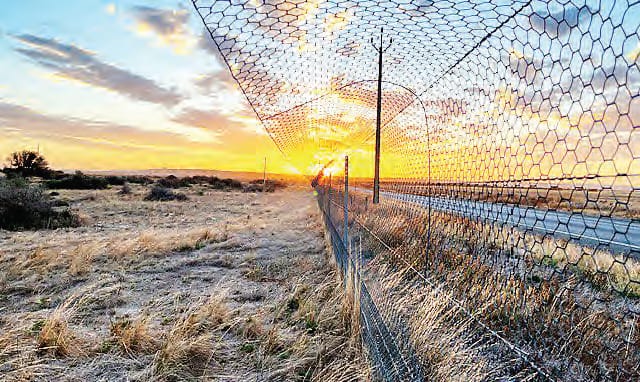
Key details of the University of Adelaide biodiversity and farmland retirement research
The research examined the gap between current native vegetation coverage and the 30% threshold required under the Kunming-Montreal Global Biodiversity Framework, adopted internationally in 2022. Across all four study regions, the deficit is severe. The Copper Coast’s retention of 3.6% native vegetation represents the most extreme case, but the Coorong, Yorke Peninsula, and Grant local government areas are similarly degraded. The study’s methodology centred on spatial modelling of existing vegetation cover against the 30% benchmark and on identifying the land area and vegetation types required to close that gap within the 2030 timeframe.
To reach the 30% target, the research identifies a transition from traditional intensive “wheat-sheep” farming systems to a district-scale mosaic model described as “wheat-sheep-mallee.” This approach integrates native vegetation belts, patches, and corridors back into farming systems across the landscape rather than confining restoration to remnant parcels at paddock edges. The mosaic model requires the retirement of marginal agricultural land as a minimum, but the study is explicit that some productive cropping land will also need to come out of production if the 30% figure is to be achieved within the study regions. This is a significant finding because it moves the restoration debate from opportunistic revegetation of economically marginal land to a deliberate reallocation of land use at a district scale.
A key driver shaping the urgency of this transition is climate change and its effect on the viability of current agricultural zones. Goyder’s Line, the historic boundary in South Australia used since the 1860s to demarcate reliable rainfall sufficient for cropping from drier pastoral country to the north, is projected to shift southward over coming decades. The study notes that by 2100, Kadina, a major grain-producing centre on Yorke Peninsula, could experience climatic conditions comparable to those currently found at Hawker in the semi-arid upper Flinders Ranges. This projection fundamentally alters the economic and agronomic calculus for land retirement: some farmland that is currently productive may become unviable for cropping independently of biodiversity policy, making the case for ecological transition more economically rational over a 20 to 30 year horizon.
The research identifies social licence as the primary barrier to achieving the transition, not technical or ecological feasibility. Agricultural communities across these regions were built over generations of land clearing and intensification, and the prospect of large-scale farmland retirement carries real economic and cultural weight for landholder families and local economies. The study does not dismiss these concerns but frames them as the central challenge that must be addressed through community engagement, economic transition support, and the design of incentive structures that make ecological stewardship financially viable for landholders. Without adequate social licence, the 30 by 30 target in these regions will not be achieved regardless of the strength of the regulatory framework.

Australian regulatory context for the 30 by 30 biodiversity target and native vegetation restoration
Australia endorsed the Kunming-Montreal Global Biodiversity Framework in December 2022, committing to protect or restore 30% of terrestrial and marine areas by 2030. Domestic implementation is progressing through a combination of federal and state-level policy mechanisms, including the Nature Repair Market established under the Nature Repair Market Act 2023, updates to the Environment Protection and Biodiversity Conservation Act 1999, and state-based native vegetation and biodiversity frameworks. For practitioners across the environmental consulting and planning sectors, this research underscores the growing regulatory and commercial pressure to account for biodiversity outcomes in land-use decisions well beyond the boundaries of formal protected area networks.
References and related sources
- Primary source: adelaide.edu.au
- arr.news
- news.cn
- insidewaste.com.au
- pmc.gov.au
- NEPM Assessment of Site Contamination
- EPBC Act
How iEnvi can help
iEnvi provides specialist consulting services relevant to this topic. Our team includes CEnvP Site Contamination Specialists with experience across contaminated land, groundwater, remediation, ecology, and regulatory compliance.
- iEnvi groundwater services
- iEnvi remediation and validation services
- iEnvi expert services and independent review services
This is an iEnvi Machete news summary. Prepared by iEnvi to summarise the source article for contaminated land, groundwater, remediation, approvals and site risk professionals.
Published: 04 Jul 2026
Need advice on this topic? Speak to an iEnvi expert at info@ienvi.com.au or 1300 043 684, or contact us online.
Need advice on this issue? iEnvi provides practical, senior-led environmental consulting across contaminated land, remediation, ecology and environmental risk.
Team credentials Contaminated land services Remediation services Groundwater services Talk to iEnvi