
Overview
A significant advancement in groundwater monitoring technology has emerged from research into artificial intelligence-driven “soft sensors”. These systems use machine learning models trained on historical operational and water quality data to predict concentrations of complex contaminants in real time, without requiring the days-long wait associated with traditional laboratory analysis. For groundwater practitioners managing Managed Aquifer Recharge (MAR) schemes, advanced water treatment plants, and large-scale remediation systems, this technology offers the potential to dramatically improve both compliance responsiveness and operational efficiency.
Key details
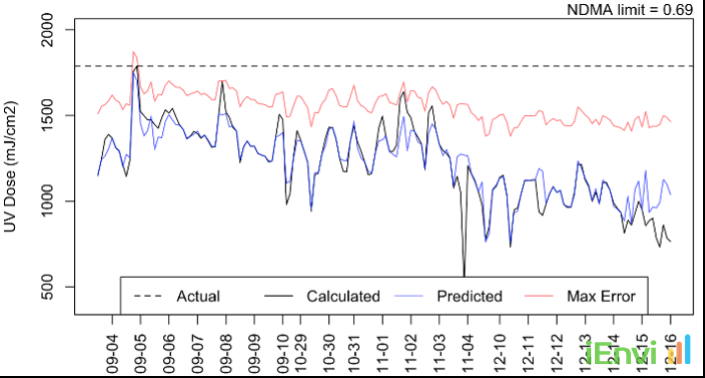
The research, demonstrated through Project 5129, involved deploying a boosted trees machine learning model at an advanced water treatment facility. The system was trained on historical datasets of operational parameters (such as flow rates, UV transmittance, and treatment process variables) alongside corresponding laboratory analytical results for key water quality indicators.
The key technical outcomes were notable:
- Total Organic Carbon (TOC) prediction: The model achieved a Root Mean Square Error (RMSE) of just 0.349 mg/L, significantly outperforming traditional linear regression approaches and demonstrating that machine learning can reliably predict organic contaminant concentrations from readily available process data.
- N-Nitrosodimethylamine (NDMA) prediction: Real-time prediction of NDMA concentrations enabled dynamic adjustment of UV advanced oxidation dosing. Rather than operating at static, conservatively high UV doses, operators could optimise energy input based on predicted contaminant levels.
- Energy savings: The facility projected up to 26 per cent energy savings through dynamic UV dosing optimisation, while still meeting all regulatory compliance targets for groundwater augmentation.
- No new hardware required: A critical advantage of the soft sensor approach is that it leverages existing operational data streams and does not necessarily require installation of new physical sensor networks.
The term “soft sensor” refers to the use of computational models to infer a target measurement from correlated, more easily measured parameters. In essence, the system predicts what the laboratory would report, but delivers the result in minutes rather than days.
Australian context
Australia has a well-established regulatory framework for Managed Aquifer Recharge, with guidelines published by the National Water Quality Management Strategy and state-level policies governing groundwater replenishment. States such as Western Australia, South Australia, and Victoria have operational MAR schemes where advanced water treatment is critical to meeting groundwater quality objectives.
The relevance of AI soft sensors to the Australian context is substantial:
- Regulatory compliance: Australian MAR schemes must meet strict water quality criteria, including limits on trace organics, nutrients, and pathogens. Real-time predictive capability allows operators to identify potential exceedances before they occur and adjust treatment processes proactively.
- Groundwater remediation: For contaminated sites undergoing pump-and-treat or in-situ remediation, soft sensors could provide continuous performance monitoring, reducing reliance on periodic laboratory sampling that may miss transient contaminant spikes.
- Drought resilience: As Australian cities increasingly invest in indirect potable reuse and aquifer storage and recovery to build drought resilience, the demand for reliable, cost-effective water quality monitoring will grow significantly.
- Cost reduction: Laboratory analysis of trace organics and emerging contaminants is expensive. Reducing the frequency of confirmatory lab testing, while maintaining or improving compliance assurance through continuous predictive monitoring, offers meaningful cost savings for both utilities and private site operators.
Practical implications
For environmental professionals working in groundwater management, remediation, and water treatment, the practical takeaways include:
- Data asset audit: Review existing monitoring datasets held by your clients. Historical groundwater quality data, process logs, and operational records may have untapped value as training data for predictive models.
- Pilot opportunities: Consider proposing AI soft sensor pilots for large-scale remediation sites or MAR schemes where laboratory turnaround times create compliance risk or operational inefficiency.
- Regulatory dialogue: Engage with state regulators early to understand their position on using predictive models as a complement to (not replacement for) laboratory-based compliance monitoring.
- Technology partnerships: Environmental consulting firms should explore partnerships with data science and machine learning specialists to build in-house capability for deploying soft sensor systems.
- Validation requirements: Any deployment of AI-based monitoring must include robust validation protocols, including ongoing comparison against laboratory results, to maintain data quality and regulatory confidence.
References and related sources
Original source: California Water Environment Association
Source published: 20 March 2026
Added to Enviro News: 21 March 2026
Read the primary source article
Join the discussion on LinkedIn
Related references:
How iEnvi can help
iEnvi’s contaminated land and remediation teams work extensively with groundwater monitoring, assessment, and treatment system design across Australia. Whether you are managing a MAR scheme, operating a groundwater remediation system, or investigating opportunities to improve monitoring efficiency through emerging technologies, iEnvi can provide the technical expertise to support your program. Our team can help with site conceptual model development, monitoring network optimisation, and regulatory engagement to ensure your groundwater management approach remains robust and forward-looking.
This is an iEnvi Machete news summary. Prepared by iEnvi to summarise the source article for contaminated land, groundwater, remediation, approvals and site risk professionals.
Need advice on this topic? Speak to an iEnvi expert at info@ienvi.com.au or 1300 043 684, or contact us online.
Need advice on this issue? iEnvi provides practical, senior-led environmental consulting across contaminated land, remediation, ecology and environmental risk.
Groundwater remediation Contaminated land services Remediation services Talk to iEnvi