
ALRC Report 144: What the Native Title Future Acts Overhaul Means for Project Approvals in Australia
Overview of the ALRC Native Title Future Acts Inquiry
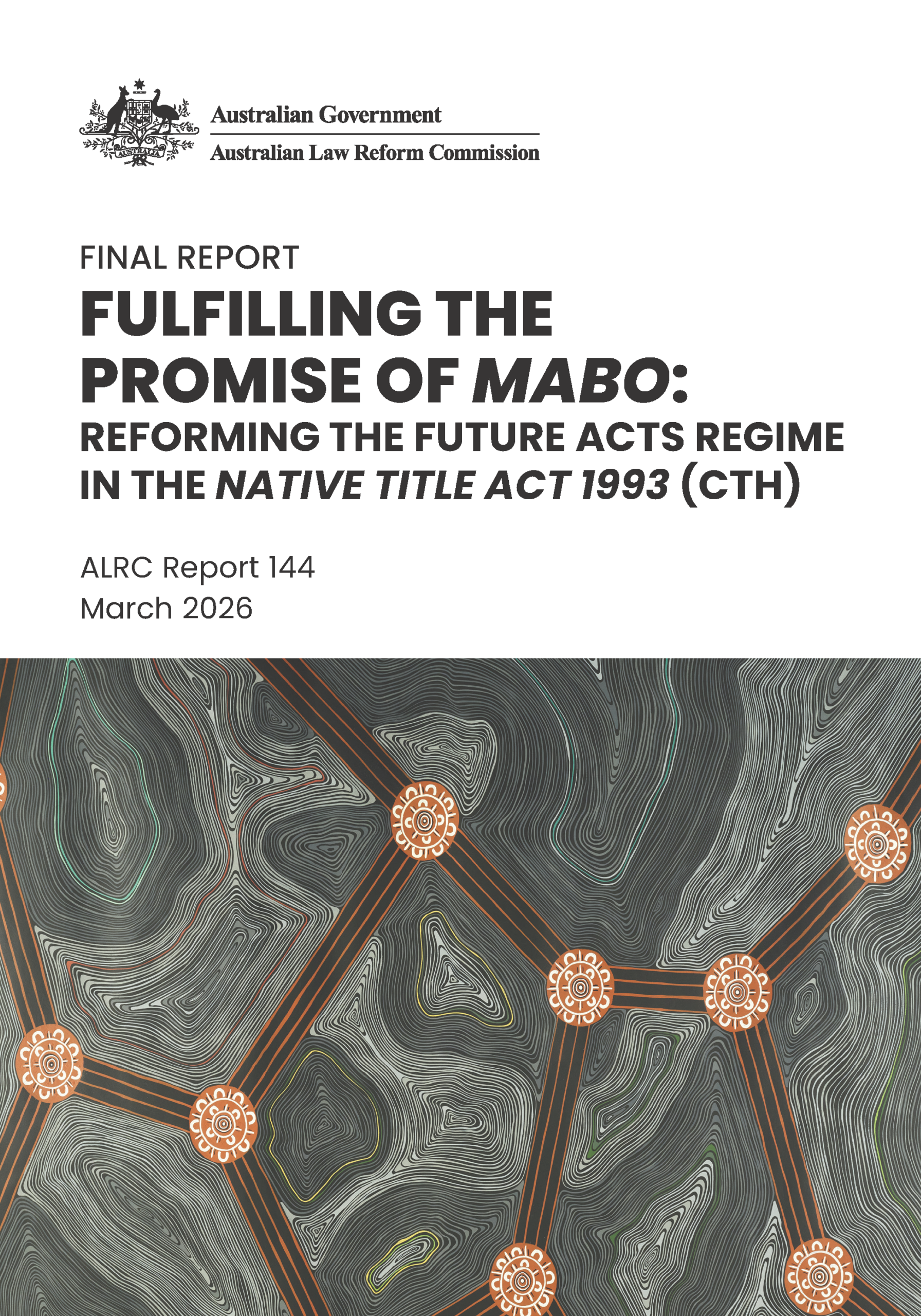
On 11 December 2024, the Commonwealth Attorney-General tabled Australian Law Reform Commission (ALRC) Report 144, titled Fulfilling the Promise of Mabo: Reforming the Future Acts Regime in the Native Title Act 1993 (Cth). The report represents the first comprehensive review of the future acts regime in nearly 30 years, since the Native Title Act 1993 (Cth) was first enacted in the wake of the High Court’s Mabo decision. The ALRC’s conclusion is unambiguous: the existing system “generally fails” both native title holders and project proponents, and the legislative architecture underpinning development approvals on native title land requires fundamental reconstruction.
The report carries 86 recommendations directed at overhauling the statutory procedures that currently govern how mining, infrastructure, energy, and other development activities proceed on land subject to native title. The ALRC found the current framework to be unfair, discriminatory, inefficient, and poorly suited to the realities of modern project delivery. For environmental consultants, planning specialists, EIS project managers, ecologists, and the developers and councils they advise, this is not an incremental policy adjustment. It is a structural realignment of the legal conditions under which major projects are planned, approved, and delivered across Australia.
The relevance extends well beyond legal practitioners. Environmental professionals leading feasibility studies, preparing Environmental Impact Statements, managing project timelines, or advising on land access and cultural heritage obligations will need to understand the proposed changes and factor them into project design from the earliest stages. The shift in regulatory expectations around First Nations engagement is particularly significant for projects in Queensland, New South Wales, Victoria, South Australia, and Western Australia, where native title determinations and claims overlay significant areas of land subject to development pressure.
Key details of ALRC Report 144 and the proposed future acts reforms
ALRC Report 144 targets the future acts regime specifically, which is the legal mechanism in the Native Title Act 1993 (Cth) that determines how governments, developers, and infrastructure proponents can lawfully carry out activities on land and waters subject to native title. The existing regime is structured through a complex series of statutory procedures contained in Subdivisions G to N of Division 3, Part 2 of the Act. These procedures include the Right to Negotiate (RTN), the Expedited Procedure, Infrastructure Provisions, and various state and territory alternatives. The ALRC has recommended replacing this rigid, activity-specific architecture with a unified, non-discriminatory framework built around genuine agreement-making and equitable benefit-sharing.
The 86 recommendations address several systemic problems identified through the ALRC’s inquiry. The Expedited Procedure, which allows certain acts to bypass full negotiation where they are assessed as having a minimal impact on native title rights, has been criticised in the report for being routinely misapplied. Proponents and governments have used the procedure for activities that do, in practice, significantly affect native title holders, forcing native title parties into costly and time-consuming objection processes. The Right to Negotiate, while intended to provide native title parties with procedural equality, has in practice produced negotiations that are unbalanced in terms of resourcing, information access, and bargaining power. The ALRC found that native title parties frequently enter RTN processes without adequate funding, legal support, or technical advice to negotiate effectively.
The report’s proposed replacement framework centres on several structural changes. First, it prioritises early, substantive engagement between proponents and Prescribed Bodies Corporate (PBCs) or native title representative bodies before statutory procedures are triggered. Second, it introduces more rigorous procedural rights for native title parties, including rights to information, adequate timeframes for response, and access to independent technical and legal advice. Third, it proposes that benefit-sharing arrangements form a substantive part of any agreement, rather than being a discretionary or negotiated add-on. Fourth, the recommendations call for a streamlined pathway to agreement that reduces reliance on the National Native Title Tribunal as an arbitral backstop, instead incentivising negotiated outcomes between parties. The ALRC’s position is that genuine, well-resourced early engagement will reduce the frequency of disputes escalating to arbitration or litigation, thereby improving project delivery timelines and reducing costs for all parties.
Importantly, the ALRC has also made recommendations addressing compensation. The Timber Creek litigation (Northern Land Council v Timber Creek Shire Council) and subsequent decisions have confirmed that native title holders are entitled to compensation for acts that extinguish or impair native title rights, and that compensation calculations must account for both economic and cultural or spiritual loss. The ALRC’s recommendations seek to build clearer compensation frameworks into the reformed future acts regime, reducing the uncertainty that currently forces proponents to carry unquantified compensation liabilities on their project risk registers.

Australian context: native title reform and its intersection with environmental and planning frameworks
Australia’s native title framework operates alongside, and often in tension with, state and territory environmental assessment and planning legislation. In Queensland, large-scale resource and infrastructure projects are subject to both the State Development and Public Works Organisation Act 1971 (Qld) and the Environmental Protection Act 1994 (Qld), and native title obligations under the Commonwealth Act must be satisfied in parallel with those state processes. In New South Wales, the Environmental Planning and Assessment Act 1979 (NSW) governs project approvals, but native title procedural requirements sit outside that framework entirely, creating sequencing and timing challenges for project teams managing integrated approval pathways. Similar structural tensions exist in Western Australia, South Australia, and Victoria, where state planning and environmental legislation does not incorporate native title procedural steps in any coordinated way.
For environmental consultants and EIS project managers, this means that even where a project secures all necessary state and territory environmental approvals, it may still face delays, objections, or legal challenges arising from incomplete or inadequate native title processes. The ALRC’s proposed reforms, if implemented, would not resolve the underlying jurisdictional separation between Commonwealth native title law and state planning law, but they would create a more predictable and consistent procedural environment at the Commonwealth level. That predictability is itself a significant practical benefit for project teams working across multiple regulatory frameworks simultaneously.
The reforms also intersect with Australia’s broader First Nations policy environment, including the implementation of free, prior, and informed consent principles in project development, the growing use of Indigenous Land Use Agreements (ILUAs) as flexible deal-making tools, and the increasing expectation from financiers, insurers, and investors that proponents can demonstrate genuine engagement with native title parties as part of their social licence assessments. Environmental and planning professionals advising on major projects will need to understand how the reformed future acts regime interacts with these broader obligations and expectations.
References and related sources
- Primary source: www.alrc.gov.au
- alrc.gov.au
- alrc.gov.au
- allens.com.au
- mabocentre.com
- NEPM Assessment of Site Contamination
How iEnvi can help
iEnvi provides specialist consulting services relevant to this topic. Our team includes CEnvP Site Contamination Specialists with experience across contaminated land, groundwater, remediation, ecology, and regulatory compliance.
- iEnvi contaminated land investigation services
- iEnvi remediation and validation services
- iEnvi expert services and independent review services
This is an iEnvi Machete news summary. Prepared by iEnvi to summarise the source article for contaminated land, groundwater, remediation, approvals and site risk professionals.
Published: 30 Jun 2026
Need advice on this topic? Speak to an iEnvi expert at info@ienvi.com.au or 1300 043 684, or contact us online.
Need advice on this issue? iEnvi provides practical, senior-led environmental consulting across contaminated land, remediation, ecology and environmental risk.
Team credentials Contaminated land services Remediation services Groundwater services Talk to iEnvi