
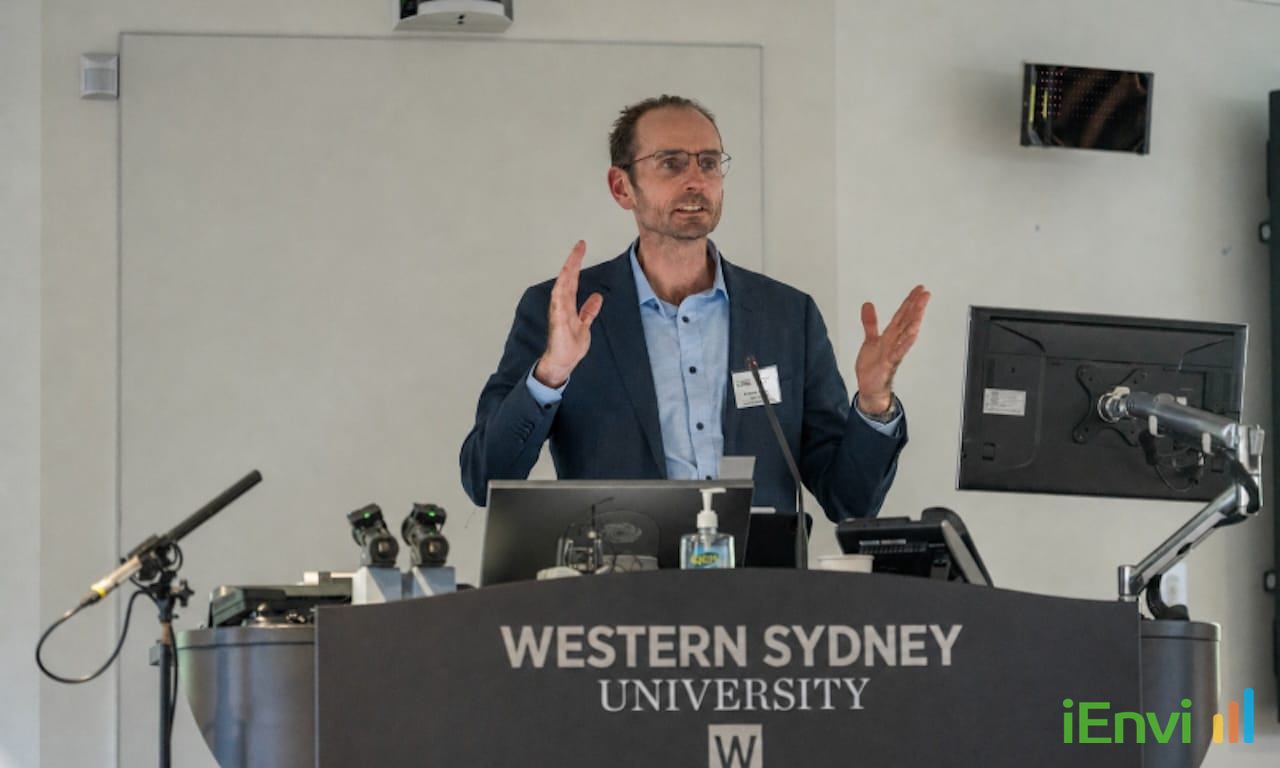
NØBEL training centre targets construction and demolition waste recycling
The Australian Research Council has funded a new Industrial Transformation Training Centre, NØBEL, led by Western Sydney University, to tackle one of the construction sector’s most persistent environmental problems: what to do with the enormous volumes of concrete and structural material generated by demolition and redevelopment. The centre was officially launched on 18 August 2026 and brings together university researchers, industry partners and government stakeholders under the Industrial Transformation Research Program established through the Australian Research Council Act 2001 (Cth).
For environmental consultants, this is not simply a research grant announcement. NØBEL’s core focus is converting demolished concrete and heavy structural waste into certified high-grade recycled aggregate, using artificial intelligence, IoT sensors and data analytics to monitor material quality and environmental performance across the building lifecycle. That combination of digital tracking and circular processing speaks directly to problems environmental practitioners deal with daily on brownfield and civil redevelopment sites: high landfill levies, limited disposal capacity, and the difficulty of proving material quality when moving fill off site.
The relevance for developers, councils and legal advisers sits in the practical detail. Any technology that can verify contamination status and engineering specification of recycled aggregate before it leaves a site boundary has implications for waste classification decisions, environmental due diligence, and how ESG and Scope 3 carbon disclosures are substantiated on major projects.
How NØBEL will use AI, IoT sensors and data analytics for recycled aggregate
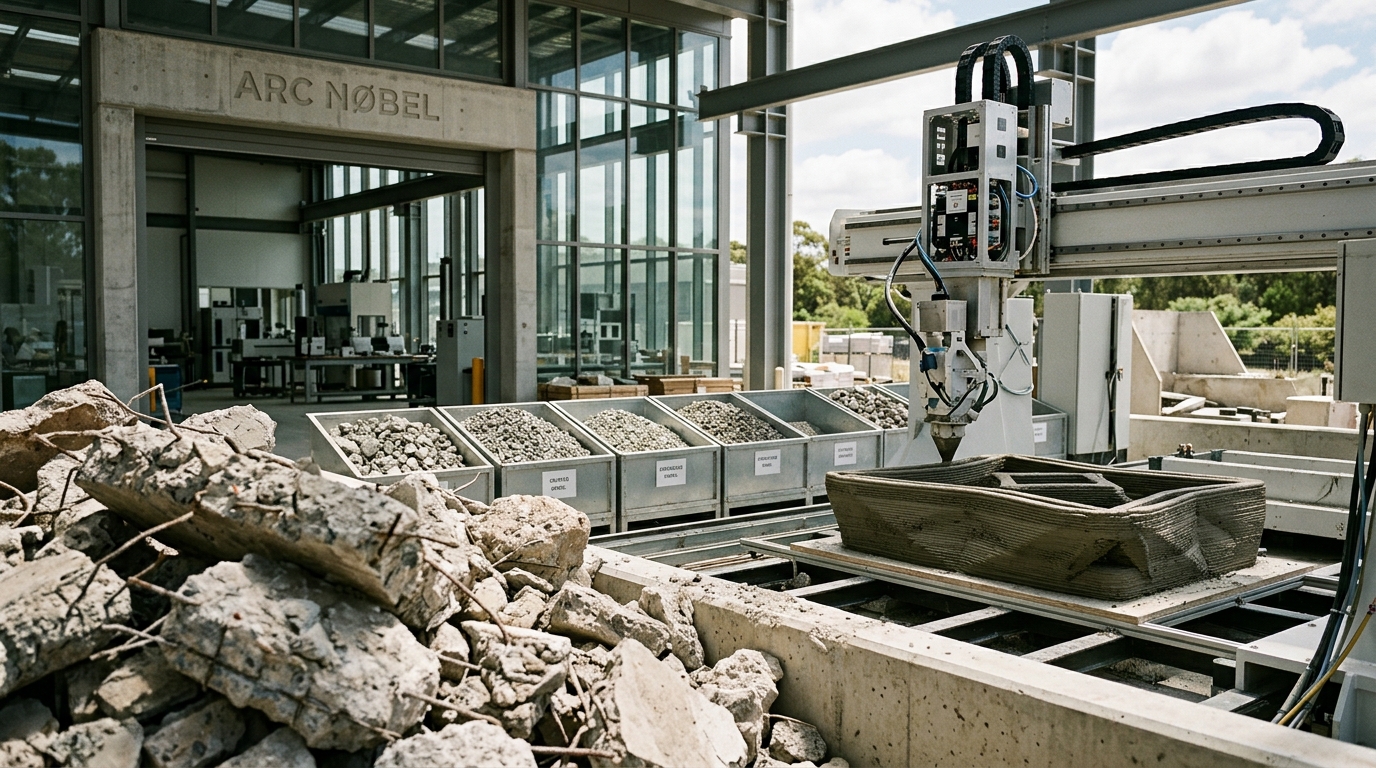
NØBEL is structured as a national Industrial Transformation Training Centre, a funding vehicle the Australian Research Council uses to link postgraduate research training directly to industry-defined problems. The centre’s stated purpose is to develop technologies that transform demolished concrete and structural materials into high-grade recycled building aggregate and products, with the explicit goals of diverting heavy construction and demolition waste from landfill, cutting embodied carbon, and making net-zero construction pathways scalable across Australia.
The technical approach rests on three integrated elements. First, digital platforms designed to monitor, track and optimise material performance and environmental impacts across the full building and infrastructure lifecycle, not just at the point of demolition. Second, IoT sensors intended to capture real-time data on material condition and processing. Third, advanced data analytics and AI used to interpret that sensor data and support decisions on material grading, batching and traceability. This is a shift from periodic laboratory-based characterisation toward continuous, in-line monitoring of recovered material streams.
Western Sydney University is the lead institution, with the centre supported by industry and government partners, consistent with the co-funding model required under the Industrial Transformation Research Program. The initiative sits within the broader Commonwealth Circular Economy Framework set out in the National Waste Policy: Less Waste, More Resources, which targets reduced reliance on virgin materials and greater resource recovery across priority sectors including construction and demolition waste.
No specific detection limits, aggregate grading standards or emission thresholds have been published as part of the launch announcement. The reporting to date describes the centre’s objectives and structure rather than a finalised technical protocol, which means the practical testing methodology, quality assurance criteria and data standards for the digital platforms are still to be developed through the centre’s research programme.
Australian context: resource recovery frameworks and circular concrete
Recovered concrete aggregate in Australia already operates within established but state-specific regulatory pathways. In New South Wales, recycled aggregate must satisfy Resource Recovery Orders and Exemptions issued under the Protection of the Environment Operations (Waste) Regulation 2014 before it can be applied as a beneficial reuse product rather than managed as waste. In Victoria, beneficial reuse of crushed concrete and similar materials is governed by waste classification requirements under the Environment Protection Regulations 2021, which determine whether material can bypass landfill disposal and be reused in construction applications.
These frameworks share a common operational weakness that NØBEL’s digital platforms are aimed at addressing: the reliance on batch sampling and periodic laboratory testing to characterise heterogeneous demolition material. Continuous sensor-based monitoring, if validated and accepted by regulators, would allow real-time verification of contaminant status and engineering properties as material is processed, rather than relying solely on end-of-batch testing. This has obvious parallels with how site assessment practice under the National Environment Protection (Assessment of Site Contamination) Measure 1999 (as amended 2013) (NEPM) treats sampling density and data representativeness, where consultants must justify that testing frequency adequately characterises material variability across a site.
Queensland, South Australia and other jurisdictions operate comparable resource recovery approval pathways, each requiring proof that recycled material meets both environmental criteria and engineering specification before reuse. A nationally consistent digital verification approach, if it emerges from NØBEL’s research, could reduce the current fragmentation between state-based testing and approval requirements, though this remains a research and industry-development outcome rather than a confirmed regulatory change at this stage.
Practical implications for environmental consultants, developers and councils
Environmental consultants advising on demolition, brownfield redevelopment and civil works should watch NØBEL’s outputs for two reasons. The first is commercial: any validated sensor-based verification of recycled aggregate quality would change the economics of off-site material movement, where laboratory turnaround times and conservative waste classification currently push large volumes of reusable concrete toward landfill or lower-value applications. The second is evidentiary: continuous digital records of material condition and processing could strengthen the documentation trail that consultants rely on when justifying waste classifications, resource recovery exemption compliance and fill quality sign-offs.
For developers and contractors, the near-term action is contractual rather than technical. Projects with demolition phases scheduled over the next several years may benefit from specifying data capture and material tracking requirements now, so that recovered concrete streams are documented in a form compatible with emerging digital verification approaches. This also supports Scope 3 emissions reporting and embodied carbon claims, which increasingly require substantiation rather than estimation.
Councils and legal advisers should note that nothing in the launch announcement changes current regulatory obligations. Recycled aggregate must still satisfy the applicable state-based resource recovery orders, exemptions and waste classification requirements before reuse. Until regulators formally recognise continuous monitoring data as an acceptable substitute for, or supplement to, batch laboratory testing, existing sampling and characterisation practice remains the compliance baseline. The sensible position for practitioners is to treat NØBEL as a development worth tracking, engage with the centre’s industry partnership opportunities where relevant, and await published technical protocols before adjusting standard operating procedures.
References and related sources
- Primary source: wastemanagementreview.com.au
How iEnvi can help
iEnvi provides specialist consulting services relevant to this topic. Our team includes CEnvP Site Contamination Specialists with experience across contaminated land, groundwater, remediation, ecology, and regulatory compliance.
- iEnvi remediation services
- iEnvi ESG services
- iEnvi contaminated land investigation services
- iEnvi expert services and independent review services
This is an iEnvi Machete news summary. Prepared by iEnvi to summarise the source article for contaminated land, groundwater, remediation, approvals and site risk professionals.
Published: 20 Aug 2026
Need advice on this topic? Speak to an iEnvi expert at info@ienvi.com.au or 1300 043 684, or contact us online.
Need advice on this issue? iEnvi provides practical, senior-led environmental consulting across contaminated land, remediation, ecology and environmental risk.
Team credentials Contaminated land services Remediation services Groundwater services Talk to iEnvi