

Overview of TNFD Alternative Fuels Disclosure Guidance
In June 2026, the Taskforce on Nature-related Financial Disclosures (TNFD) released additional sector guidance specifically targeting alternative fuels, including bioenergy and synthetic fuel pathways. Clayton Utz published a detailed legal analysis of this guidance on 24 July 2026, examining its practical implications for Australian corporate reporting. The guidance establishes a clear and consequential threshold: decarbonisation credentials alone are no longer sufficient to support a green or sustainability claim for alternative fuels. Nature performance, assessed across land use, water consumption, ocean interactions, and pollution, is now the ultimate measure of whether such claims hold up to scrutiny.
This development is significant for a wide range of Australian organisations, not just energy producers. Airlines, shipping companies, road transport operators, electric utilities, and any corporate buyer of alternative fuels now face an expectation to assess and disclose the nature-related impacts embedded in their fuel supply chains, even where they exercise no operational control over production facilities. This represents a material shift in how environmental risk is allocated along supply chains, and it arrives at a moment when Australian mandatory climate disclosure obligations are already expanding the reporting burden for large entities.
For environmental professionals, the guidance introduces a layer of ecological assessment that sits alongside, but is distinct from, carbon accounting. Understanding its scope, methodology, and interaction with existing Australian regulatory frameworks is essential for anyone advising developers, corporate clients, or infrastructure proponents with exposure to alternative fuel procurement, project development, or sustainability reporting.
Key details of the TNFD alternative fuels guidance and LEAP methodology
The TNFD additional sector guidance released in June 2026 targets two primary fuel categories. The first is bioenergy, encompassing gas, liquid, and solid fuels derived from biomass, including primary biomass, agricultural waste, and residue feedstocks. The second is synthetic fuels, which covers hydrogen produced via electrolysis and hydrogen-derived fuels synthesised using carbon dioxide or nitrogen as inputs. These two pathways carry fundamentally different nature-related risk profiles and must be assessed separately under the guidance.
The analytical method prescribed is the TNFD’s four-phase LEAP approach: Locate, Evaluate, Assess, and Prepare. In the Locate phase, organisations identify where their fuel supply chains interface with natural ecosystems, including the geographic footprint of biomass sourcing, water extraction points, and any marine or freshwater dependencies. The Evaluate phase requires a structured assessment of organisational dependencies on ecosystem services, such as freshwater availability, soil fertility, and pollination, that underpin feedstock supply. The Assess phase involves identifying and quantifying nature-related risks and opportunities, distinguishing between physical risks (such as water scarcity or soil degradation caused by intensive biomass harvesting) and transition risks (including regulatory non-compliance, shifts in investor expectations, and greenwashing liability exposure). The Prepare phase requires organisations to develop disclosure outputs and integrate nature-related findings into governance and strategy processes.
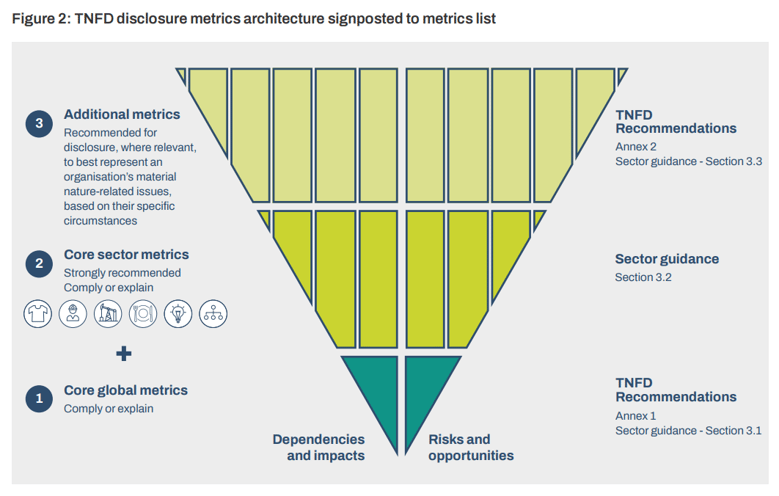
A particularly important aspect of this guidance is the scope of disclosure obligations. Organisations that purchase or use alternative fuels are expected to report on core sector metrics for nature-related issues arising from those fuels, regardless of whether they own or operate the production facility. This means that a corporate buyer procuring sustainable aviation fuel to meet net-zero commitments must assess and disclose the land use change, freshwater depletion, and biodiversity impacts associated with the feedstock used to produce that fuel. The absence of operational control does not limit the disclosure obligation; it simply shifts the mechanism by which the organisation must gather data, typically through supply chain traceability systems and contractual verification mechanisms.
The guidance operates on a “comply or explain” basis, which is consistent with the TNFD’s broader voluntary framework architecture. Organisations are expected either to comply with the recommended disclosures or to provide a clear explanation of why they have not. However, the practical weight of “comply or explain” is increasing as institutional investors, lenders operating under their own ESG mandates, and regulators in multiple jurisdictions begin to treat TNFD alignment as a baseline expectation rather than a leading-edge commitment.
Australian context: mandatory disclosures, the GO scheme, and nature-related reporting expectations
The TNFD guidance arrives at a precise and consequential moment in the Australian regulatory calendar. Group 2 entities, defined under Chapter 2M of the Corporations Act 2001 (Cth) as large companies, registered schemes, and superannuation funds with assets under management exceeding five billion dollars, commenced their first mandatory climate-related financial reporting periods on 1 July 2026. These entities are now required to produce climate-related financial disclosures aligned with the Australian Sustainability Reporting Standards (ASRS), which draw heavily on the International Sustainability Standards Board (ISSB) frameworks. The Australian Guarantee of Origin (GO) scheme adds a further dimension for alternative fuel producers and buyers. The GO scheme provides a certification and tracking mechanism for hydrogen and other clean energy products, enabling producers to substantiate the emissions intensity of their output and buyers to make verifiable procurement claims. Where GO certificates are used to support sustainability claims about alternative fuels, the TNFD guidance creates an expectation that nature-related performance data sits alongside those carbon credentials. A GO certificate addresses emissions; it does not, of itself, address land use change, freshwater depletion, or biodiversity impact. Organisations relying on GO-certified fuels to underpin green claims will increasingly need to demonstrate that the nature-related dimension has also been assessed and disclosed. While nature-related disclosure remains voluntary under current Australian law, transition plans that omit nature metrics are increasingly exposed to challenge on grounds of completeness and credibility, particularly given the greenwashing enforcement posture adopted by the Australian Securities and Investments Commission (ASIC) in recent years.
References and related sources
- Primary source: www.claytonutz.com
- claytonutz.com
- rpclegal.com
- allens.com.au
- claytonutz.com
- EPBC Act
How iEnvi can help
iEnvi provides specialist consulting services relevant to this topic. Our team includes CEnvP Site Contamination Specialists with experience across contaminated land, groundwater, remediation, ecology, and regulatory compliance.
- iEnvi contaminated land investigation services
- iEnvi remediation and validation services
- iEnvi expert services and independent review services
This is an iEnvi Machete news summary. Prepared by iEnvi to summarise the source article for contaminated land, groundwater, remediation, approvals and site risk professionals.
Published: 26 Jul 2026
Need advice on this topic? Speak to an iEnvi expert at info@ienvi.com.au or 1300 043 684, or contact us online.
Need advice on this issue? iEnvi provides practical, senior-led environmental consulting across contaminated land, remediation, ecology and environmental risk.
Team credentials Contaminated land services Remediation services Groundwater services Talk to iEnvi