

Overview of TNFD Nature-Related Reporting for Alternative Fuels
On 24 July 2026, Australian law firm Clayton Utz published a detailed analysis of the Taskforce on Nature-related Financial Disclosures (TNFD) sector-specific guidance for alternative fuels. The guidance, which was circulated in draft form for consultation in April 2026 with a target final publication date of June 2026, introduces a materially new standard against which alternative fuel projects will be assessed. It is worth noting that as of mid-2026, the TNFD website still referenced the document as a draft, and independent confirmation of the final release had not been established at the time of the Clayton Utz analysis. Regardless of its final publication status, the framework it describes represents a significant reorientation of how the sustainability credentials of energy transition projects are evaluated.
The core shift is this: decarbonisation performance alone will no longer be sufficient to validate a project’s green credentials. Historically, alternative fuel pathways including biofuels, green hydrogen, and synthetic fuels have been assessed almost entirely on their greenhouse gas (GHG) reduction potential. The TNFD guidance introduces what the framework effectively treats as a nature performance test, requiring project proponents and downstream users to demonstrate that the ecological footprint of production and supply chains does not undermine the environmental case for the fuel. Freshwater depletion, native vegetation clearing, chemical pollution, and ocean-use changes are all flagged as material ecological impacts that must be disclosed.
For environmental professionals advising developers, financiers, councils, and corporate clients in the energy transition space, this development is directly relevant. It intersects with Australia’s own mandatory Climate-Related Financial Disclosures (CRFD) regime, which commenced for Group 2 entities on 1 July 2026. The practical effect is that ecological risk assessment is moving from a discretionary best-practice activity into a disclosure obligation with financial and reputational consequences.
Key details of the TNFD alternative fuels guidance and LEAP methodology
The TNFD guidance for alternative fuels is structured around the LEAP approach, a four-phase methodology that stands for Locate, Evaluate, Assess, and Prepare. In the Locate phase, organisations must identify where in their operations and value chains they interface with nature, including the geographic footprints of feedstock sourcing, processing facilities, and distribution infrastructure. The Evaluate phase requires a structured assessment of dependencies on ecosystem services, such as water availability, soil health, and pollination, alongside the direct and indirect impacts the project generates on those services. The Assess phase translates those findings into material risks and opportunities that carry financial relevance, and the Prepare phase involves developing governance structures, targets, and disclosures.
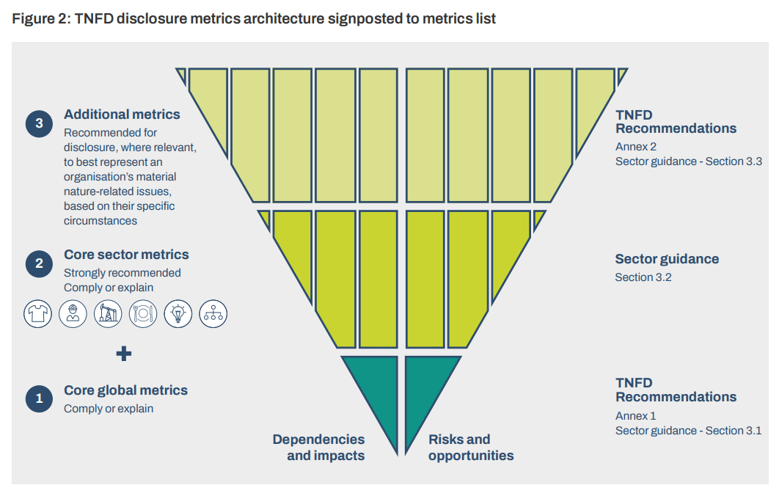
For alternative fuel pathways specifically, the guidance introduces sector-specific disclosure metrics that reporting entities are expected to address on a comply-or-explain basis. These metrics go beyond carbon accounting and require quantification of physical ecological impacts. Water stress indices, soil quality indicators, and biodiversity loss metrics are among the parameters cited as relevant to alternative fuel supply chains. A biofuel project drawing on irrigated feedstocks in a water-stressed catchment, for example, would be expected to disclose the volume and source of water consumed per unit of fuel produced, and to assess whether that extraction rate is sustainable relative to the catchment’s ecological water requirements.
The guidance explicitly recognises that the production of alternative fuels can carry severe ecological footprints even when those fuels deliver net GHG reductions relative to fossil fuel equivalents. Land-use change associated with feedstock cultivation, chemical pollution from fertiliser runoff and processing waste streams, and the disruption of freshwater systems through over-extraction are identified as impacts that cannot be offset by carbon credentials. This positions the TNFD framework as a check on what has become a recognised risk in ESG assessment: the substitution of one form of environmental harm for another under the banner of decarbonisation.
A critical feature of the framework is its value chain scope. Disclosure obligations do not rest solely with fuel producers. Downstream buyers and end users, including airlines, marine shipping operators, road transport fleets, and electric utilities purchasing fuel inputs, are expected to disclose core metrics for material nature-related issues arising from the alternative fuels they procure, even where those buyers have no operational control over production sites. This places organisations well removed from primary production within scope of the reporting framework, and it creates a chain of disclosure accountability that runs from feedstock sourcing through to final fuel consumption.
Australian context: CRFD, ASRS, and the regulatory intersection with TNFD guidance
Australia’s mandatory CRFD regime, established under the Treasury Laws Amendment (Financial Market Infrastructure and Other Measures) Act 2024 (Cth), creates the domestic regulatory environment into which the TNFD alternative fuels guidance now sits. The regime is being implemented in phases. Group 1 entities, being those with annual revenue of $500 million or more, total assets of $1 billion or more, or 500 or more employees, commenced mandatory reporting for financial years beginning on or after 1 January 2025. Group 2 entities, which include large entities and investment funds or asset owners with assets under management of $5 billion or more, commenced their mandatory reporting period on 1 July 2026. Group 3 entities, covering smaller large entities not captured under Groups 1 or 2, are scheduled to commence mandatory reporting for financial years beginning on or after 1 July 2027.
References and related sources
- Primary source: www.claytonutz.com
- allens.com.au
- linklaters.com
- themodernregulator.com
How iEnvi can help
iEnvi provides specialist consulting services relevant to this topic. Our team includes CEnvP Site Contamination Specialists with experience across contaminated land, groundwater, remediation, ecology, and regulatory compliance.
- iEnvi groundwater services
- iEnvi remediation and validation services
- iEnvi expert services and independent review services
This is an iEnvi Machete news summary. Prepared by iEnvi to summarise the source article for contaminated land, groundwater, remediation, approvals and site risk professionals.
Published: 28 Jul 2026
Need advice on this topic? Speak to an iEnvi expert at info@ienvi.com.au or 1300 043 684, or contact us online.
Need advice on this issue? iEnvi provides practical, senior-led environmental consulting across contaminated land, remediation, ecology and environmental risk.
Team credentials Ecological risk assessment Contaminated land services Remediation services Talk to iEnvi