
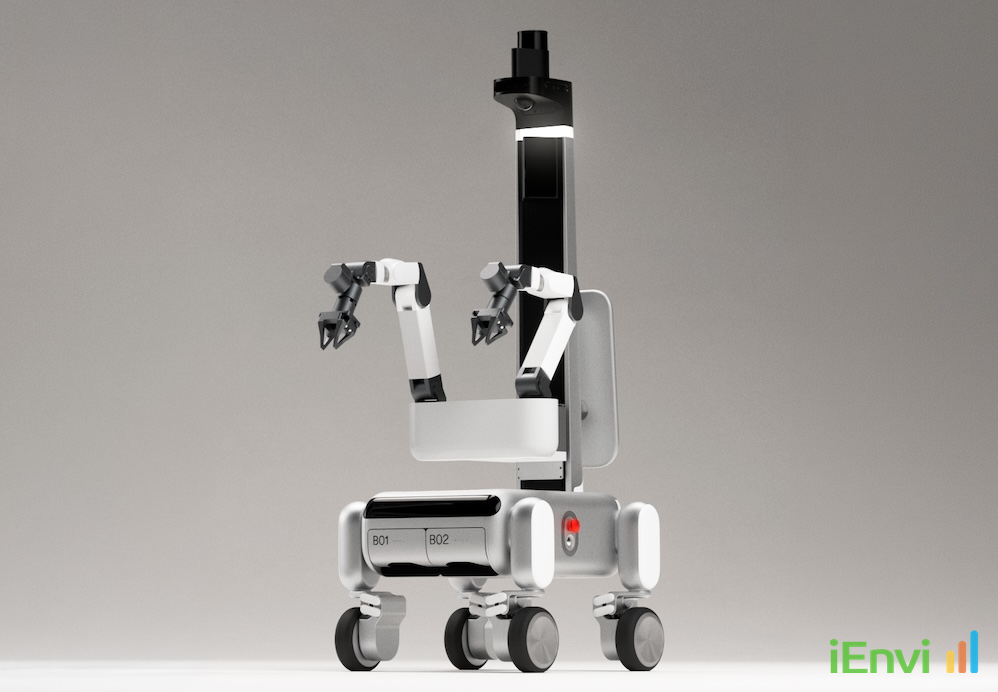
Proxie Gen 2 and the shift toward deployable physical AI in industrial operations
Collaborative Robotics Inc., known commercially as Cobot, unveiled its second-generation mobile collaborative robot, the Proxie Gen 2, at the Automate 2026 conference in Chicago on 22 June 2026. The announcement marks a deliberate pivot in the industrial robotics sector away from speculative humanoid platforms toward hardened, task-oriented physical AI that can be deployed in active operational environments without months of custom software development. For business leaders, operations managers, and technology decision-makers across logistics, healthcare, and industrial sectors, the launch signals that general-purpose mobile manipulation has crossed from laboratory demonstration into a commercially viable, scalable solution.
Cobot was founded by Brad Porter, formerly Vice President of Robotics at Amazon, where he oversaw the scaling of Amazon’s autonomous robot fleet to more than 500,000 units. That operational heritage is directly relevant to the design philosophy behind Proxie Gen 2. Porter’s team has engineered a platform intended not for trade show floors but for the realities of hospital corridors, manufacturing lines, and distribution centres where uptime, safety, and integration simplicity are non-negotiable priorities. The core innovation of Gen 2 is a capability Cobot calls “Autotasking,” which allows the robot to independently identify material handling tasks that need performing and execute them autonomously, without requiring a human dispatcher or a complex connection to enterprise IT systems.
The broader significance of this release lies in what it says about the current trajectory of physical AI commercialisation. While much of the public conversation around robotics has been dominated by bipedal humanoid prototypes from various technology companies, enterprise procurement teams have found those platforms difficult to justify on a return-on-investment basis. Proxie Gen 2 represents the opposite approach: a wheeled, stable, purpose-built platform optimised for reliability and rapid deployment rather than anthropomorphic form.
Key details of the Proxie Gen 2 platform and its Autotasking capability
The Autotasking system at the heart of Proxie Gen 2 is powered by an onboard real-time world model (RTWM). This model allows the robot to perceive its environment continuously, assess what material handling tasks are pending or required, and execute those tasks without waiting for an instruction from a human operator or a software dispatch system. The practical implication is that Cobot is claiming deployment timelines measured in days rather than months, bypassing the integration work that has historically made mobile robotics projects expensive and operationally disruptive. This is a technically substantive claim because it removes one of the most significant barriers to enterprise adoption, namely the need to align robot deployment with an organisation’s existing warehouse management systems, ERP platforms, or custom middleware.
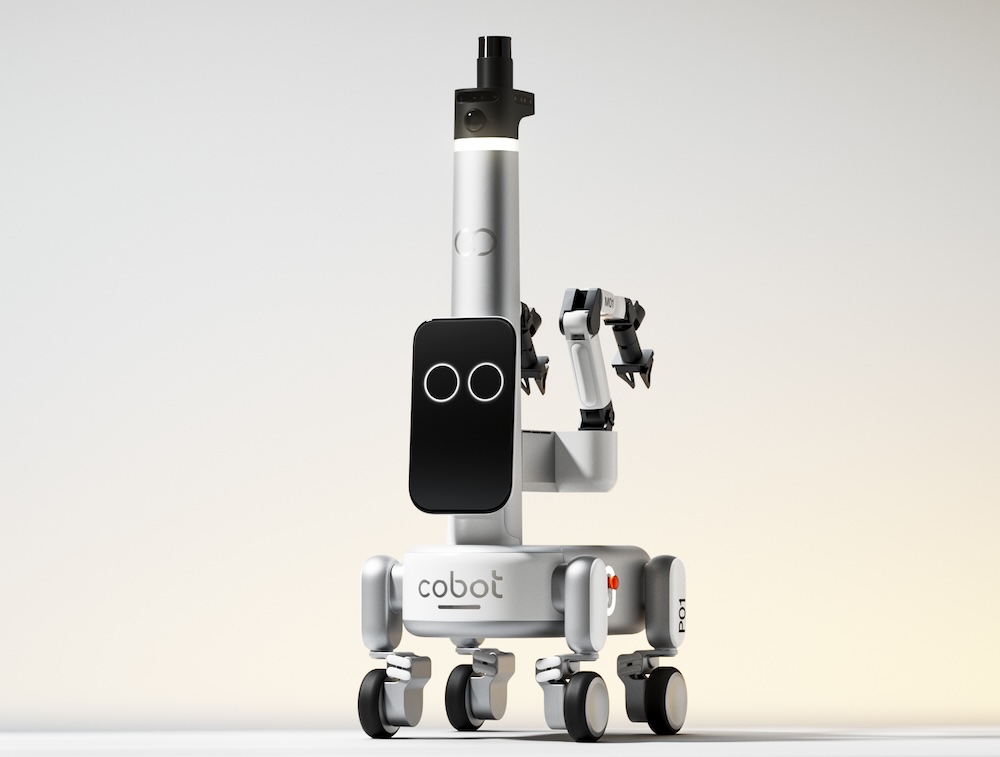
The engineering specifications of Gen 2 reflect lessons drawn directly from field deployment of the first-generation Proxie. The Gen 1 platform logged 12,627 operating hours across real-world deployments, including at the Mayo Clinic, during which it moved more than 18.1 million kilograms (approximately 40 million pounds) of material and saved workers an estimated 17 million steps. Gen 2 is built on more than 500 discrete improvements derived from that operational dataset. One of the most consequential mechanical changes is a 40 per cent reduction in total component count compared to Gen 1, which reduces potential failure points and simplifies maintenance in demanding industrial environments. The robot also features a more compact physical footprint, designed specifically to navigate tight hallways, doorways, and elevators that commonly constrain mobility in healthcare and manufacturing facilities.
In terms of raw physical capacity, Proxie Gen 2 can transport carts weighing up to approximately 680 kilograms (1,500 pounds) and lift loads of up to approximately 100 kilograms (220 pounds) on its modular vertical spine. Power is provided by lithium iron phosphate (LFP) batteries, a chemistry chosen specifically for its superior thermal stability and reduced fire risk in industrial settings compared to conventional lithium-ion chemistries. A self-swapping battery station supports continuous multi-shift operations, addressing the operational continuity requirement that has been a sticking point for battery-powered mobile platforms in 24-hour industrial environments.
The modular dual-arm attachment is among the most technically significant additions in Gen 2. The two-arm configuration allows the robot to perform bimanual manipulation tasks, which are tasks requiring coordinated use of both hands simultaneously, such as picking and placing irregular items, sorting, and assembly operations. The arms are trained using physical AI models, and Cobot has indicated that the training process for new tasks is designed to be rapid, allowing operators to expand the robot’s task repertoire without specialist robotics engineering knowledge. This modularity is architecturally important because it means the platform can be configured for different task profiles across different facilities without procuring entirely separate hardware.
Australian context: implications for industrial automation, operations management, and professional services
Australia’s industrial and logistics sectors are operating under sustained labour market pressure across healthcare, warehousing, mining services, and manufacturing. The Australian Bureau of Statistics has consistently reported tight conditions in skilled and semi-skilled trade categories, and wage growth in the transport, postal, and warehousing industries has outpaced broader inflation over recent years. Against this backdrop, platforms that offer rapid deployment, reduced reliance on specialist integration expertise, and demonstrable operational throughput gains are likely to attract serious evaluation from Australian procurement and operations teams looking to stabilise workforce costs and maintain service continuity across critical facilities.
References and related sources
- Primary source: www.therobotreport.com
- orthospinenews.com
- therobotreport.com
- automateshow.com
How iEnvi can help
iEnvi integrates technology and data-driven approaches into environmental consulting. We monitor AI and technology developments that affect how environmental professionals deliver services to clients.
This is an iEnvi Machete news summary. Prepared by iEnvi to summarise the source article for environmental professionals tracking AI, data, and technology developments that affect consulting and project delivery.
Published: 23 Jun 2026
Need advice on this topic? Speak to an iEnvi expert at info@ienvi.com.au or 1300 043 684, or contact us online.
Need advice on this issue? iEnvi provides practical, senior-led environmental consulting across contaminated land, remediation, ecology and environmental risk.
Contaminated land advice Remediation services Discuss your site Talk to iEnvi