
Overview
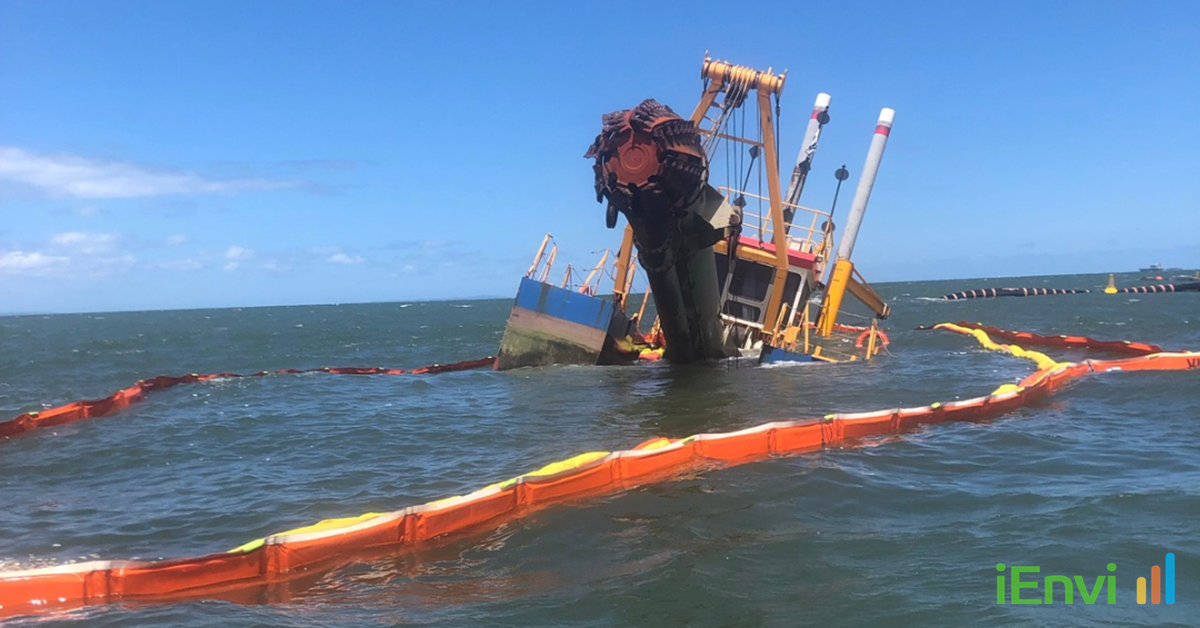
A multi-agency environmental response is underway in Port Phillip Bay after the dredger Kirra partially sank while at anchor about 1.8 km offshore from Middle Park Beach in Melbourne. No crew were aboard at the time. The submersion released diesel fuel into the bay, and a marine pollution containment boom has been placed around the semi-submerged hull to limit the spread of hydrocarbons. The City of Port Phillip published its update on 8 November 2026.
The Kirra was supporting the City of Port Phillip’s Middle Park Beach coastal renourishment project. The project is funded by Victoria’s Department of Energy, Environment and Climate Action (DEECA) and involves dredging approximately 37,000 m³ of sand. Parks Victoria is coordinating the emergency response with Environment Protection Authority Victoria (EPA Victoria), the Department of Transport and Planning (DTP), the City of Port Phillip and maritime authorities.
For Australian environmental professionals, the incident is a clear example of a risk that sits outside the usual focus of marine works planning. Dredging approvals and Construction Environmental Management Plans (CEMPs) typically concentrate on turbidity, sediment plumes and seagrass protection. The Kirra release came from a fuelled vessel sitting unattended at anchor, not from the dredging activity itself. Developers, councils, port authorities and their legal advisers should treat it as a prompt to check whether their spill contingency arrangements actually cover plant when nobody is on board.
Key details
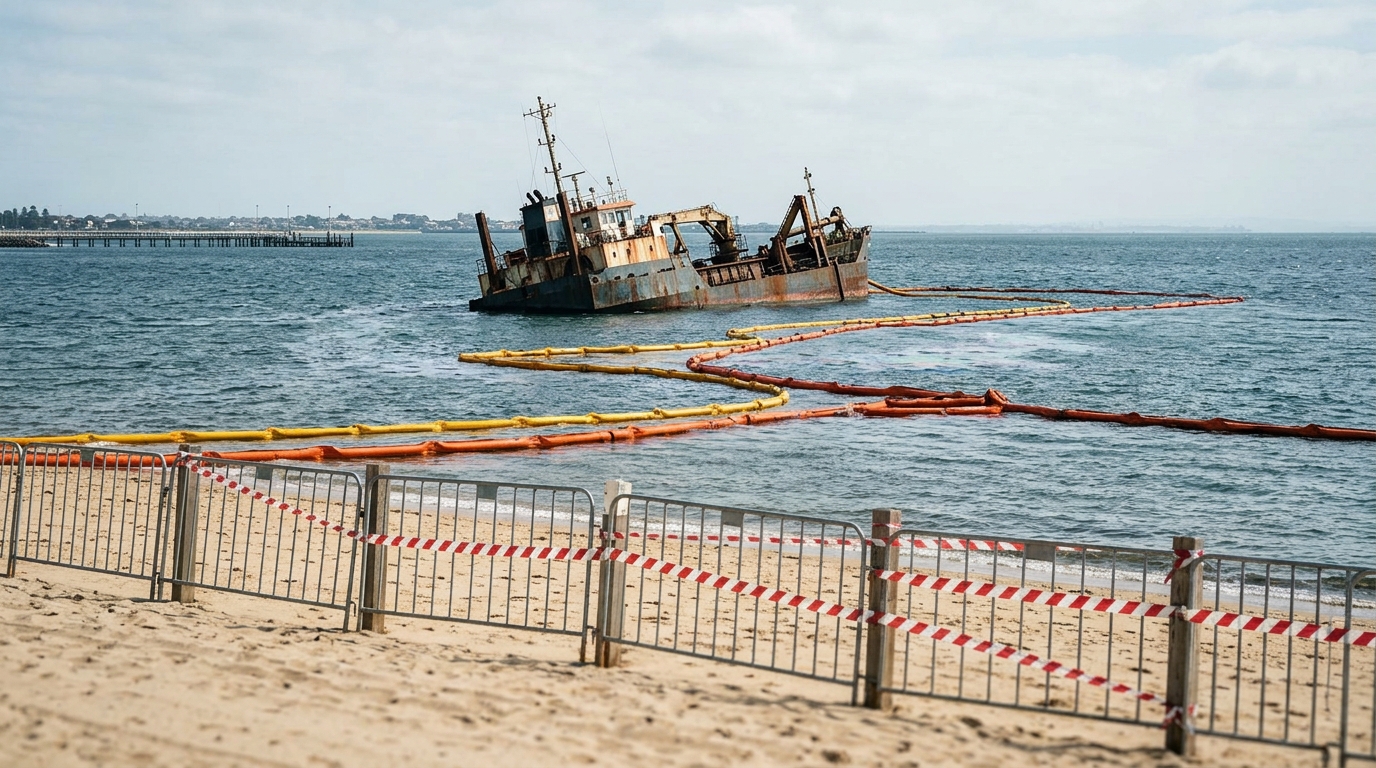
The vessel partially sank at anchor approximately 1.8 km off Middle Park Beach, and diesel entered the water as an active release. The response to date has included deployment of a containment boom around the vessel, ongoing hydrocarbon recovery operations, and diver surveys of the hull. Those surveys are being used to plan refloating and salvage. At the time of Council’s update, salvage was still in the planning stage.
Because tidal currents could carry hydrocarbons towards the shore, the City of Port Phillip closed South Melbourne Beach as a precaution between the South Melbourne Surf Life Saving Club and Kerferd Road Pier. EPA Victoria separately issued water contact warnings for people and pets across Middle Park and South Melbourne beaches. The advice is to avoid the water wherever there is a visible sheen, discolouration or a fuel odour. These are field indicators rather than laboratory thresholds, which is typical of the early phase of a fuel spill response before analytical data is available.
The primary Victorian legislation is the Environment Protection Act 2017 (Vic). Section 25 sets out the general environmental duty (GED), which requires a person engaging in an activity that may give rise to risks of harm to human health or the environment from pollution or waste to minimise those risks so far as reasonably practicable. Section 31 requires a person engaging in an activity that causes a pollution incident, or in management or control of the place or thing from which it occurs, to respond to the resulting harm and restore the affected area so far as reasonably practicable. Section 32 covers notification of notifiable incidents to EPA Victoria. Because the release involves oil from a vessel in state waters, the Pollution of Waters by Oil and Noxious Substances Act 1986 (Vic) also applies and carries its own reporting obligations. Navigational hazard and vessel safety matters fall under the Marine Safety Act 2010 (Vic) and the Marine Safety (Domestic Commercial Vessel) National Law Act 2012 (Cth).
For post-incident water quality assessment, a diesel release would ordinarily call for analysis of total recoverable hydrocarbons (TRH), BTEXN (benzene, toluene, ethylbenzene, xylenes and naphthalene) and polycyclic aromatic hydrocarbons (PAHs). The Environment Reference Standard (ERS) made under the 2017 Act identifies the environmental values for Port Phillip Bay segments, including water dependent ecosystems and species and water-based recreation. ANZG 2018 marine default guideline values are the usual comparison point for individual toxicants. For example, the marine default guideline value for naphthalene at the 95% species protection level is 70 µg/L. Beach reopening decisions, however, will rest on incident-specific advice from EPA Victoria and Council rather than on any single guideline comparison.
Australian context
Victoria’s framework places the GED at the centre of pollution prevention, and that duty applies continuously, including while a vessel is moored or anchored between shifts. In practice this means the duty holder cannot rely on the fact that no work was occurring when the incident happened. The GED is a preventative duty, so a key question for any investigation is likely to be whether reasonably practicable controls were in place before the release, such as fuel volume management, weather-based relocation triggers and pre-positioned spill equipment. Councils acting as project proponents should note that the GED is not limited to vessel operators; anyone engaging in the activity carries obligations proportionate to their control.
Comparable obligations exist in other states. In New South Wales, the Protection of the Environment Operations Act 1997 imposes pollution incident notification duties, and the Marine Pollution Act 2012 (NSW) governs oil discharges from vessels in state waters. Queensland relies on the general environmental duty under the Environmental Protection Act 1994 alongside the Transport Operations (Marine Pollution) Act 1995. South Australia’s Environment Protection Act 1993 and the Protection of Marine Waters (Prevention of Pollution from Ships) Act 1987 perform similar roles. Across all four jurisdictions, the common thread is a duty to prevent, notify and respond, with regulators able to pursue clean-up and cost recovery against the responsible party.
The assessment frameworks used after a spill are also largely consistent across the country. The ANZG 2018 guideline values apply nationally, so the same toxicant benchmarks used in Port Phillip Bay would be applied in Sydney Harbour or Moreton Bay. Where hydrocarbons reach beach sand or intertidal sediments, practitioners typically draw on the ANZG sediment quality guidelines and the National Environment Protection (Assessment of Site Contamination) Measure 1999. Larger marine spills can also draw on the National Plan for Maritime Environmental Emergencies, managed by the Australian Maritime Safety Authority (AMSA) with the states and the Northern Territory, which provides access to national response equipment and trained personnel.
References and related sources
- Primary source: www.portphillip.vic.gov.au
- thedcn.com.au
- coastherald.com
- NEPM Assessment of Site Contamination
- ANZG Water Quality Guidelines
- EPA Victoria
How iEnvi can help
iEnvi provides specialist consulting services relevant to this topic. Our team includes CEnvP Site Contamination Specialists with experience across contaminated land, groundwater, remediation, ecology, and regulatory compliance.
- iEnvi contaminated land investigation services
- iEnvi remediation and validation services
- iEnvi expert services and independent review services
This is an iEnvi Machete news summary. Prepared by iEnvi to summarise the source article for contaminated land, groundwater, remediation, approvals and site risk professionals.
Published: 10 Nov 2026
Need advice on this topic? Speak to an iEnvi expert at info@ienvi.com.au or 1300 043 684, or contact us online.
Need advice on this issue? iEnvi provides practical, senior-led environmental consulting across contaminated land, remediation, ecology and environmental risk.
Team credentials Environmental management plans Contaminated land services Remediation services Talk to iEnvi