
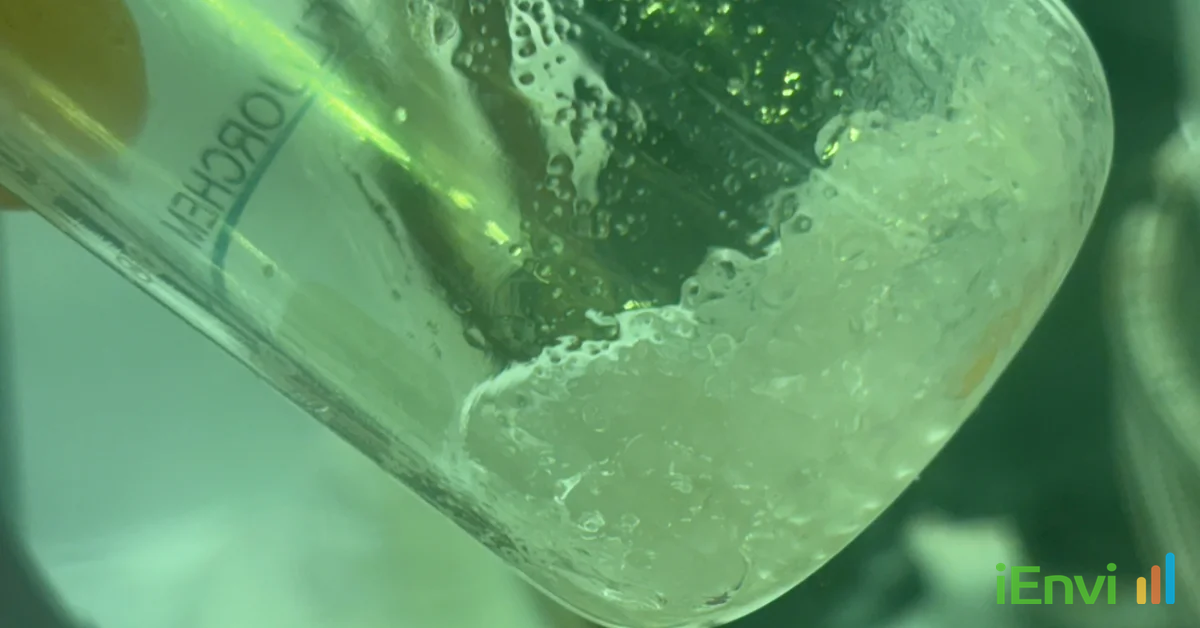
Eagle Farm Fuel Terminal PFAS Enforcement Action
On 30 April 2026, Queensland environmental regulators issued a strict environmental enforcement order against the operator of a fuel terminal at Eagle Farm, Brisbane, following the detection of highly elevated per- and polyfluoroalkyl substance (PFAS) concentrations in the site’s soil, groundwater, and washdown infrastructure. Groundwater sampling confirmed total PFAS concentrations reaching 93.9 micrograms per litre (µg/L), with the specific compounds detected including perfluorooctane sulfonate (PFOS), perfluorohexane sulfonate (PFHxS), and perfluorooctanoic acid (PFOA). The suspected source is legacy aqueous film-forming foam (AFFF) used at the facility for firefighting purposes, a common historical practice at fuel terminals, aviation facilities, and industrial sites across Australia that is now generating significant contaminated land liability.
The enforcement action is significant for reasons that extend well beyond the site boundary. Eagle Farm sits adjacent to the Brisbane River, one of south-east Queensland’s most ecologically and commercially significant waterways, and regulators have mandated a comprehensive investigation of all potential off-site migration pathways. This places the case directly within the framework of the Australian and New Zealand Guidelines for Fresh and Marine Water Quality (ANZG 2018), which provide the default guideline values (DGVs) for aquatic ecosystem protection that Queensland authorities are applying as enforceable compliance thresholds. The site operator is required to deliver a final investigation and management report by 2027.
For environmental practitioners, site owners, property lawyers, and corporate advisers working on contaminated land transactions or regulatory matters, this case marks a clear escalation point. Regulatory scrutiny of legacy PFAS has historically concentrated on Commonwealth defence bases and major airports. The Eagle Farm enforcement order signals that Queensland’s Department of Environment is now applying the same rigour to commercial and industrial fuel facilities, with real consequences for operators who have not proactively characterised historical AFFF use under the current National Environmental Management Plan for PFAS (PFAS NEMP 3.0), published in March 2025.
Key Details of the Eagle Farm PFAS Enforcement Order
The groundwater contamination detected at Eagle Farm is severe by any applicable benchmark. Total PFAS concentrations of 93.9 µg/L in groundwater represent a concentration many orders of magnitude above the ANZG 2018 freshwater default guideline values for aquatic ecosystem protection. To put this in context, the ANZG 2018 framework sets 99th percentile species protection (PC99) values for PFOS in freshwater at 0.00013 µg/L and 95th percentile species protection (PC95) values at 0.0014 µg/L. Reported sampling at the Eagle Farm site confirmed that PFOS concentrations consistently breached both the PC95 and PC99 DGVs, meaning that even at the most protective level of the guideline hierarchy, exceedances were recorded. These are not marginal exceedances of secondary or screening-level criteria; they represent fundamental failures against the most stringent ecological protection thresholds available in Australian regulatory guidance.
The three PFAS compounds detected, specifically PFOS, PFHxS, and PFOA, are the primary constituents of legacy AFFF formulations used in Australia prior to the phase-out of long-chain PFAS chemistry. PFOS is classified as a persistent organic pollutant under the Stockholm Convention and is subject to specific focus under PFAS NEMP 3.0. PFHxS was listed under the Stockholm Convention in 2022, adding further regulatory weight to its presence in site investigations. PFOA has been a listed substance since 2019. The co-occurrence of all three compounds is entirely consistent with AFFF-sourced contamination plumes characterised at fuel terminals, fire training areas, and aviation refuelling facilities across Australia, and should be anticipated as a standard finding at any site with a history of foam use.
The enforcement order issued under the Queensland Environmental Protection Act 1994 compels the operator to conduct extensive further sampling across the site and to investigate all potential migration pathways. This explicitly includes the site’s washdown facilities, which represent a direct pathway for PFAS-laden water to enter stormwater infrastructure and, ultimately, the Brisbane River. The groundwater-surface water interface is a particularly critical pathway in this case given the site’s proximity to the river. The requirement for a final report to be delivered in 2027 establishes a defined regulatory timeline that will likely include iterative reporting obligations, works approvals, and potential remediation planning milestones under the oversight of the Queensland Department of Environment.
The enforcement mechanism used here, an environmental enforcement order under the Queensland Environmental Protection Act 1994, is a significant regulatory instrument. It is not a voluntary undertaking or an information-gathering notice. It is a legally binding directive that carries penalties for non-compliance and can escalate to prosecutions or enforceable undertakings if the operator fails to meet its terms. The breadth of the investigation required, covering soil, groundwater, surface water, and washdown infrastructure, reflects the regulatory expectation under PFAS NEMP 3.0 that site investigations for AFFF-related contamination must adopt a comprehensive, multi-media approach anchored to a dynamic conceptual site model (CSM).

National PFAS Regulatory Framework and Industry Liability
Australia’s PFAS NEMP 3.0, finalised in March 2025, is the current national framework governing the assessment, investigation, and management of PFAS contamination.
References and related sources
- Primary source: ascotnews.com.au
- PFAS National Environmental Management Plan (NEMP)
- ANZG Water Quality Guidelines
How iEnvi can help
iEnvi provides specialist consulting services relevant to this topic. Our team includes CEnvP Site Contamination Specialists with experience across contaminated land, groundwater, remediation, ecology, and regulatory compliance.
- iEnvi contaminated land services
- iEnvi remediation and validation services
- iEnvi expert services and independent review services
This is an iEnvi Machete news summary. Prepared by iEnvi to summarise the source article for contaminated land, groundwater, remediation, approvals and site risk professionals.
Published: 01 May 2026
Need advice on this topic? Speak to an iEnvi expert at info@ienvi.com.au or 1300 043 684, or contact us online.
Need advice on this issue? iEnvi provides practical, senior-led environmental consulting across contaminated land, remediation, ecology and environmental risk.
Contaminated land advice Remediation services Groundwater services Ecological assessment Talk to iEnvi