
Addressing Mercury Contamination on Australian Sites
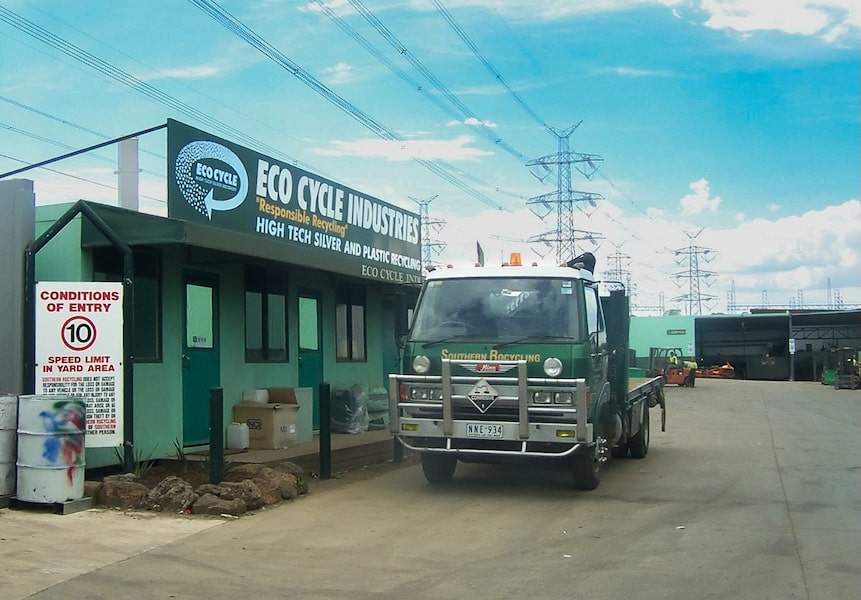
For environmental consultants, site developers, and regulatory authorities across Australia, managing mercury contamination has historically been one of the most persistent challenges in contaminated land management. As a highly toxic, persistent heavy metal that bioaccumulates in the food chain and volatilises at room temperature, mercury poses exceptional risks to human health and ecological receptors. For three decades, EcoCycle has operated as a critical pillar of Australia’s hazardous waste infrastructure, celebrating 30 years of advancing the nation’s domestic capacity for specialist hazardous waste treatment and mercury recovery. This operational milestone marks a significant evolution in how the Australian remediation industry manages complex, high-risk waste streams without relying on international export or indefinite onsite storage.
Historically, site managers faced a regulatory and logistical bottleneck when dealing with elemental mercury or heavily contaminated materials recovered during industrial decommissioning, gasworks remediation, or laboratory upgrades. The lack of a sophisticated, high-capacity local treatment pathway often meant that the only practical options were prolonged onsite containment or the highly complex process of exporting hazardous waste to international facilities under the Basel Convention. The development and continuous refinement of local processing facilities over the past 30 years have transformed this landscape, allowing practitioners to manage these difficult wastes under strict Australian environmental regulations while reducing long-term liability for site owners and developers.
Having a local, fully licensed facility means that Australian environmental professionals can design and execute remediation projects with a clear, definitive exit strategy. The domestic processing of mercury-containing wastes ensures that harmful elements are permanently removed from the commercial and ecological lifecycles, reducing the risk of contamination spreading to surrounding communities or ecosystems. This capability supports urban renewal projects on historical industrial land where mercury was once widely used in manufacturing, chemical processing, and resource extraction, making domestic recycling a cornerstone of sustainable development.
The Technical Process of Thermal Desorption and Distillation
The technical process of mercury recovery relies heavily on thermal desorption and vacuum distillation, technologies that take advantage of the unique physical properties of elemental mercury. Mercury possesses a relatively low boiling point of 356.7 degrees Celsius, allowing it to be vapourised and separated from non-volatile matrices such as soils, sludges, crushed glass, and dental amalgam. Within specialised domestic facilities, contaminated materials are heated under a vacuum to lower the boiling point further, ensuring efficient vapourisation while preventing oxidation. The volatilised mercury is then directed through a multi-stage condensation system where it is cooled back into high-purity liquid elemental mercury, often exceeding 99.9% purity. The remaining solid matrix, now free of hazardous volatile mercury, can typically be classified as general solid waste or clean fill, depending on other contaminant concentrations, and safely disposed of or reused.
From a regulatory perspective, managing these processes requires strict adherence to waste classification guidelines and environmental protection policies across different states. Under the New South Wales Environmental Protection Authority waste classification guidelines, and equivalent frameworks in Victoria, Queensland, and South Australia, mercury-bearing wastes are subject to highly stringent concentration thresholds. For example, the contaminant threshold value for mercury in waste destined for landfill without treatment is extremely low, meaning that high-concentration wastes must undergo pre-treatment to satisfy the Toxicity Characteristic Leaching Procedure limits. By utilising advanced distillation technology, domestic processors can reduce the concentration of mercury in the host material to levels well below the restricted solid waste or hazardous waste thresholds, facilitating a compliant disposal or recycling pathway.
The domestic processing facility handles a wide array of specialist mercury-containing waste streams that are common across municipal, industrial, and medical sectors. These streams include fluorescent lighting tubes, which contain approximately 3 to 15 mg of mercury per tube, dental amalgam waste, commercial thermometers, barometers, and specialised industrial catalysts used in historical manufacturing processes. Processing these items locally ensures that tonnes of toxic elemental mercury are prevented from entering municipal landfills where they could otherwise methylate into highly toxic methylmercury, which poses severe ecological risks to aquatic systems and groundwater resources.
Modern mercury recovery operations also incorporate advanced air pollution control systems to manage fugitive emissions during the treatment process. Because mercury is highly volatile, the process off-gases must be passed through specialised sulfur-impregnated activated carbon beds, which chemically bind any residual mercury vapours to prevent their release into the atmosphere. This level of environmental control is critical for maintaining compliance with state-based clean air regulations and industrial emission licences, ensuring that the recovery process itself does not contribute to local environmental degradation or risk the health of nearby communities.
Australia’s Alignment with the Minamata Convention
The presence of a mature, domestic mercury recycling infrastructure is directly linked to Australia’s international treaty commitments, most notably the Minamata Convention on Mercury. Australia signed the convention in 2013 and formally ratified it on 7 December 2021, with the treaty driving stricter national controls on mercury import, export, and manufacture.
References and related sources
- Primary source: wastemanagementreview.com.au
How iEnvi can help
iEnvi provides specialist consulting services relevant to this topic. Our team includes CEnvP Site Contamination Specialists with experience across contaminated land, groundwater, remediation, ecology, and regulatory compliance.
- iEnvi remediation services
- iEnvi contaminated land investigation services
- iEnvi expert services and independent review services
This is an iEnvi Machete news summary. Prepared by iEnvi to summarise the source article for contaminated land, groundwater, remediation, approvals and site risk professionals.
Published: 17 Jun 2026
Need advice on this topic? Speak to an iEnvi expert at info@ienvi.com.au or 1300 043 684, or contact us online.
Need advice on this issue? iEnvi provides practical, senior-led environmental consulting across contaminated land, remediation, ecology and environmental risk.
Team credentials Contaminated land services Remediation services Groundwater services Talk to iEnvi