
Overview
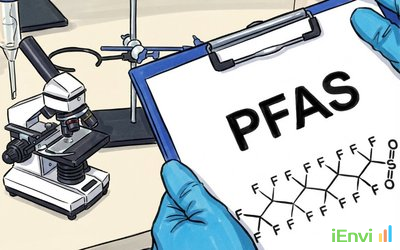
Environmental Clean Technologies (ASX: ECT) announced on 7 April 2026 that it has expanded its existing licence agreement with Rice University to apply Flash Joule Heating (FJH) technology to PFAS-contaminated adsorbent materials, specifically Granular Activated Carbon (GAC). Independent peer-reviewed research from Rice University has demonstrated that FJH achieves greater than 99.9% removal of tested PFAS compounds from contaminated carbon media under controlled laboratory conditions. This expansion extends ECT’s Rapid Electrothermal Mineralisation (REM) technology platform beyond its original focus on PFAS-contaminated soils into the treatment of spent water filtration materials, a shift that has direct and immediate relevance for water authorities, remediation consultants, and facility operators across Australia.
The significance of this development lies not just in the destruction efficiency figures, but in what it means for the back end of PFAS water treatment systems. GAC filtration is the most widely deployed technology for stripping PFAS from contaminated groundwater and drinking water supplies. It is in use at hundreds of sites across Australia, including defence installations, airport precincts, and industrial facilities operating under site management orders and remediation action plans. The problem the industry has never adequately solved is what to do with the spent carbon once it is saturated with concentrated PFAS. That material has historically required transport to specialised high-temperature incineration facilities, a pathway that is becoming increasingly scrutinised by regulators due to the risk of incomplete combustion and fugitive airborne PFAS emissions.
For environmental practitioners advising clients on PFAS remediation strategy under the PFAS National Environmental Management Plan (NEMP) 3.0, published in March 2025, this technology represents a materially different approach to secondary waste management. The potential to treat spent GAC on-site, or at a centralised facility using FJH, could potentially change how lifecycle liability is calculated for long-running pump-and-treat remediation programmes.
Key details of Flash Joule Heating applied to PFAS-contaminated GAC
Flash Joule Heating is an electrothermal process in which a high-voltage electrical current is passed directly and rapidly through a conductive material. In the case of GAC, the carbon matrix itself acts as the resistive conductor. The electrical current causes an almost instantaneous and extreme temperature spike within the material, sufficient to break the carbon-fluorine (C-F) bonds that make PFAS compounds so persistent in the environment. The C-F bond is one of the strongest bonds in organic chemistry, which is precisely why PFAS resist conventional biological and chemical degradation. The thermal energy delivered by FJH is targeted and intense enough to achieve defluorination and mineralisation of the contaminant load without requiring the sustained high-temperature combustion chambers of a conventional incinerator.
The peer-reviewed research underpinning this licence expansion confirms destruction efficiencies exceeding 99.9% for tested PFAS compounds including perfluorooctanoic acid (PFOA) and perfluorooctane sulfonate (PFOS) within contaminated carbon media. These are the two legacy compounds that attract the most stringent guideline values globally and are subject to the tightest scrutiny under Australian frameworks. The research was conducted under controlled conditions, and practitioners should note that performance data from controlled laboratory matrices does not automatically translate without question to the heterogeneous, multi-compound PFAS mixtures typically present in field-derived GAC from operational groundwater treatment systems. The full spectrum of PFAS compounds in spent GAC from Australian sites will commonly include short-chain precursors, fluorotelomer compounds, and sulfonamide-based PFAS, not all of which may have been included in the tested compound set.
A critical technical distinction between FJH and conventional thermal treatment is the energy intensity and processing time. Incineration of PFAS-laden materials requires sustained temperatures typically above 1,000 °C for sufficient dwell time to achieve complete destruction, and even then the process is susceptible to incomplete combustion if temperature gradients are not uniform throughout the load. FJH delivers its thermal energy in milliseconds directly to the conductive substrate, which theoretically reduces the opportunity for partial combustion products and airborne PFAS release. This distinction is particularly important given the growing regulatory and community concern over incineration facilities as potential point sources of PFAS air deposition.
The expansion of the Rice University licence agreement also raises the prospect of carbon regeneration. Because the FJH process targets the contaminant adsorbed to the carbon rather than the carbon structure itself, there is a theoretical pathway in which the GAC could be regenerated for reuse following treatment. If this proves viable at scale, it would further reduce the cost and logistical burden of spent carbon management by extending the service life of the filtration media itself. This remains a developing area of the technology and has not yet been demonstrated at commercial scale in field conditions, but it represents a meaningful potential operational advantage over disposal-only pathways.
Australian context: PFAS NEMP 3.0, spent GAC disposal, and remediation obligations
Australia’s PFAS NEMP 3.0, published by the heads of EPAs in March 2025, substantially raises the bar for PFAS remediation practice. The plan reinforces the waste hierarchy principle and places a clear priority on destruction over containment or landfill disposal for PFAS-laden
References and related sources
- Primary source: smallcaps.com.au
- https://smallcaps.com.au/environmental-clean-technologies-expands-fjh-platform-d
- PFAS National Environmental Management Plan (NEMP)
How iEnvi can help
iEnvi provides specialist consulting services relevant to this topic. Our team includes CEnvP Site Contamination Specialists with experience across contaminated land, groundwater, remediation, ecology, and regulatory compliance.
- iEnvi remediation services
- iEnvi groundwater services
- iEnvi expert services and independent review services
This is an iEnvi Machete news summary. Prepared by iEnvi to summarise the source article for contaminated land, groundwater, remediation, approvals and site risk professionals.
Published: 08 Apr 2026
Need advice on this topic? Speak to an iEnvi expert at info@ienvi.com.au or 1300 043 684, or contact us online.
Need advice on this issue? iEnvi provides practical, senior-led environmental consulting across contaminated land, remediation, ecology and environmental risk.
Team credentials Groundwater investigation and treatment Environmental management plans Contaminated land advice Talk to iEnvi