
Overview
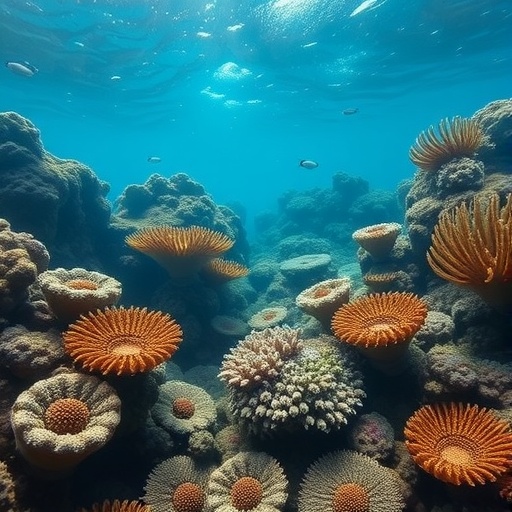
A landmark scientific study published in the journal Science Advances in May 2026 has redefined our understanding of marine evolution and ecological baselines off the coast of Western Australia. Led by researchers at Edith Cowan University, the study reveals that the North West Shelf was the primary evolutionary nursery for modern global marine biodiversity. During the Miocene epoch, approximately 10 to 20 million years ago, this region hosted the Great Indo-Australian Miocene Reef System, an ancient habitat that rivalled the modern Great Barrier Reef in both scale and biological complexity. This discovery shifts the scientific consensus on how marine life diversified, establishing that physical habitat expansion, rather than climatic shifts alone, drove the evolution of the marine species we see today.
For Australian environmental professionals, including offshore developers, environmental lawyers, resources companies and marine consultants, this research introduces a new ecological baseline. The modern remnants of this ancient Miocene system, which include Ashmore Reef, Scott Reef and the Rowley Shoals, can no longer be evaluated merely as isolated coral habitats. Instead, they must be recognised as the direct descendants of a globally significant evolutionary engine. This elevates their conservation value and alters the risk profile for any offshore commercial activities, decommissioning projects, or infrastructure developments planned within the vicinity of the North West Shelf.
As regulatory scrutiny intensifies around offshore biodiversity and marine ecosystem integrity, understanding the deep-time ecological heritage of project areas is becoming a core requirement for successful approvals. This research provides the peer-reviewed data that regulators will use to assess long-term cumulative impacts. Proponents operating in Western Australian waters must modernise their environmental impact assessment frameworks to account for this newly recognised evolutionary significance, ensuring that spatial conservation and habitat complexity are prioritised from the earliest phases of project design.
Key details
The research published in Science Advances used a methodology that integrated geological records, fossil evidence and modern genetic data to reconstruct the historical extent and biological influence of the Great Indo-Australian Miocene Reef System. By analysing these datasets, the Edith Cowan University research team mapped the spatial distribution of these ancient reefs. Their findings demonstrate that during the Miocene epoch, between 10 and 20 million years ago, the region between northern Australia and South-East Asia experienced the largest coral reef expansions observed anywhere on Earth over the past 100 million years. This physical expansion created an abundance of complex, three-dimensional marine habitats.
A key finding of the study is the challenge it presents to traditional evolutionary models, which have long prioritised temperature and climate as the primary drivers of marine species diversification. While climate certainly played a role, the Edith Cowan University researchers demonstrated that the physical structural complexity of the reef system was the dominant catalyst for speciation. The vast network of shallow-water lagoons, reef slopes and carbonate platforms provided countless ecological niches. This structural variety allowed ancestral marine organisms to adapt, specialise and diversify at an accelerated rate, eventually colonising marine ecosystems across the globe.
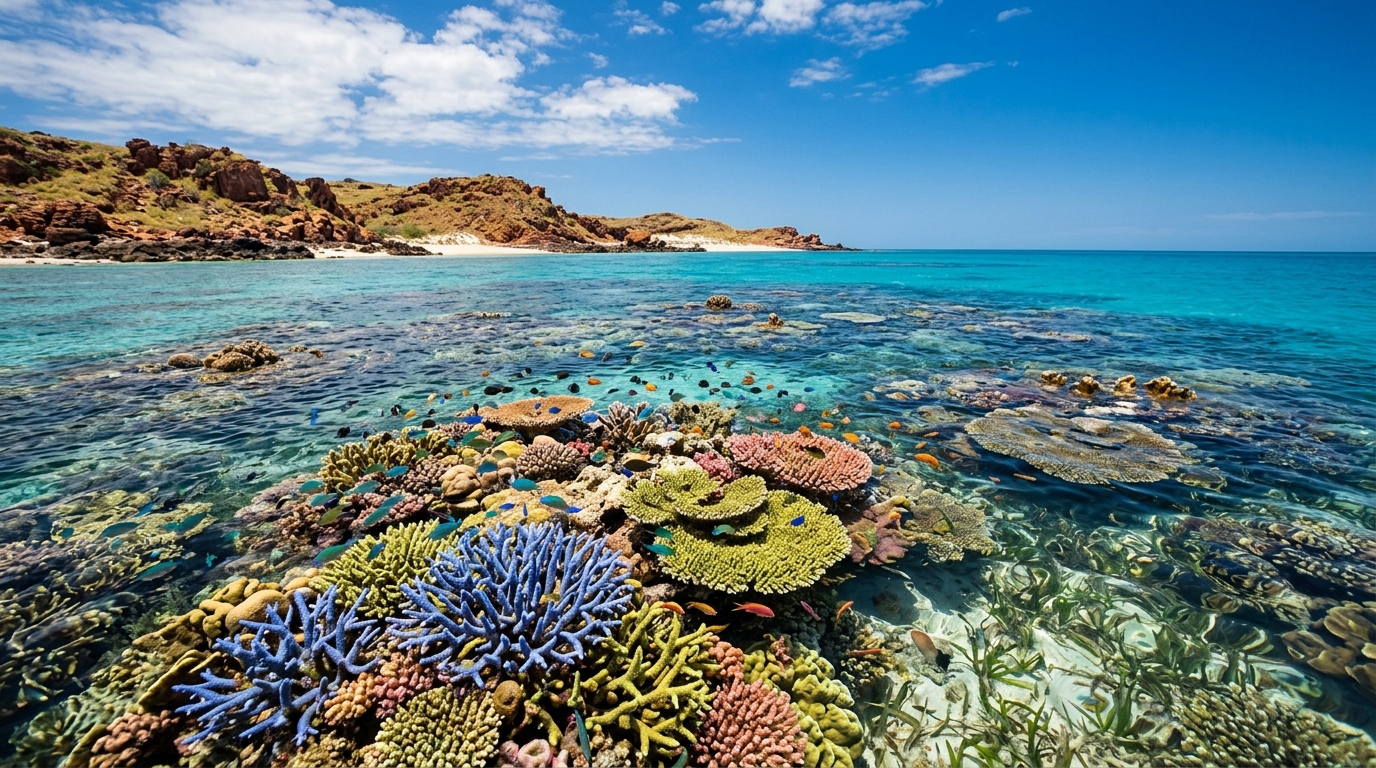
Today, the physical remnants of this ancient evolutionary cradle exist as isolated oceanic reef systems on the outer edge of the North West Shelf. These include Ashmore Reef, Scott Reef and the three atolls of the Rowley Shoals. The study confirms that these modern features are not ecologically independent formations but are the direct biological legacy of a continuous, large-scale Miocene reef complex. The genetic lineages of many modern fish, mollusc and coral species inhabiting the Indo-Pacific region can be traced directly back to the evolutionary processes that occurred within this ancient Western Australian system millions of years ago.
The scale of the Great Indo-Australian Miocene Reef System was immense, occupying thousands of square kilometres of what is now the Australian continental shelf. The geological data indicates that the subsidence of the North West Shelf, combined with warm sea surface temperatures and favourable ocean currents during the Miocene, allowed for continuous carbonate deposition and reef growth. This structural framework survived major geological transitions, leaving behind a highly complex benthic topography that continues to support some of the most biodiverse marine communities in Australian waters today.
Australian context
The revelation that the North West Shelf served as a global evolutionary cradle has direct consequences for the administration of Australian environmental legislation. Principal among these is the Environment Protection and Biodiversity Conservation Act 1999 (the EPBC Act), which governs Matters of National Environmental Significance (MNES). Remnant systems such as Ashmore Reef and the Rowley Shoals are already recognised under various Commonwealth and state protective frameworks, but this research provides a powerful scientific argument for regulators to demand higher standards of protection. Under the EPBC Act, impacts on Commonwealth marine areas and threatened or migratory species must be rigorously assessed, and this new data effectively raises the baseline of what is considered an acceptable impact.
In addition to federal legislation, the findings intersect with state-based regulatory guidelines, such as those administered b
References and related sources
- Primary source: scienmag.com
- EPBC Act
How iEnvi can help
iEnvi provides specialist consulting services relevant to this topic. Our team includes CEnvP Site Contamination Specialists with experience across contaminated land, groundwater, remediation, ecology, and regulatory compliance.
- iEnvi contaminated land investigation services
- iEnvi remediation and validation services
- iEnvi expert services and independent review services
This is an iEnvi Machete news summary. Prepared by iEnvi to summarise the source article for contaminated land, groundwater, remediation, approvals and site risk professionals.
Published: 21 May 2026
Need advice on this topic? Speak to an iEnvi expert at info@ienvi.com.au or 1300 043 684, or contact us online.
Need advice on this issue? iEnvi provides practical, senior-led environmental consulting across contaminated land, remediation, ecology and environmental risk.
Team credentials Contaminated land services Remediation services Groundwater services Talk to iEnvi