
Overview
On the night of 9 June 2022, a major fire broke out at the DGL Group (Envirostore) chemical facility on Nathan Drive in Campbellfield, Victoria. The facility is EPA-licensed to manage hazardous materials including heavy metals and other chemical waste streams. Fire Rescue Victoria deployed 70 firefighters and used substantial volumes of water to bring the blaze under control. While EPA Victoria declared localised air quality safe by the morning of 10 June 2022, the environmental consequences of the incident were far from resolved. The volume of firewater generated during suppression efforts overwhelmed on-site containment and breached the stormwater system, flowing directly into Merlynston Creek and travelling downstream into Jack Roper Reserve.
On 12 June 2022, EPA Victoria published water quality testing results from samples collected by its science teams from waterways directly downstream of the facility. The results confirmed significant chemical contamination characterised by elevated copper concentrations and markedly high Chemical Oxygen Demand (COD). In response, Melbourne Water and DGL Group deployed eduction trucks to siphon contaminated water from the drainage network to prevent further downstream migration. Health alerts remain active, warning the community to avoid all contact with Merlynston Creek and the lake at Jack Roper Reserve. A fishing ban is also in force for these waterbodies. EPA Victoria has issued Information Gathering Notices to DGL Group under Section 165 of the Environment Protection Act 2017 (Vic) to investigate the facility’s fire risk management and emergency containment protocols.
For environmental practitioners, site owners, and their legal advisers, this incident is a serious case study in how a licensed and regulated industrial facility can generate an acute off-site contamination event within hours. It raises direct questions about the adequacy of firewater containment infrastructure across industrial Victoria and has broader implications for how emergency response planning is integrated into environmental management frameworks nationally.
Key details of the Campbellfield firewater contamination event
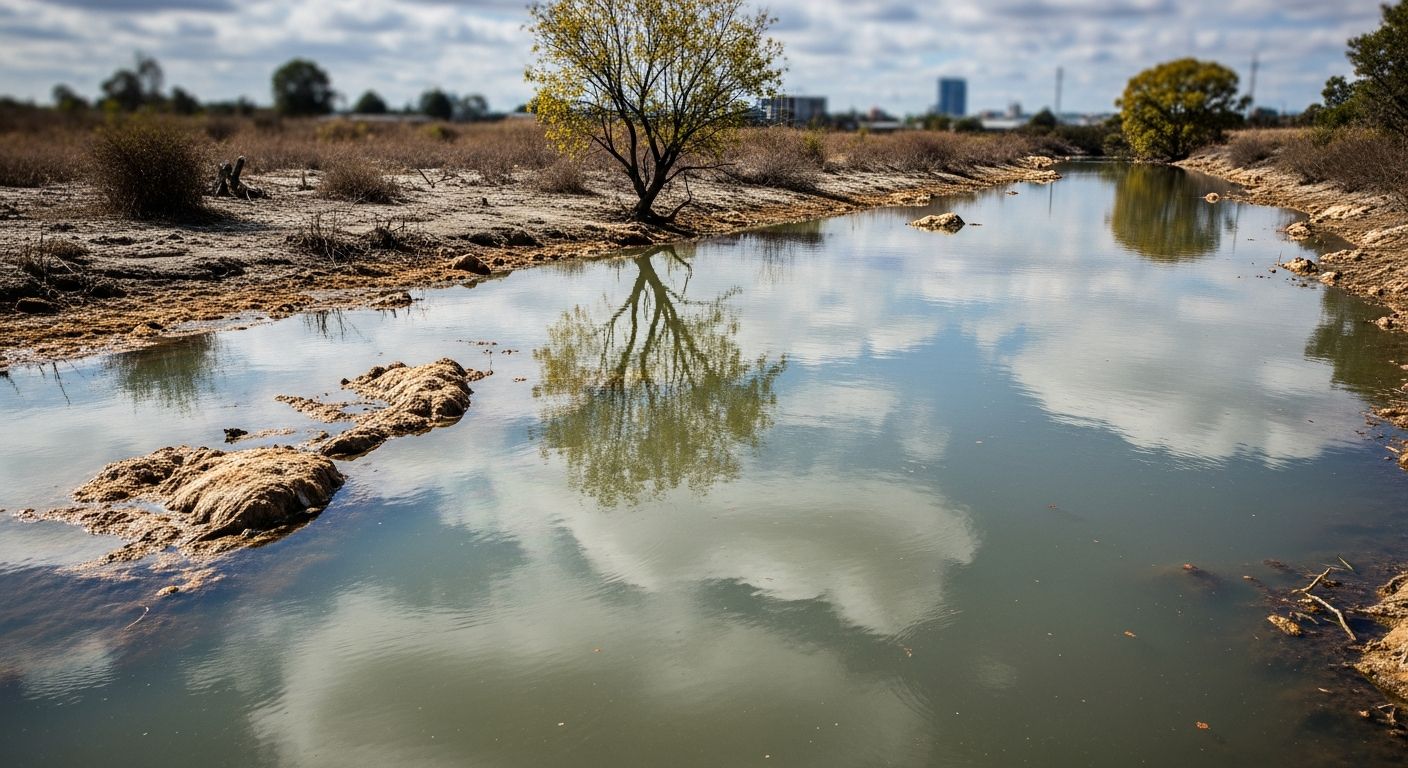
The DGL Group facility at Campbellfield is an EPA-licensed chemical management site handling hazardous materials including heavy metals. When the fire broke out on the night of 9 June 2022, the volume of water required for suppression was significant enough to overwhelm the site’s stormwater management infrastructure. The contaminated firewater, carrying dissolved and suspended chemical constituents from the burning facility, entered the municipal stormwater drainage network and discharged into Merlynston Creek. From there, the plume migrated downstream to Jack Roper Reserve, a publicly accessible green space with a lake. The speed of the downstream migration highlights how rapidly surface water contamination events can escalate once containment is lost.
EPA Victoria’s water quality testing, published on 12 June 2022, identified two primary contamination indicators in the downstream waterway samples. First, elevated levels of copper were confirmed. Copper is acutely toxic to freshwater aquatic organisms even at relatively low concentrations. Under the Australian and New Zealand Guidelines for Fresh and Marine Water Quality (ANZG 2018), the default guideline value (DGV) for copper in freshwater ecosystems for 95 percent species protection is 1.4 micrograms per litre (µg/L). Post-incident concentrations exceeding this threshold, even marginally, represent a material risk to in-stream biota including invertebrates and fish. Second, the testing confirmed significantly elevated Chemical Oxygen Demand. High COD indicates a substantial loading of organic and chemical pollutants that exert a biochemical oxygen demand on the water column, reducing dissolved oxygen to levels that can cause fish kills and suppress aquatic ecosystem function. The combination of copper toxicity and oxygen depletion represents a compound stressor on the affected creek system.
The regulatory response has been twofold. EPA Victoria issued Information Gathering Notices to DGL Group under Section 165 of the Environment Protection Act 2017 (Vic). These notices compel the recipient to provide information relevant to the agency’s investigation of fire risk management and compliance with environmental protection obligations. This is a formal investigative tool that precedes potential enforcement action, including clean-up notices, pollution abatement notices, or prosecution. Separately, Melbourne Water and DGL deployed eduction trucks to physically remove contaminated water from the drainage system. This intervention was designed to reduce the mass loading of contaminants in the network and limit further plume migration, though by the time of deployment, downstream impacts to Merlynston Creek and Jack Roper Reserve had already been confirmed.
The General Environmental Duty (GED), established under Section 25 of the Environment Protection Act 2017 (Vic), is central to the regulatory framing of this incident. The GED is a proactive, legally binding obligation requiring any person or organisation whose activities create a risk of harm to human health or the environment to understand those risks and take reasonably practicable steps to eliminate or reduce them. Critically, the GED applies regardless of whether a facility holds an EPA licence. Holding a licence does not constitute compliance with the GED; rather, it sets a regulatory baseline that the GED obligation sits above. A failure to maintain adequate firewater containment that results in off-site contaminant migration is a prima facie breach of the GED, exposing the operator to both regulatory enforcement and civil liability for clean-up costs.
Australian context: firewater containment and surface water quality frameworks
References and related sources
- Primary source: www.epa.vic.gov.au
- epa.sa.gov.au
- epa.vic.gov.au
- epa.vic.gov.au
- ANZG Water Quality Guidelines
- EPA Victoria
How iEnvi can help
iEnvi provides specialist consulting services relevant to this topic. Our team includes CEnvP Site Contamination Specialists with experience across contaminated land, groundwater, remediation, ecology, and regulatory compliance.
- iEnvi contaminated land investigation services
- iEnvi remediation and validation services
- iEnvi expert services and independent review services
This is an iEnvi Machete news summary. Prepared by iEnvi to summarise the source article for contaminated land, groundwater, remediation, approvals and site risk professionals.
Published: 18 Jun 2026
Need advice on this topic? Speak to an iEnvi expert at info@ienvi.com.au or 1300 043 684, or contact us online.
Need advice on this issue? iEnvi provides practical, senior-led environmental consulting across contaminated land, remediation, ecology and environmental risk.
Team credentials Contaminated land services Remediation services Groundwater services Talk to iEnvi