
Overview
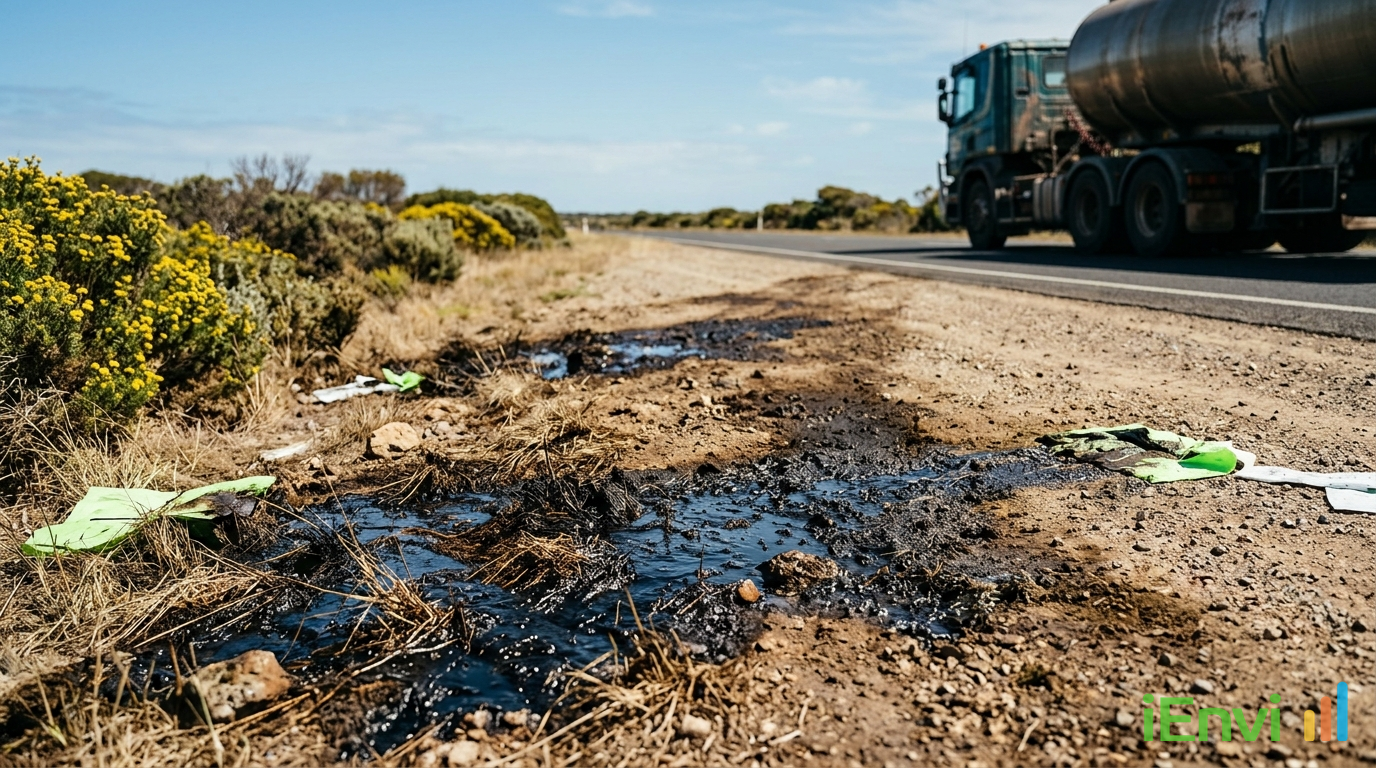
On 1 May 2026, EPA Victoria announced a $4,070 infringement notice against Villamanor Pty Ltd, trading as J&M Zammit Transport, following a spill of animal by-products along approximately 150 metres of the Princes Highway near Camperdown in western Victoria. The load, which included tissue, blood, and organic processing residues destined for a composting facility, breached containment during transit and deposited material across the road corridor. The proximity of the spill to Lake Gnotuk, a shallow saline lake within the Corangamite catchment, elevated the environmental significance of the incident well beyond a routine road spill.
The material involved is classified as Reportable Priority Waste under Victoria’s Environment Protection Act 2017, a classification that carries strict transport, tracking, and notification obligations. The classification alone meant EPA Victoria’s regulatory response was immediate and non-discretionary. Beyond the direct environmental risk, the spill generated a severe odour impact for the Camperdown community, illustrating that priority waste incidents carry simultaneous amenity, public health, and ecological consequences that regulators are required to address.
For environmental professionals advising developers, councils, industrial operators, and logistics companies, this enforcement action is a pointed reminder that environmental liability under Victoria’s current legislative framework does not terminate at the point of waste handover. The General Environmental Duty, which is a core principle of the Environment Protection Act 2017, applies continuously throughout the waste management chain, including during road transport. Understanding where that duty sits, who holds it, and what it requires in practice is essential for anyone managing contaminated material, industrial waste, or organic processing by-products in Victoria.
Key details of the EPA Victoria enforcement action and regulatory framework
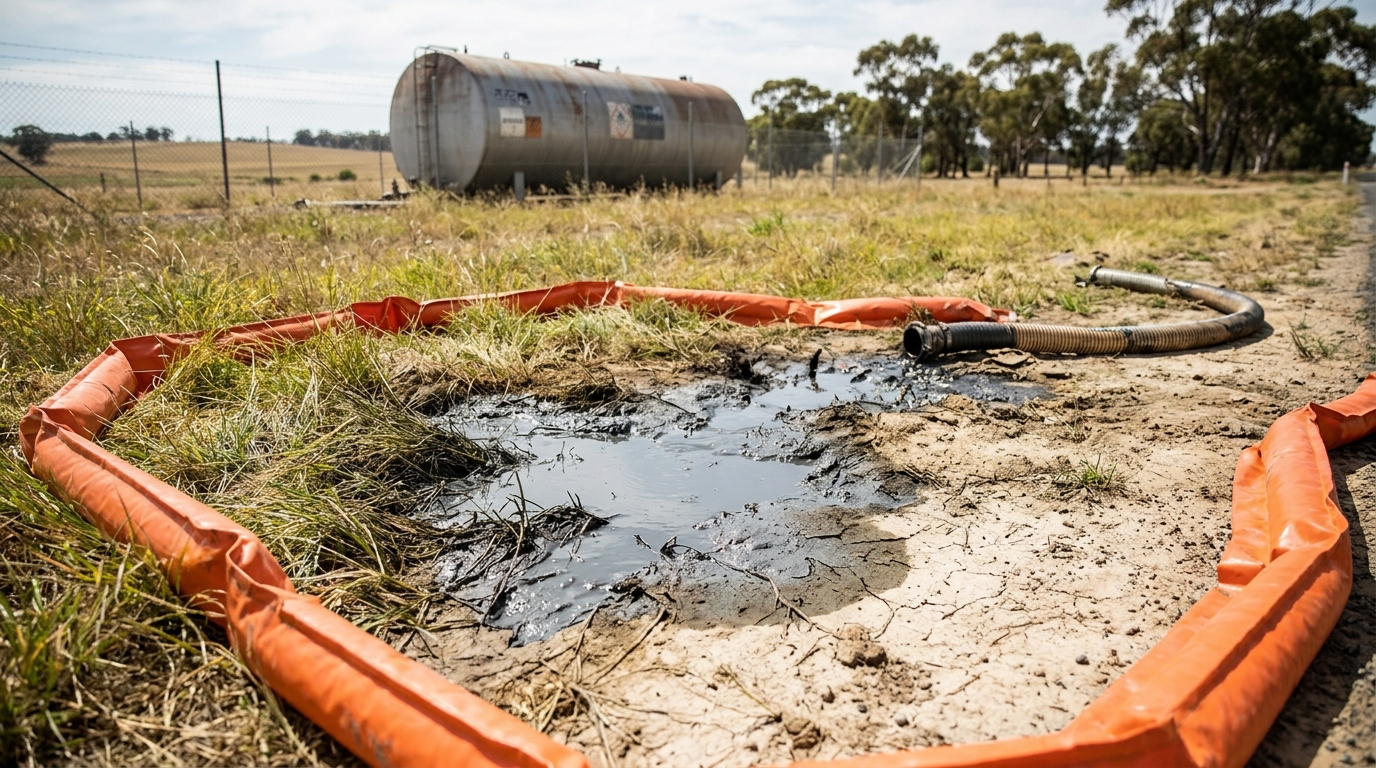
The infringement notice of $4,070 was issued by EPA Victoria against Villamanor Pty Ltd following its investigation of the Princes Highway spill near Camperdown. The 150-metre spill corridor involved animal by-products comprising tissue, blood, and organic processing residues, materials that are characteristically semi-liquid or viscous in nature and present both acute odour and leachate risks if not properly contained. The proximity to stormwater drains and Lake Gnotuk, which sits within the broader Corangamite Ramsar wetland system, meant the receiving environment was of genuine ecological sensitivity.
The regulatory foundation for this enforcement action rests on two intersecting provisions of the Environment Protection Act 2017 (Vic). Section 25 establishes the General Environmental Duty (GED), which requires any person conducting an activity that may pose risks to human health or the environment to understand those risks and minimise them so far as reasonably practicable. For waste transport operators, the GED translates directly into obligations around load security, containment vessel integrity, pre-trip inspection, spill kit availability, and driver training. Holding an EPA transport permission is a necessary but not sufficient condition for compliance. The GED requires that operational practices on the road actually meet the standard of minimising risk so far as reasonably practicable.
Section 30 of the Environment Protection Act 2017 imposes mandatory notification requirements where an incident is threatening to cause, or has caused, material harm to the environment. A spill of Reportable Priority Waste adjacent to a stormwater drainage network and a sensitive receiving water body clearly engages this provision. Reportable Priority Waste is a specific category under the Act and the associated Environment Protection (Industrial Waste Resource) Regulations, covering wastes that pose a higher risk to human health or the environment due to their chemical, biological, or physical properties. Animal by-products containing blood and tissue residues fall within this category because of their pathogen load, nutrient content, and capacity to cause acute oxygen depletion in receiving waterways.
The $4,070 penalty figure is consistent with EPA Victoria’s infringement notice scale for breaches of this nature, though it represents the lower end of the enforcement spectrum. The Act provides for significantly higher penalties through the formal prosecution pathway, including substantial fines for bodies corporate found to have breached the GED. The relatively modest infringement amount should not be read as an indication that EPA Victoria treats such incidents lightly. The speed and public nature of the enforcement response, including the publication of a named enforcement notice, signals a deterrence objective that goes well beyond the dollar figure on the notice.
Australian context: GED obligations, priority waste transport, and parallels across jurisdictions
Victoria’s Environment Protection Act 2017 introduced the General Environmental Duty as a principle-based, overarching obligation that applies to all persons conducting activities in Victoria that could pose risks to human health or the environment. This represented a significant shift from the previous prescriptive licensing model under the repealed Environment Protection Act 1970. The GED is modelled on the safety duty concept familiar from occupational health and safety legislation, and it was deliberately framed to capture conduct that sits between specific regulatory thresholds. Waste transport is one of the clearest practical applications of the GED, because the risk profile of a load does not change once it leaves a licensed facility.
Other Australian jurisdictions have broadly comparable priority waste or trackable waste frameworks, though the terminology, threshold classifications, and enforcement mechanisms vary across state and territory lines. New South Wales administers waste transport obligations primarily through the Protection of the Environment Operations Act 1997 and the associated resource recovery and waste transport regulations, with the NSW Environment Protection Authority holding equivalent enforcement powers. Queensland’s framework under the Environmental Protection Act 1994 similarly imposes duty-based obligations on waste transporters alongside specific trackable waste licensing requirements. In all cases, the underlying principle is consistent: the generator, transporter, and receiver of regulated waste each carry concurrent obligations, and a spill event during transport does not absolve any party of responsibility simply because physical custody rested with the carrier at the time.
References and related sources
- Primary source: www.epa.vic.gov.au
- epa.vic.gov.au
- EPA Victoria
How iEnvi can help
iEnvi provides specialist consulting services relevant to this topic. Our team includes CEnvP Site Contamination Specialists with experience across contaminated land, groundwater, remediation, ecology, and regulatory compliance.
- iEnvi remediation services
- iEnvi due diligence services
- iEnvi expert services and independent review services
This is an iEnvi Machete news summary. Prepared by iEnvi to summarise the source article for contaminated land, groundwater, remediation, approvals and site risk professionals.
Published: 06 May 2026
Need advice on this topic? Speak to an iEnvi expert at info@ienvi.com.au or 1300 043 684, or contact us online.
Need advice on this issue? iEnvi provides practical, senior-led environmental consulting across contaminated land, remediation, ecology and environmental risk.
Contaminated land services Remediation services Groundwater services Ecological assessment Talk to iEnvi