
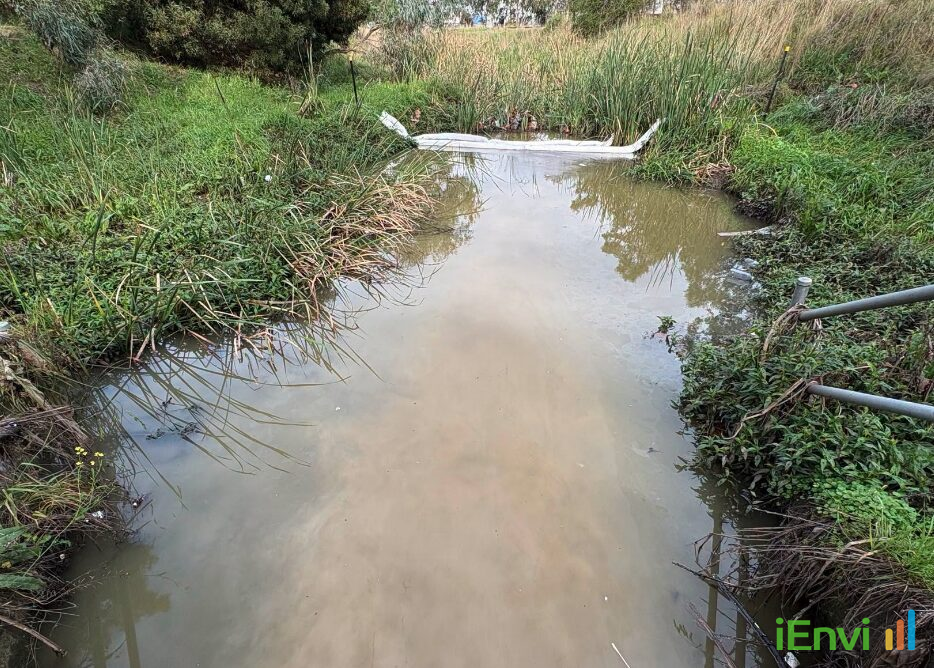
EPA Victoria Wet Weather Sediment Warning
On 6 July 2024, EPA Victoria issued a formal public warning directed at civil construction site managers, calling on them to proactively manage erosion and prevent sediment runoff from their sites. The warning, attributed to Rachel Gualano, EPA Victoria’s Executive Director Operations, comes against the backdrop of an unusually warm start to winter across Victoria, followed by sudden, intense rainfall events that are rapidly mobilising dry, bare soils. The regulator made clear that it is actively monitoring sites and will not hesitate to issue notices and fines where operators fail to implement practicable risk-management controls.
The significance of this warning extends well beyond a seasonal reminder. EPA Victoria’s statement that heavy rain is predictable and therefore cannot be used as a legal defence for sediment discharge represents a hardening of the regulator’s enforcement posture. This framing directly invokes the General Environmental Duty (GED) under Section 25 of the Environment Protection Act 2017 (Vic), which requires any person conducting an activity that poses a risk of harm to human health or the environment to minimise those risks so far as reasonably practicable. The EPA is drawing a line: weather is a known variable, not a force majeure.
For civil contractors, developers, project managers, and the legal and planning professionals who advise them, this warning signals that passive compliance documentation is no longer adequate. Erosion and sediment control (ESC) is being treated as an active, ongoing obligation with real enforcement consequences. Understanding what the regulator expects, and what the technical and legal standards actually require, is essential for anyone with a live civil construction project in Victoria.
Key details of the EPA Victoria sediment runoff warning
The EPA Victoria warning published on 6 July 2024 identifies two primary site categories: civil construction sites and, as a secondary audience, farms and agricultural land. The emphasis is clearly on civil construction, where large areas of soil are routinely disturbed, stripped of vegetation, and left exposed during earthworks, subdivision development, road construction, and infrastructure projects. Under these conditions, even moderate rainfall can mobilise substantial volumes of fine sediment, which is then transported off-site via stormwater drainage, overland flow, or tracked onto public roads by heavy vehicles.
The EPA’s warning explicitly references EPA Victoria Publication 1834, the Civil construction, building and demolition guide, as the benchmark document against which site controls will be assessed. Publication 1834 outlines the required hierarchy of erosion and sediment controls, including stabilisation of exposed surfaces, installation and maintenance of silt fences, construction and operation of sediment basins, functioning vehicle wash-down bays at site egress points, and bunding of materials stockpiles. Critically, the guide treats ESC plans as dynamic documents that must be updated as site conditions and weather patterns change throughout the project lifecycle. Regulators assessing a site following a sediment discharge event will reference Publication 1834 to determine whether the operator’s controls were appropriate and properly maintained.
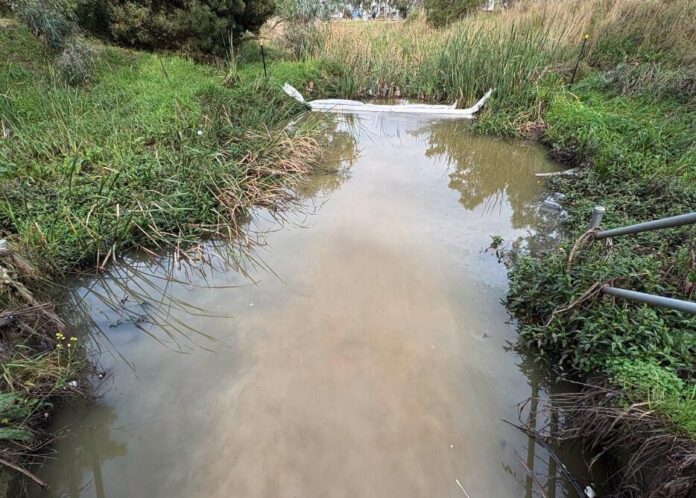
From an ecological and water quality standpoint, the consequences of inadequate sediment management are well documented. Fine sediment particles increase turbidity in receiving waterways, which reduces light penetration and suppresses aquatic plant growth. Suspended sediment can physically damage fish gills and smother fish eggs and the larvae of aquatic insects, with cascading effects on freshwater ecosystem function. These impacts are not reversible on short timescales and can trigger obligations under both state and Commonwealth environmental legislation where threatened species or ecological communities are present in receiving environments.
The enforcement framework underpinning this warning is Section 25 of the Environment Protection Act 2017 (Vic), which established the GED as the centrepiece of Victoria’s modernised environmental protection regime. Under the GED, the duty is not triggered only when harm has occurred; it applies to activities that pose a risk of harm. This means a site operator can be issued a notice and face fines before any off-site sediment discharge is confirmed, if the regulator determines that the site’s controls are inadequate to manage a foreseeable risk. The EPA’s statement that rainfall is predictable is legally significant because it closes the door on arguments that a rainfall event was an intervening cause that broke the chain of responsibility.
Australian context: sediment management obligations across state frameworks
Victoria’s GED under the Environment Protection Act 2017 (Vic) is the most direct regulatory hook for this warning, but comparable obligations exist across Australian jurisdictions, and the EPA Victoria enforcement posture is relevant to practitioners and clients operating in Queensland, New South Wales, and South Australia as well. In Queensland, the Environmental Protection Act 1994 (Qld) imposes a general environmental duty in similar terms, and the Department of Environment, Science and Innovation has published specific erosion and sediment control guidelines applicable to construction activities. In New South Wales, the Protection of the Environment Operations Act 1997 (NSW) creates pollution offences that apply to sediment discharge, and the NSW Environment Protection Authority has issued the Blue Book (Managing Urban Stormwater: Soils and Construction) as the accepted technical standard. In South Australia, the Environment Protection Act 1993 (SA) and associated Environment Protection (Water Quality) Policy 2015 create duties that are broadly analogous to Victoria’s GED, requiring persons responsible for activities with environmental risk to take all reasonable and practicable measures to prevent pollution of water resources.
References and related sources
- Primary source: www.insidestategovernment.com.au
- epa.vic.gov.au
- ashurst.com
- epa.vic.gov.au
- EPA Victoria
How iEnvi can help
iEnvi provides specialist consulting services relevant to this topic. Our team includes CEnvP Site Contamination Specialists with experience across contaminated land, groundwater, remediation, ecology, and regulatory compliance.
- iEnvi contaminated land investigation services
- iEnvi remediation and validation services
- iEnvi expert services and independent review services
This is an iEnvi Machete news summary. Prepared by iEnvi to summarise the source article for contaminated land, groundwater, remediation, approvals and site risk professionals.
Published: 10 Jul 2026
Need advice on this topic? Speak to an iEnvi expert at info@ienvi.com.au or 1300 043 684, or contact us online.
Need advice on this issue? iEnvi provides practical, senior-led environmental consulting across contaminated land, remediation, ecology and environmental risk.
Team credentials Contaminated land services Remediation services Groundwater services Talk to iEnvi