
EPA Victoria Cracks Down on Illegal Asbestos Dumping
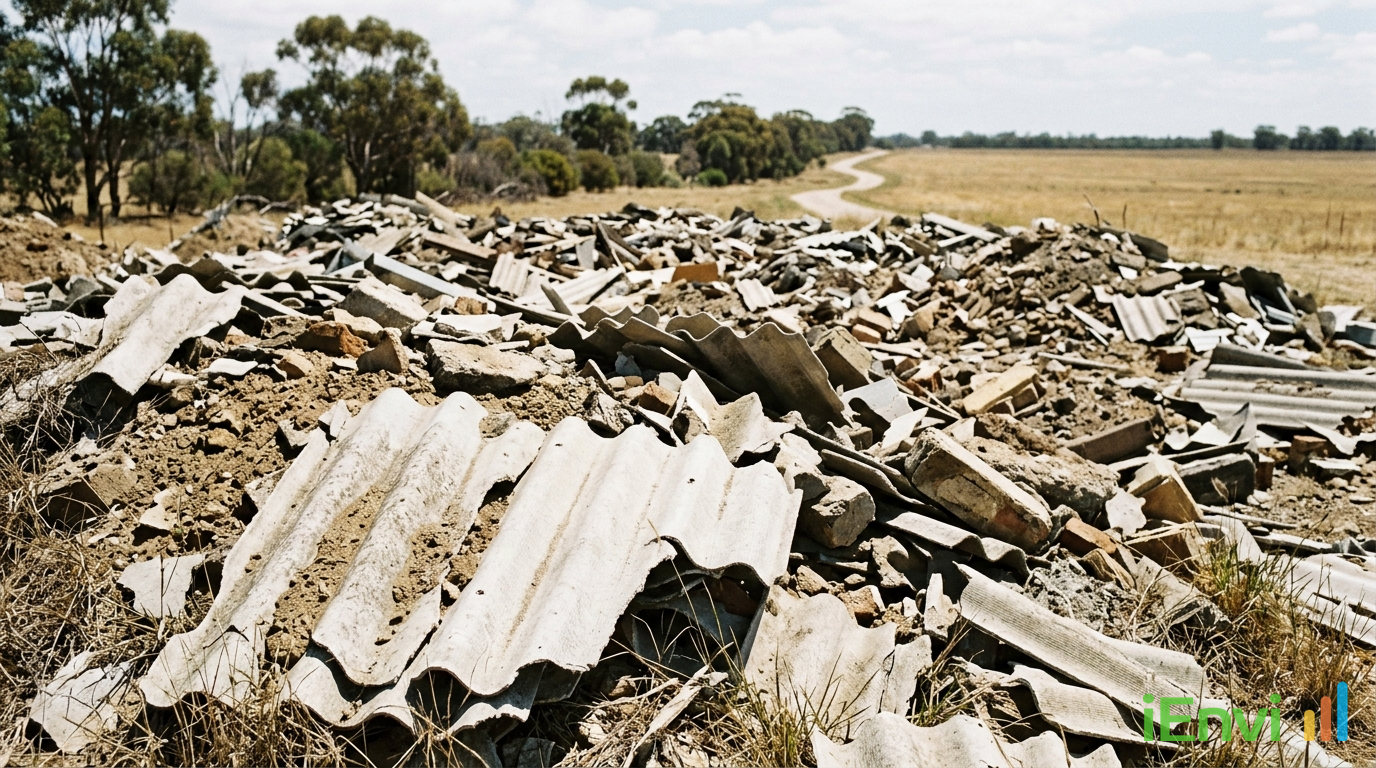
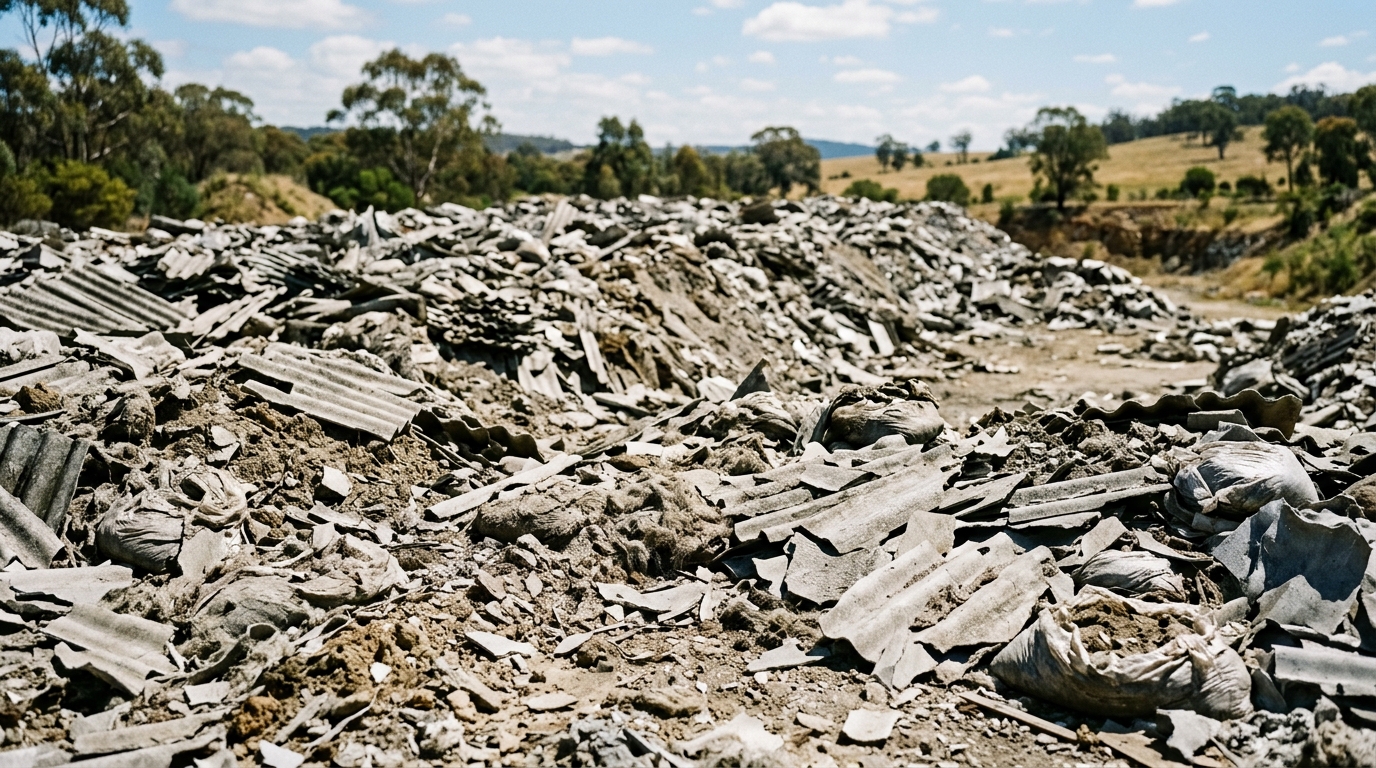
On 1 May 2026, EPA Victoria announced the results of a major coordinated enforcement operation at a rural property in Wildwood, in Melbourne’s north. Acting on community tip-offs, a joint inspection involving 22 officers from EPA Victoria, Victoria Police, Hume City Council, and emergency services uncovered thousands of tonnes of industrial waste that had been illegally deposited and buried on the property. Subsequent laboratory testing confirmed the presence of asbestos-containing materials within several of the waste stockpiles, elevating the site to a significant public health and environmental concern. Regulatory notices have been issued to halt further deliveries and to mandate compliant cleanup and disposal of the material.
The operation was led by Victoria’s newly established Illegal Waste Dumping Taskforce, a coordinated body formed specifically to pursue illicit waste disposal on public and private land across the state. EPA North Metropolitan Regional Manager Steve Riley confirmed that the unlicensed site poses both environmental and fire risks, the latter being a particular concern when industrial and asbestos-containing waste is buried in uncontrolled conditions without appropriate fire management measures. Victoria Police and Hume City Council are continuing separate investigative streams in parallel with the EPA’s regulatory response.
For environmental professionals, property developers, construction contractors, and waste generators operating anywhere in Australia, this enforcement action is a sharp reminder that the risks of improper waste tracking do not stop at the site gate. The involvement of police, council officers, and emergency services in a single operation signals a deliberate escalation in enforcement posture. Intelligence sharing between agencies is now an operational reality, and the consequences for waste generators whose material ends up at illegal disposal sites are becoming increasingly difficult to avoid.
Key details of the Wildwood illegal waste dumping operation
The Wildwood property is located in Melbourne’s north within the Hume City Council local government area. The scale of material discovered is notable: thousands of tonnes of industrial waste had been deposited and buried on the site, with laboratory analysis confirming asbestos-containing materials (ACM) among the stockpiles. ACM in construction and demolition waste typically includes friable and non-friable forms, both of which carry strict handling, transport, and disposal obligations under state environment protection legislation and the national Safe Work Australia model codes of practice for managing and controlling asbestos in the workplace.
The 22-officer joint inspection was coordinated under the authority of the Environment Protection Act 2017 (Vic), which came into force on 1 July 2021 and fundamentally restructured Victoria’s environmental regulatory framework. The Act introduced a General Environmental Duty (GED), which places an affirmative obligation on any person whose activities create a risk of harm to the environment or human health to take reasonably practicable steps to minimise that risk. Critically, this duty applies to waste generators, not just the final disposal operator. Where a generator hands waste to a transporter or contractor without adequate verification of the receiving facility’s licence status, regulators can argue the GED was not met.
The Illegal Waste Dumping Taskforce was established under this strengthened legislative framework to concentrate enforcement resources on what EPA Victoria has identified as a growing problem: large-scale, organised illegal disposal operations that exploit gaps in waste tracking chains. The Taskforce integrates intelligence from EPA field officers, Victoria Police criminal investigators, and local government rangers, enabling agencies to identify patterns of activity, trace waste to its point of origin, and pursue both the disposal operator and the original generator. The Wildwood operation reflects this multi-directional investigative approach.
The fire risk component identified by Steve Riley is technically significant. Buried industrial waste, particularly when it contains organic material, plastics, or chemical residues, can generate heat through biological and chemical decomposition. Where asbestos fibres are present, a fire or smouldering event can mobilise friable fibres into the air column, creating a dispersal risk for surrounding communities that extends well beyond the property boundary. Emergency services attendance at the Wildwood inspection reflects that this risk was assessed as credible and immediate, not merely theoretical. This combination of buried ACM and fire hazard triggers obligations under the Environment Protection Act 2017, the Public Health and Wellbeing Act 2008 (Vic), and relevant WorkSafe Victoria requirements simultaneously.
Australian context: waste tracking obligations, the General Environmental Duty, and national asbestos frameworks
The Wildwood enforcement action sits at the intersection of two distinct but related regulatory frameworks in Australia: industrial and construction waste tracking, and asbestos management. At the national level, asbestos disposal is governed by the Safe Work Australia model Work Health and Safety Regulations, which set out licensing requirements for removal work and disposal obligations for both friable and non-friable ACM. Each state and territory has adopted these model provisions to varying degrees. In Victoria, the Environment Protection Regulations 2021 prescribe specific classification and tracking requirements for industrial waste categories, including asbestos waste, which is classified as a priority waste requiring documented chain of custody from point of generation to final licensed receiving facility.
The General Environmental Duty introduced under the Environment Protection Act 2017 (Vic) operates as an overarching obligation that sits above specific waste tracking requirements. Where a waste generator, transporter, or contractor fails to meet the GED, the EPA may issue a notice to require compliance, direct remediation, or refer the matter for prosecution. The Wildwood operation demonstrates that this chain of liability now extends backward through the waste stream: generators whose material is found at an unlicensed site face direct regulatory exposure, regardless of whether they had direct involvement in the illegal disposal. Waste tracking records, consignment authorisations, and due diligence documentation are, in this environment, the primary evidentiary tools available to any party seeking to demonstrate that their obligations were met.
References and related sources
- Primary source: www.epa.vic.gov.au
- epa.vic.gov.au
- EPA Victoria
How iEnvi can help
iEnvi provides specialist consulting services relevant to this topic. Our team includes CEnvP Site Contamination Specialists with experience across contaminated land, groundwater, remediation, ecology, and regulatory compliance.
- iEnvi asbestos services
- iEnvi contaminated land investigation services
- iEnvi remediation and validation services
- iEnvi expert services and independent review services
This is an iEnvi Machete news summary. Prepared by iEnvi to summarise the source article for contaminated land, groundwater, remediation, approvals and site risk professionals.
Published: 05 May 2026
Need advice on this topic? Speak to an iEnvi expert at info@ienvi.com.au or 1300 043 684, or contact us online.
Need advice on this issue? iEnvi provides practical, senior-led environmental consulting across contaminated land, remediation, ecology and environmental risk.
Contaminated land services Remediation services Groundwater services Asbestos in soil advice Talk to iEnvi