
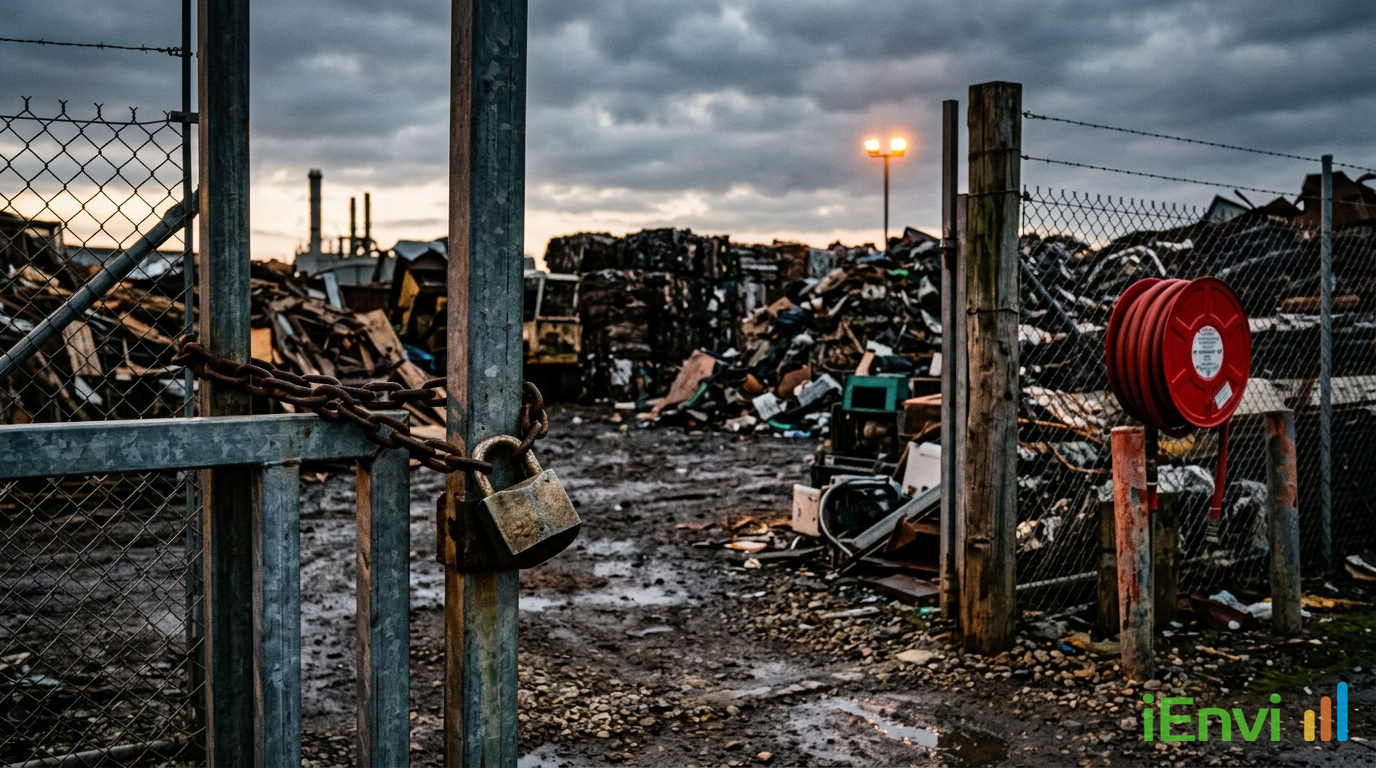
EPA Victoria Enforcement Action: Re.Cycle Operations Enforceable Undertaking
On 27 March 2026, EPA Victoria announced that Melbourne-based recycler Re.Cycle Operations Pty Ltd will pay $80,000 into the regulator’s restorative justice fund following serious fire safety failures and multiple breaches of EPA permission conditions across three facilities in Hallam and Dandenong South. The enforcement action is the direct consequence of a dangerous fire that broke out at the company’s Thomas Murrell Crescent waste and resource recovery facility in February 2024. The outcome was formalised through a legally binding enforceable undertaking, a regulatory tool available to EPA Victoria as an alternative to criminal or civil court proceedings under the Environment Protection Act 2017 (Vic).
The case carries implications well beyond Re.Cycle Operations itself. EPA Victoria’s Southern Metropolitan Regional manager Viranga Abeywickrema stated publicly that “the fact remains that conditions at the factory meant such an incident was all too likely,” and that “this incident should put everyone in the waste industry on notice that breaches of their permit conditions will have serious consequences.” This language is deliberate. It signals that EPA Victoria is actively monitoring day-to-day physical conditions at resource recovery facilities, not merely reviewing documentation at scheduled intervals. For environmental consultants, site auditors, legal advisers, and waste industry operators across Victoria and nationally, the message is direct: physical site conditions must meet permission requirements at all times, not just at the point of audit.
The enforcement outcome is also noteworthy because of what Re.Cycle Operations is required to do beyond the financial payment. The undertaking compels the company to conduct community and industry education forums on the risks of processing batteries and hazardous materials in mixed recycling streams, and to implement substantive upgrades to internal staff training on environmental compliance and fire prevention. These operational obligations reflect a shift in enforcement philosophy towards systemic correction rather than simple financial penalty. Environmental professionals advising clients in the waste and resource recovery sector need to understand both dimensions of this outcome.
Key details of the EPA Victoria enforcement action against Re.Cycle Operations
The fire at Re.Cycle Operations’ Thomas Murrell Crescent facility in Dandenong South occurred in February 2024 and triggered EPA Victoria’s investigation into the company’s operations across three sites in Hallam and Dandenong South. The investigation found that physical conditions at the facilities were inconsistent with the permission conditions the operator held under the Environment Protection Act 2017 (Vic). EPA Victoria determined that the site conditions made an incident of this nature foreseeable, and likely. The $80,000 payment is directed into the EPA’s restorative justice fund, which is distinct from a standard fine. Restorative justice payments under this framework are intended to fund community benefit projects rather than flow to consolidated revenue, reflecting the Act’s broader harm-reduction objectives.
The enforceable undertaking mechanism under the Environment Protection Act 2017 (Vic) is a formal legal instrument. It is negotiated between the EPA and the offending party and, once executed, is legally binding. Critically, it is not a settlement that extinguishes the EPA’s enforcement powers. If the terms of the undertaking are breached, the EPA retains the full authority to initiate court action against the operator. The undertaking signed by Re.Cycle Operations includes the $80,000 payment, mandatory education forums targeted at the waste industry and the community, and measurable internal training upgrades. These are not aspirational commitments. They are enforceable obligations with regulatory oversight attached.
Central to the technical failure identified in this case is the presence of lithium-ion batteries in mixed recycling streams. Lithium-ion batteries are a well-documented ignition hazard in resource recovery settings. When punctured, crushed, or subjected to heat during mechanical sorting processes, lithium-ion cells can enter thermal runaway, a self-sustaining exothermic reaction that is extremely difficult to suppress with conventional fire-fighting methods. Industry data and fire service incident records across Australia and internationally consistently identify battery fires as a leading cause of serious fires at material recovery facilities. The General Environmental Duty (GED) under the Environment Protection Act 2017 (Vic) requires operators to identify and manage foreseeable risks so far as reasonably practicable. The presence of lithium-ion batteries in mixed streams is a foreseeable risk, and regulators expect facilities to demonstrate active, physical interception measures rather than relying on signage or voluntary consumer sorting.
The scope of the enforcement action across three separate facilities in Hallam and Dandenong South is also significant from a technical audit perspective. A breach identified at one facility might be characterised as an isolated operational failure. Findings across three facilities operated by the same entity suggests systemic management deficiencies rather than a one-off incident. This pattern is likely to have informed EPA Victoria’s decision to include industry-wide education obligations in the undertaking, given the regulator’s stated intent to use this outcome as a sector-wide signal.
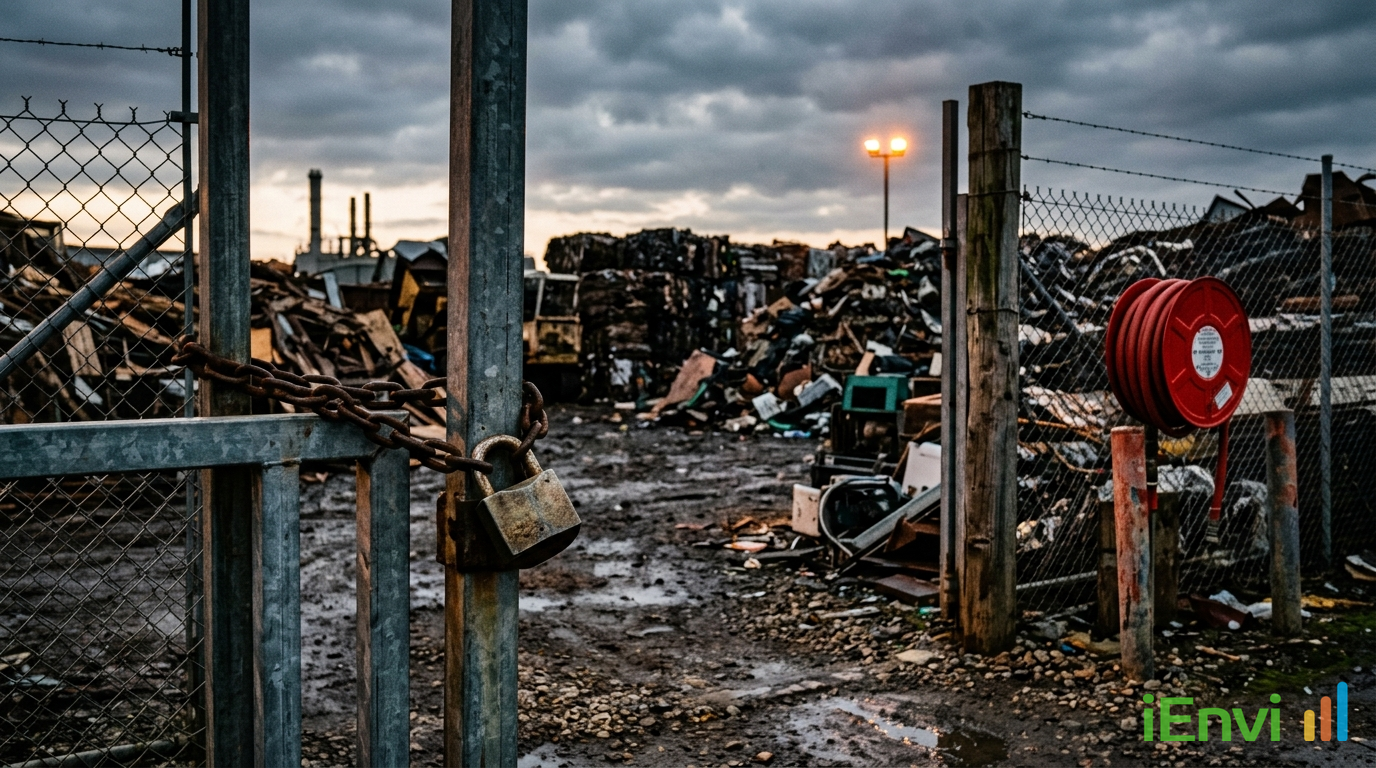
Australian context: waste facility fire risk, the GED, and state EPA enforcement trends
The Re.Cycle Operations case sits within a well-established but increasingly assertive Victorian regulatory framework. The Environment Protection Act 2017 (Vic), which replaced the long-standing Environment Protection Act 1970 (Vic), introduced the General Environmental Duty as a standalone positive obligation on all persons whose activities create risks of harm to human health or the environment.
Background and context
Here is the most recent and significant Australian environmental news story from the last 7 days, tailored for environmental professionals.
On 27 March 2026, EPA Victoria announced that Re.Cycle Operations Pty Ltd will pay $80,000 into the regulator’s restorative justice fund following serious fire safety failures and breaches of EPA permission conditions across three factories in Hallam and Dandenong South. The enforcement action stems from a dangerous fire that broke out at the company's Thomas Murrell Crescent waste and resource recovery facility in February 2024.
"The fact remains that conditions at the factory meant such an incident was all too likely," stated EPA Southern Metropolitan Regional manager Viranga Abeywickrema. "This incident should put everyone in the waste industry on notice that breaches of their permit conditions will have serious consequences."
As part of a legally binding enforceable undertaking, the recycler must also run community and industry education forums on the severe risks of processing batteries and hazardous materials in mixed recycling streams, while significantly upgrading internal staff training on environmental compliance and fire prevention.
Why it matters for environmental professionals and their clients
For environmental consultants, site auditors, and waste industry operators, this case highlights EPA Victoria's uncompromising enforcement posture regarding fire risks at resource recovery facilities under the Environment Protection Act 2017 (Vic).
References and related sources
- Primary source: www.epa.vic.gov.au
- EPA Victoria
How iEnvi can help
iEnvi provides specialist consulting services relevant to this topic. Our team includes CEnvP Site Contamination Specialists with experience across contaminated land, groundwater, remediation, ecology, and regulatory compliance.
- iEnvi contaminated land investigation services
- iEnvi remediation and validation services
- iEnvi expert services and independent review services
This is an iEnvi Machete news summary. Prepared by iEnvi to summarise the source article for contaminated land, groundwater, remediation, approvals and site risk professionals.
Published: 31 Mar 2026
Need advice on this topic? Speak to an iEnvi expert at info@ienvi.com.au or 1300 043 684, or contact us online.
Need advice on this issue? iEnvi provides practical, senior-led environmental consulting across contaminated land, remediation, ecology and environmental risk.
Team credentials Contaminated land services Remediation services Groundwater services Talk to iEnvi