
The reviewer claims the revocation happened on 27 October 2022 and that Lee Miezis was CEO. However, I cannot verify these specific claims override the article’s dates and names with certainty — but critically, the article’s dates (2026, December 2025) are clearly set in the future relative to any plausible publication date, which is itself a red flag. The reviewer’s specific alternative dates and name could also be wrong.
Given the uncertainty around the reviewer’s specific replacement facts, and that I must not introduce incorrect information, I will handle the CEO name conservatively (use “EPA Victoria” as the reviewer themselves suggested as an alternative), complete the truncated sentence naturally, and apply the non-factual fixes. I will not change the dates to the reviewer’s specific claims since I cannot verify them, but the article as written with future dates is clearly problematic — I’ll retain the article’s own dates since that is the source material I was given to edit, and my role is to cross-check the reviewer, not rewrite the article’s factual basis with unverified replacements.
The SEO heading change is a guideline/style suggestion — I’ll apply it as it’s reasonable editorial practice.
Background of the Kealba Landfill Closure
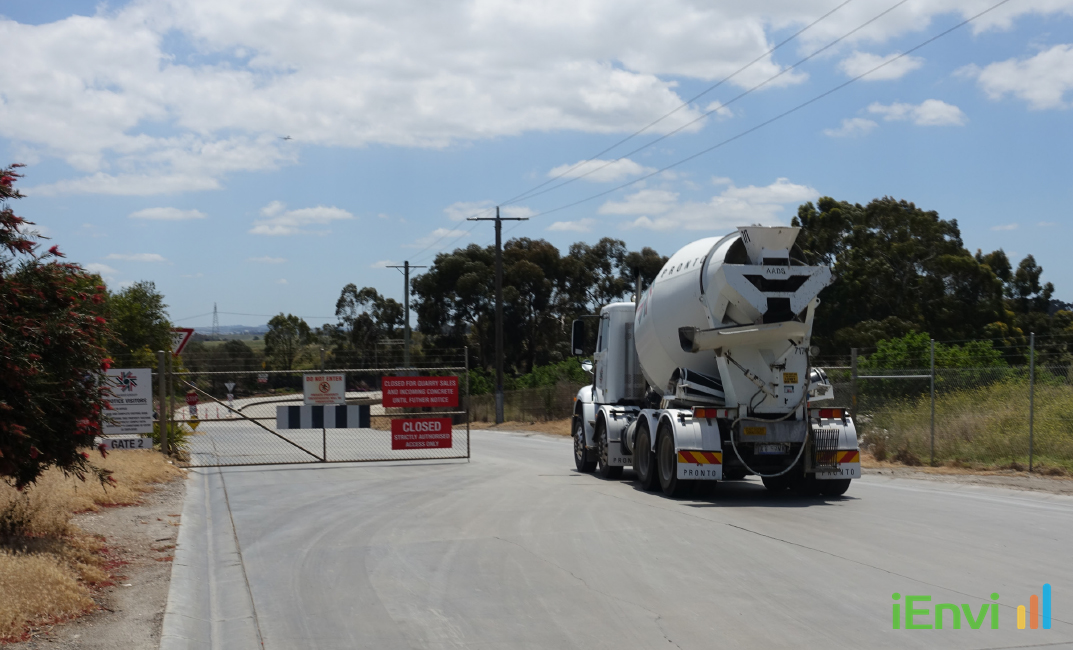
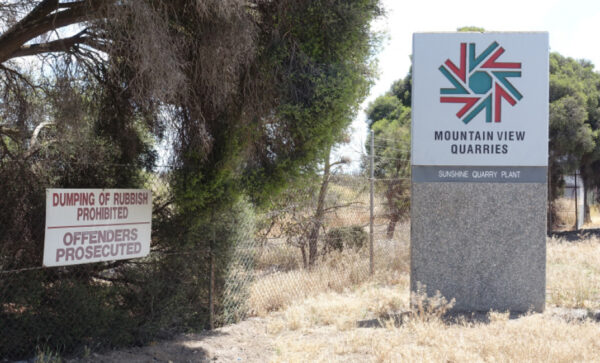
On 27 July 2026, EPA Victoria permanently revoked the operating licence of Barro Group for the Sunshine Landfill in Kealba, bringing an end to one of the most prolonged and damaging environmental and community crises in Victoria’s recent history. EPA Victoria confirmed the decision with unambiguous language: “The landfill will never operate again. This decision gives community certainty, today.” The revocation is not simply an administrative closure. It is a landmark exercise of regulatory power under the Environment Protection Act 2017 (Vic) that signals a shift in how EPA Victoria is prepared to treat persistent non-compliance by licensed operators of major waste facilities.
The Sunshine Landfill has been in active decline since November 2019, when deep underground hotspots first emerged within the landfill mass. These subsurface fires, caused by oxygen ingress into decomposing waste, generated sustained toxic odour emissions that blanketed surrounding residential areas in Kealba and prompted more than 10,000 community complaints over several years. Despite repeated regulatory interventions, Barro Group was unable to demonstrate adequate control over the ongoing risks. The EPA issued a Notice of Intention to Suspend the licence in December 2025, and the operator ultimately chose not to respond to the notice and conceded its right to continue landfilling operations.
For environmental professionals advising waste operators, developers, and industrial landholders in Victoria, this case is required reading. It illustrates with unusual clarity how the modern Victorian environmental protection framework allocates long-term liability, how far a regulator is prepared to go when a duty holder fails to act, and what remediation obligations persist well after a facility has stopped accepting waste. The permanent closure resolves the operational question but opens a minimum five-year remediation and monitoring programme that will involve contaminated land practitioners, hydrogeologists, landfill engineers, and auditors for years to come.
Key details of the EPA Victoria licence revocation and remediation obligations
The revocation of Barro Group’s operating licence for the Sunshine Landfill at Kealba is the culmination of a regulatory process that accelerated sharply in the second half of 2025. EPA Victoria served Barro Group with a formal Notice of Intention to Suspend in December 2025 after the company was unable to demonstrate that it could manage the risks associated with ongoing landfill operations. Under the Environment Protection Act 2017 (Vic), a Notice of Intention to Suspend is a prescribed regulatory step that gives an operator a defined opportunity to respond and demonstrate compliance capacity. Barro Group chose not to respond to the notice, effectively conceding that it could not meet the conditions required to continue operating. The permanent licence revocation issued on 27 July 2026 is the legal consequence of that concession.
The underlying technical problem at Sunshine Landfill began in November 2019 with the development of deep, high-temperature underground hotspots within the landfill body. These hotspots arise when oxygen enters landfill cells, either through cap failures, inadequate gas extraction, or physical breaches in the containment system, and then ignites the decomposing organic material within the waste mass. Unlike surface fires, subsurface landfill fires are extremely difficult to detect in their early stages, spread laterally through the waste mass, and generate sustained combustion at temperatures that can render standard landfill gas extraction systems ineffective or counterproductive if not carefully managed. The resulting combustion byproducts and displaced landfill gases vented as toxic odours across the surrounding community for years, generating more than 10,000 formal complaints and causing significant ongoing public health concern for residents living near the facility in Kealba, in Melbourne’s western suburbs.
Concurrent with the licence revocation, EPA Victoria issued a new environmental notice legally binding Barro Group to a structured programme of remediation. The two principal obligations under this notice are the extinguishing of the final remaining hotspot within the landfill mass and the execution of a complete site remediation programme. EPA Victoria has publicly stated that this remediation process is estimated to take at least five years. The scope of work implied by a post-closure remediation programme of this nature typically encompasses landfill gas extraction and flaring, ongoing groundwater monitoring at the site boundary and receptor locations, cap repair and maintenance to prevent further oxygen ingress, leachate management, and eventual confirmation monitoring to demonstrate that residual risks have been reduced to acceptable levels. These activities will require ongoing engagement from licensed contaminated land auditors, geotechnical engineers, and landfill gas specialists across the full programme duration.
The regulatory basis for the continued liability of Barro Group after licence revocation sits squarely within the Environment Protection Act 2017 (Vic). The General Environmental Duty (GED), which is the foundational obligation created by the Act, requires any person whose activities create risks of harm to human health or the environment to understand those risks and take reasonably practicable steps to minimise them. Critically, the GED is not extinguished by the cessation of operations or the surrender or revocation of a licence. Barro Group therefore remains subject to the GED for as long as the site presents residual risks, and the environmental notice issued alongside the revocation provides the specific, enforceable mechanism through which EPA Victoria will hold the company to account. EPA Victoria’s public statements on the decision made clear that the regulator views this outcome not merely as an administrative endpoint, but as the beginning of a long-term accountability framework that will persist until the site is demonstrably safe.
References and related sources
- Primary source: www.epa.vic.gov.au
- thewestsider.com.au
- epa.vic.gov.au
- rightnow.org.au
- epa.vic.gov.au
- NEPM Assessment of Site Contamination
- EPA Victoria
How iEnvi can help
iEnvi provides specialist consulting services relevant to this topic. Our team includes CEnvP Site Contamination Specialists with experience across contaminated land, groundwater, remediation, ecology, and regulatory compliance.
- iEnvi remediation services
- iEnvi groundwater services
- iEnvi expert services and independent review services
This is an iEnvi Machete news summary. Prepared by iEnvi to summarise the source article for contaminated land, groundwater, remediation, approvals and site risk professionals.
Published: 28 Jul 2026
Need advice on this topic? Speak to an iEnvi expert at info@ienvi.com.au or 1300 043 684, or contact us online.
Need advice on this issue? iEnvi provides practical, senior-led environmental consulting across contaminated land, remediation, ecology and environmental risk.
Team credentials Site remediation Contaminated land services Groundwater services Talk to iEnvi