
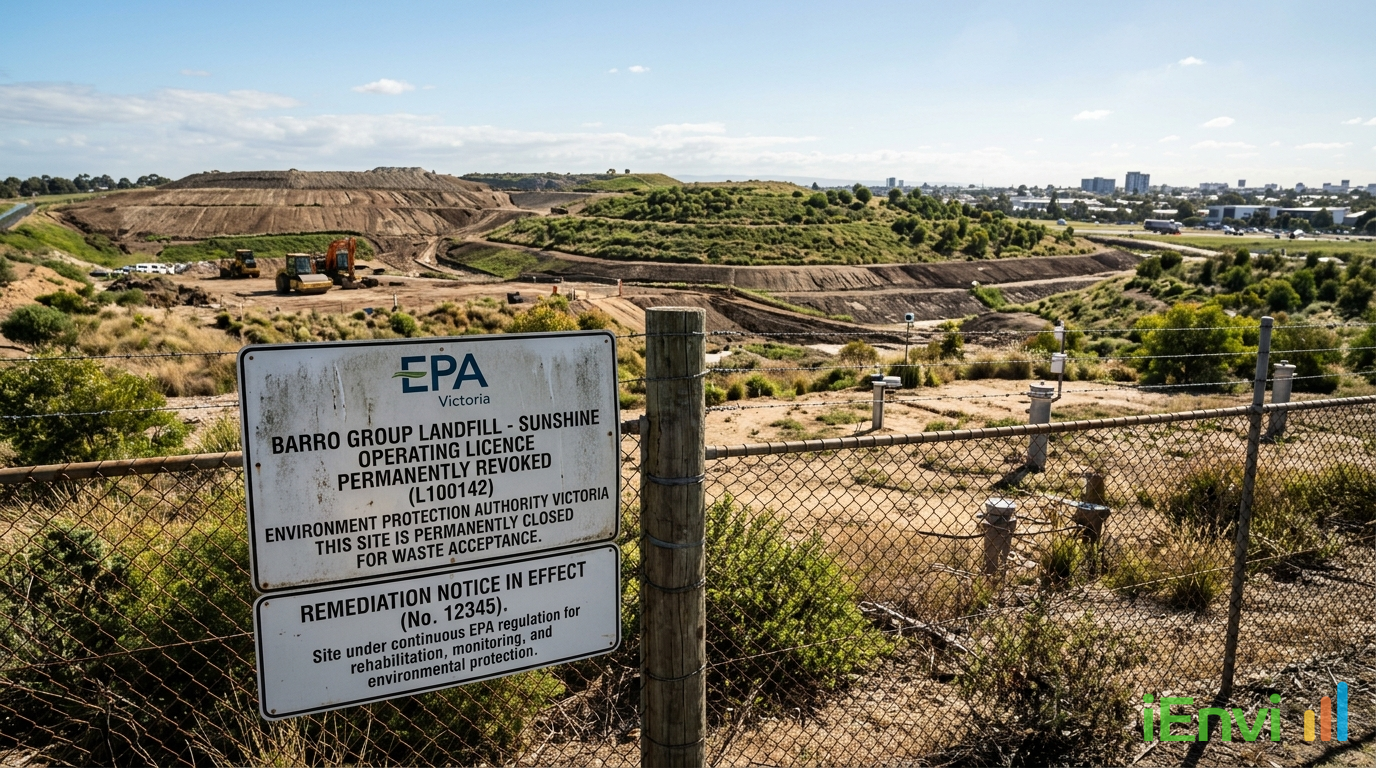
EPA Victoria Revokes Barro Group’s Sunshine Landfill Licence
EPA Victoria permanently revoked Barro Group’s operating licence for the Sunshine Landfill in Kealba on 27 July 2022, ending landfilling operations at the site for good. The action follows a Notice of Intention to Suspend issued in December 2021, prompted by unmanaged risks including underground landfill fires that had been burning beneath the site. Barro Group ultimately conceded its right to continue operations rather than contest the suspension.
What makes this case significant for Australian environmental professionals is not the revocation itself but what happened alongside it. EPA Victoria did not treat licence cancellation as a clean break. The regulator issued new environmental notices in the same action, binding Barro Group to extinguish the site’s final underground hotspot and complete full remediation of the contaminated land under ongoing EPA oversight. The hotspot extinction work is expected to take at least five years.
For developers, lawyers, councils and asset managers dealing with legacy industrial or waste sites, this is a live demonstration of how a modern environment protection framework treats operational cessation versus environmental liability as two entirely separate legal questions. Losing your right to operate a site does not mean you have lost your obligation to fix it.
Key Details of the Kealba Landfill Decision
The Sunshine Landfill at Kealba, in Melbourne’s western suburbs, had been the subject of escalating regulatory concern before the December 2021 Notice of Intention to Suspend. EPA Victoria’s concern centred on underground landfill fires, a well-documented but technically difficult hazard in ageing putrescible and industrial waste landfills where subsurface thermal decomposition can smoulder for years, generate landfill gas (predominantly methane and carbon dioxide), release volatile organic compounds, and create pathways for groundwater contamination if left unmanaged.
EPA Victoria’s enforcement pathway drew on powers under the Environment Protection Act 2017 (Vic), specifically the general environmental duty provisions and the operating licence revocation and site remediation order powers found in Part 4.4 and Part 10.4 of the Act. This structure allows the regulator to cancel a licence to operate while simultaneously issuing enforceable notices that keep the duty holder bound to environmental outcomes, rather than allowing the two to be resolved in a single administrative step.
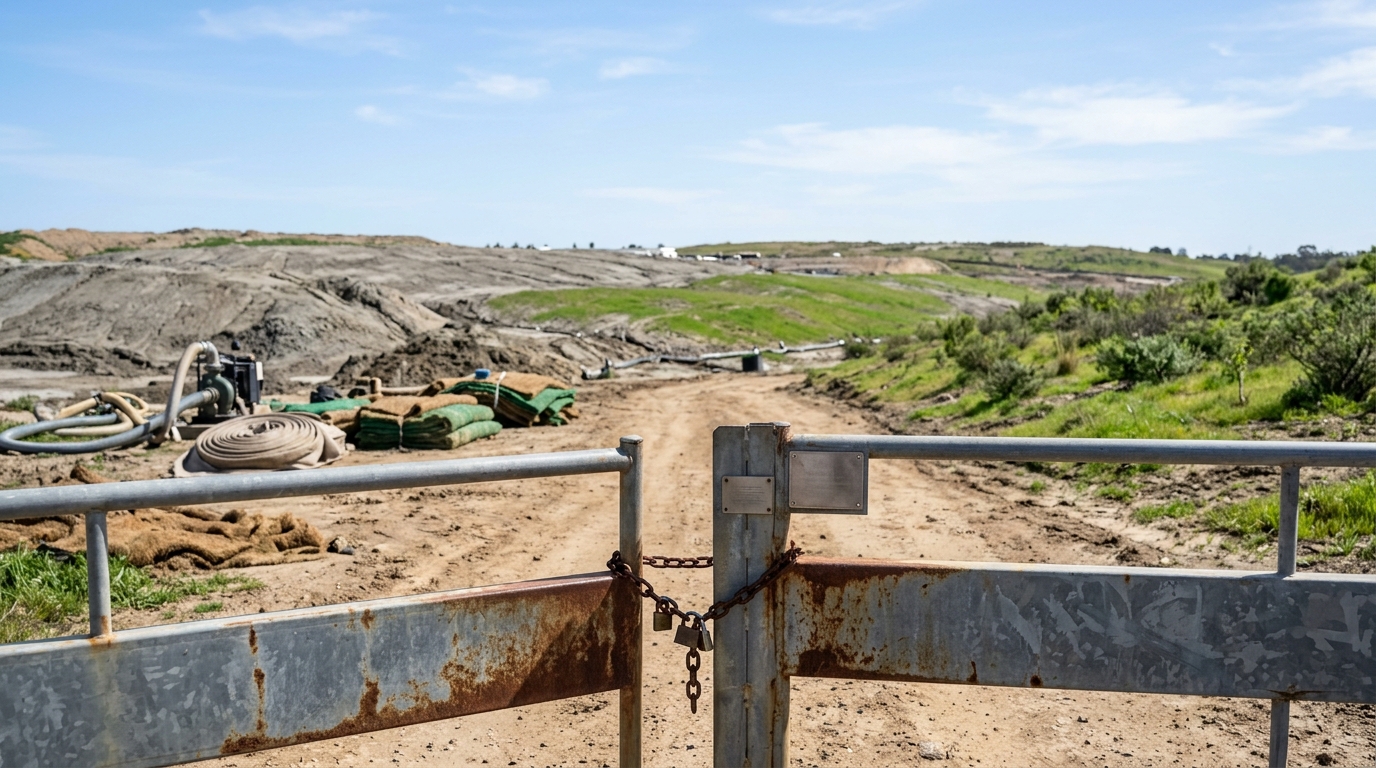
The remediation obligations imposed on Barro Group require extinction of the site’s final underground hotspot, a process EPA Victoria estimates will take a minimum of five years given the depth and persistence of subsurface thermal activity typical of long-established landfills. Full remediation will also need to address landfill gas management, capping integrity, and hydrogeological monitoring, all of which are expected to be assessed against the Environment Protection Regulations 2021 (Vic) and EPA Victoria’s Environmental Reference Standards (ERS).
Critically, the revocation is permanent. The Sunshine Landfill will not resume waste acceptance under any future licence application by Barro Group at this site. This finality separates it from a temporary suspension, which would leave a pathway back to operations once deficiencies were addressed. Here, EPA Victoria has closed the operational chapter entirely while keeping the remediation chapter open indefinitely until compliance is demonstrated.
How the Decision Fits the Australian Regulatory Landscape
Victoria’s Environment Protection Act 2017 introduced the general environmental duty (GED) as a standalone, proactive obligation that exists independently of licence conditions. The Sunshine Landfill case shows the GED in practical operation: even after a licence disappears, the duty to minimise risks of harm to human health and the environment from an activity you have carried out does not disappear with it. Site owners and operators across Victoria managing legacy landfills, contaminated industrial land, or closed extractive sites should treat this as confirmation that GED exposure persists post-closure and post-licence.
Other states operate on comparable logic even without an identical GED framework. In New South Wales, the Protection of the Environment Operations Act 1997 allows the EPA to issue clean-up notices and prevention notices independently of licence status, and contaminated land duties under the Contaminated Land Management Act 1997 attach to the land and its history of use rather than to an active licence. Queensland’s Environmental Protection Act 1994 similarly allows environmental protection orders to be issued against a person who caused or contributed to contamination regardless of whether their licence is current. South Australia’s EPA has taken parallel action on legacy site contamination, as seen in its ongoing assessment work at sites such as the Brighton area, where historical activity continues to generate active regulatory obligations for present-day landholders and past operators.
The Kealba decision also has relevance beyond Victoria for practitioners advising on contaminated land under the National Environment Protection (Assessment of Site Contamination) Measure 1999 (as amended, commonly referenced as NEPM 2013). Where a site has a documented history of landfill gas generation or subsurface combustion, auditors and consultants preparing Site Audit Statements or detailed site investigations need to factor in that regulatory notices, not licence status, will determine the actual compliance burden a purchaser or successor in title inherits.
Practical Implications for Site Owners, Advisers and Purchasers
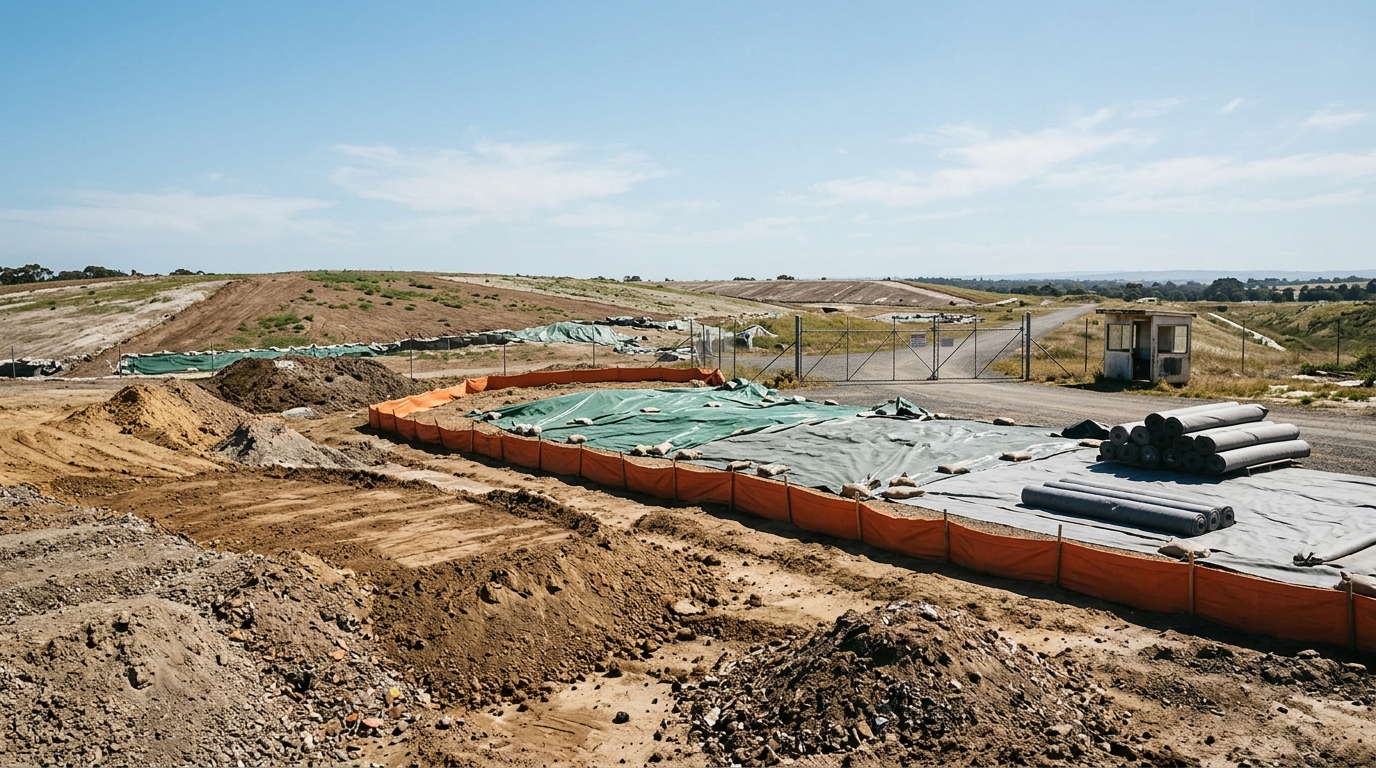
Practitioners advising clients on transactions involving former or operating landfill sites should treat licence status as only one data point in a much larger liability picture. A clean licence history or a recently surrendered licence does not mean a site is free of enforceable notices, remediation orders or ongoing general environmental duty obligations. Due diligence should extend to searching EPA public registers for current and historical notices, reviewing site history for evidence of subsurface combustion or landfill gas generation, and pricing long-tail remediation risk into any acquisition, financing or development decision.
The Kealba case confirms that regulators are prepared to close a site’s operational life permanently while keeping its environmental obligations open for years, in this instance a minimum of five. Site owners, successors in title, financiers and insurers should plan on that basis: the end of operations is not the end of liability, and remediation obligations will follow the responsible party until the regulator is satisfied that compliance has been demonstrated.
References and related sources
- Primary source: www.epa.vic.gov.au
- epa.vic.gov.au
- epa.vic.gov.au
- epa.sa.gov.au
- brimbank.vic.gov.au
- NEPM Assessment of Site Contamination
- EPA Victoria
How iEnvi can help
iEnvi provides specialist consulting services relevant to this topic. Our team includes CEnvP Site Contamination Specialists with experience across contaminated land, groundwater, remediation, ecology, and regulatory compliance.
- iEnvi remediation services
- iEnvi groundwater services
- iEnvi expert services and independent review services
This is an iEnvi Machete news summary. Prepared by iEnvi to summarise the source article for contaminated land, groundwater, remediation, approvals and site risk professionals.
Published: 30 Jul 2026
Need advice on this topic? Speak to an iEnvi expert at info@ienvi.com.au or 1300 043 684, or contact us online.
Need advice on this issue? iEnvi provides practical, senior-led environmental consulting across contaminated land, remediation, ecology and environmental risk.
DSI services Team credentials Site remediation Contaminated land services Talk to iEnvi