
Overview of the EPA Victoria Climate Risk Guidance
EPA Victoria has released its final guidance document titled Minimising pollution and waste risks in a changing climate (Publication 2062, November 2024). This is not a consultation draft or a policy aspiration. It is operational regulatory guidance that directly links the physical risks of climate change to the General Environmental Duty (GED) under Section 25 of the Environment Protection Act 2017 (Vic). For environmental consultants, site auditors, site managers, and their clients across Victoria, this guidance changes what a compliant site risk assessment looks like from this point forward.
The guidance applies to any business conducting medium-to-high-risk activities, and it is explicit that EPA permissions or licences are not a threshold for this obligation. The duty sits with the duty holder, and it is activated by the nature of the activity, not the regulatory instrument attached to it. Activities covered include outdoor storage and handling of liquids and solid materials, outdoor storage and treatment of waste, wastewater storage and treatment, underground chemical storage, and any activity involving outdoor plant, equipment, or pipework that could generate offsite pollution. The breadth of this scope means the guidance will affect a very large number of Victorian businesses, including industrial sites, waste facilities, fuel depots, agricultural operations, and construction projects.
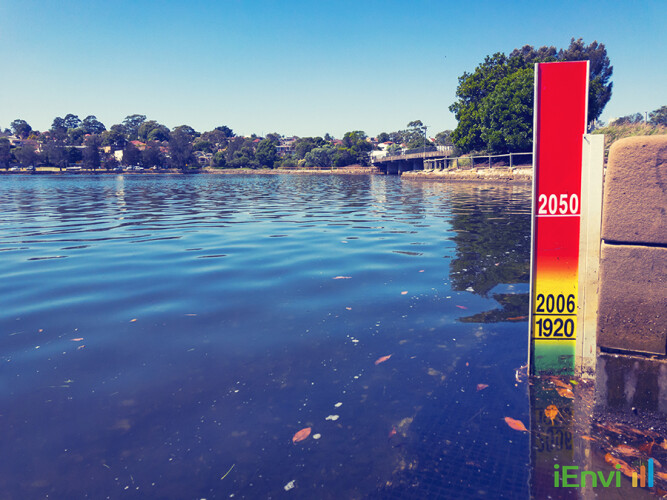
For developers, property lawyers, councils, and in-house environmental counsel, the practical significance of this release is straightforward: physical climate risk has moved from the voluntary sustainability reporting column into the statutory compliance column. A site risk assessment that does not account for the physical effects of extreme rainfall, floods, heatwaves, drought, bushfire, and sea-level rise may no longer satisfy the GED. The consequences of a breach of the GED under the Environment Protection Act 2017 can include significant civil and criminal liability, making this guidance directly relevant to project delivery, transaction due diligence, and regulatory notice responses.
Key details of the EPA Victoria climate risk guidance
The EPA Victoria guidance (Publication 2062, November 2024) provides a structured framework for how businesses should identify, assess, and mitigate physical climate risks. The framework is grounded in the General Environmental Duty under Section 25 of the Environment Protection Act 2017 (Vic), which requires any person or business conducting an activity that creates a risk of harm to human health or the environment to understand those risks and take reasonably practicable steps to minimise them. The guidance makes explicit that the changing climate is now a foreseeable source of such risk, and therefore must be factored into any credible GED assessment.
The guidance draws directly on Victoria’s Climate Science Report 2019 as the primary source of localised climate projection data. Practitioners are expected to use region-specific projections from that report and equivalent authoritative datasets when characterising the climate hazards relevant to a given site. This is a methodological requirement, not a suggestion. For a site in coastal Gippsland, sea-level rise and storm surge projections will be material inputs. For a site in the Loddon-Mallee region, extended drought, elevated temperatures, and increased fire weather frequency will be the dominant scenarios. The guidance implicitly requires practitioners to match the hazard profile to the geography and operational context of the site being assessed.
The guidance identifies several specific failure pathways that businesses and their consultants must evaluate. These include stormwater system bypass events during intense rainfall, structural or seal failures in tanks and pipework during extreme heat, elevated fugitive dust emissions during prolonged drought, and loss of containment from bunding or drainage infrastructure during flood inundation. Each of these represents a discrete pollution pathway that connects a climate hazard to an environmental receptor, and each must be assessed against the existing controls in place at the site. Where controls are inadequate for projected hazard intensity, businesses are expected to upgrade them.
The guidance also introduces the concept of maladaptation as an explicit risk that practitioners must account for during the design of adaptation measures. Maladaptation occurs when an action taken to reduce exposure to one climate hazard inadvertently increases harm from another, or transfers the risk to a third party. The guidance gives the example of a seawall with inadequate drainage that traps runoff and inundates neighbouring properties. This framing requires environmental consultants to evaluate adaptation options across the full system boundary of a site, not just the cadastral boundary. The guidance recommends the development of flexible adaptation pathways that allow for staged upgrades over time as climate projections are refined and as site conditions evolve.

Australian context: GED climate obligations and national regulatory parallels
Victoria is the first Australian jurisdiction to issue operational regulatory guidance that formally connects physical climate risk assessment to an existing statutory environmental duty. The GED under the Environment Protection Act 2017 (Vic) is structurally similar to the general environmental duty provisions in South Australia’s Environment Protection Act 1993 and the duty of care obligations embedded in various state EPAs, but Victoria’s guidance is the most explicit in treating climate change as a foreseeable risk within the meaning of the duty. This is a meaningful jurisdictional distinction. Environmental professionals working across multiple states should be aware that while Victoria has now set a clear compliance benchmark, equivalent guidance in other jurisdictions remains less prescriptive — meaning Victorian operations are subject to a higher and more clearly defined standard of climate risk assessment than those in most other Australian states.
References and related sources
- Primary source: www.epa.vic.gov.au
- engage.vic.gov.au
- australiandairyfarmers.com.au
- epa.vic.gov.au
- epa.vic.gov.au
- EPA Victoria
How iEnvi can help
iEnvi provides specialist consulting services relevant to this topic. Our team includes CEnvP Site Contamination Specialists with experience across contaminated land, groundwater, remediation, ecology, and regulatory compliance.
- iEnvi contaminated land investigation services
- iEnvi remediation and validation services
- iEnvi expert services and independent review services
This is an iEnvi Machete news summary. Prepared by iEnvi to summarise the source article for contaminated land, groundwater, remediation, approvals and site risk professionals.
Published: 07 Jul 2026
Need advice on this topic? Speak to an iEnvi expert at info@ienvi.com.au or 1300 043 684, or contact us online.
Need advice on this issue? iEnvi provides practical, senior-led environmental consulting across contaminated land, remediation, ecology and environmental risk.
Team credentials Contaminated land services Remediation services Groundwater services Talk to iEnvi