

Australia’s first dedicated harmful algal bloom research hub opens in Adelaide
On 17 June 2024, the Federal and South Australian Governments formally opened the National Office for Algal Bloom Research (OABR) in Adelaide, marking the establishment of Australia’s first dedicated central hub for harmful algal bloom (HAB) science. The facility is housed within the South Australian Research and Development Institute (SARDI) and represents a $3.2 million investment within a significantly larger $37 million Algal Bloom Science Program. That program itself sits under a $162.5 million joint government response to the harmful algal bloom events that have caused sustained damage to South Australian waters in recent years.
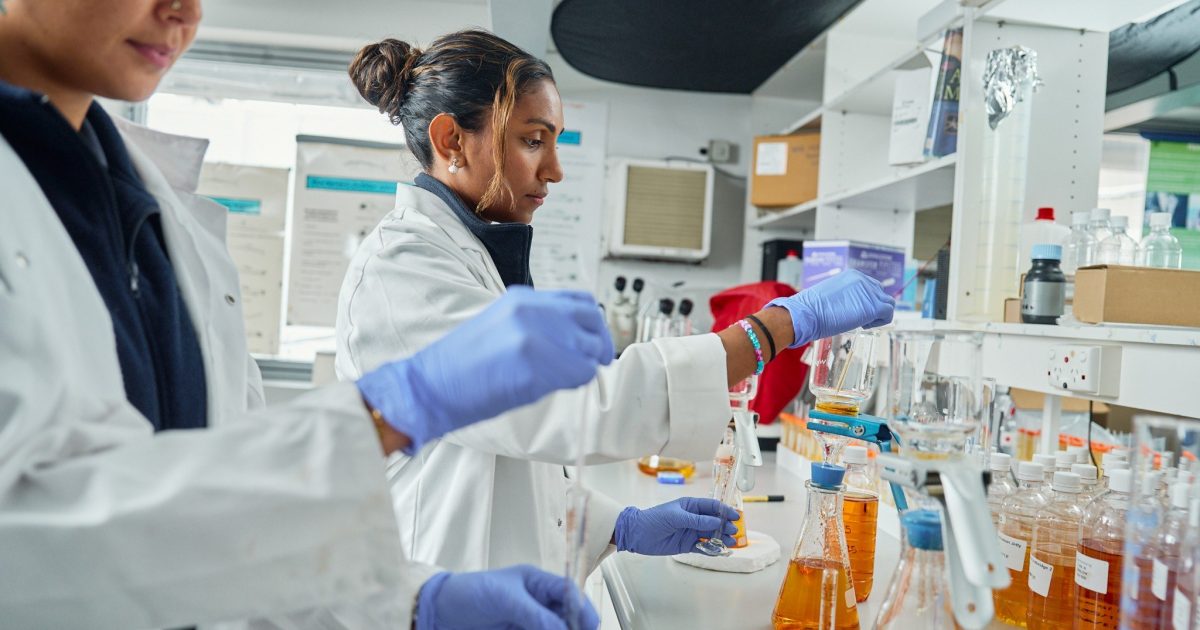
The OABR brings together a specialist team of oceanographers, phytoplankton taxonomists, data modellers, and marine biotoxin analysts. Their mandate is to build coordinated, long-term research programs that expand national capacity in algal surveillance, predictive modelling, and analytical science. The goal is not simply to respond to bloom events as they occur, but to generate the scientific infrastructure needed to anticipate and manage them. For environmental professionals working in coastal and marine settings, this represents a meaningful shift in the tools available for risk assessment and impact analysis.
The significance of this initiative extends well beyond South Australia. Harmful algal blooms pose serious ecological, public health, and commercial risks to coastal developments, marine infrastructure, desalination facilities, and aquaculture industries along every Australian coastline. The data, models, and detection methods developed by the OABR are expected to feed into national surveillance frameworks and inform environmental impact assessment practice across jurisdictions.
Key details: funding, scope, and scientific focus of the OABR
The OABR is funded at $3.2 million as a discrete component of the $37 million Algal Bloom Science Program. The broader $162.5 million government response was triggered by damaging harmful algal bloom events in South Australian coastal and estuarine waters, which caused significant losses to the aquaculture sector and required prolonged fisheries closures. The OABR is positioned as the research backbone of that response, tasked with building the scientific expertise and analytical infrastructure that reactive emergency management cannot provide.
The research priorities of the OABR centre on four interconnected areas. First, phytoplankton taxonomy: developing authoritative species identification capability for bloom-forming and toxin-producing algal species present in Australian waters. Second, algal culturing: maintaining live culture collections that enable controlled laboratory study of bloom physiology, toxin production, and environmental triggers. Third, marine biotoxin analysis: expanding Australia’s capacity to detect, quantify, and characterise the toxins produced during harmful bloom events, including paralytic shellfish toxins, domoic acid, and lipophilic toxins relevant to seafood safety regulation. Fourth, predictive modelling and oceanographic data integration: developing forecasting tools that combine satellite data, in-situ water quality sensors, and oceanographic models to project bloom formation and movement.
The regulatory and scientific context for this work connects directly to existing national water quality frameworks. The Australian and New Zealand Guidelines for Fresh and Marine Water Quality 2018 (ANZG 2018) provide default guideline values (DGVs) for marine physical and chemical stressors, including nutrients such as total nitrogen and total phosphorus, which are primary drivers of eutrophication and bloom formation. The ANZG 2018 framework also accommodates site-specific trigger levels derived from local reference condition data. The research outputs from the OABR are expected to substantially improve the evidence base for establishing those site-specific trigger levels in South Australian and, over time, other Australian marine environments.
The OABR’s work also carries direct relevance to seafood safety thresholds. Regulatory limits for paralytic shellfish toxins in bivalve shellfish for human consumption are set at 800 micrograms per kilogram (µg/kg) saxitoxin equivalents under the Australia New Zealand Food Standards Code (Standard 1.4.1). Improved biotoxin analytical capacity at the OABR will support faster and more accurate regulatory testing during bloom events, reducing the lag between bloom detection and fisheries closure decisions, and potentially shortening the duration of those closures when bloom conditions subside.
Australian context: regulatory frameworks, ANZG 2018, and coastal development obligations
In Australian practice, the ANZG 2018 guidelines are the primary technical reference for assessing water quality in marine and estuarine environments. They are referenced across state and territory environmental protection frameworks and form the basis for trigger level assessment in environmental impact assessments (EIAs) for coastal projects. The guidelines recognise that phytoplankton biomass, measured as chlorophyll-a, is a key indicator of nutrient enrichment and ecosystem condition in marine waters. Typical DGVs for chlorophyll-a in southern Australian coastal waters sit in the range of 0.5 to 2.0 micrograms per litre (µg/L), though these vary significantly by water body type and ecological condition. The site-specific application of these values requires local reference data, and the OABR’s monitoring and modelling programs are directly positioned to generate that data for South Australian waters.
Under the Environment Protection Act 1993 (SA), Section 25 establishes the General Environmental Duty, which requires any person conducting an activity that may pollute or otherwise cause environmental harm to take all reasonable and practicable measures to prevent or minimise that harm.
References and related sources
- Primary source: www.premier.sa.gov.au
- algalbloom.sa.gov.au
- ANZG Water Quality Guidelines
- SA EPA
How iEnvi can help
iEnvi provides specialist consulting services relevant to this topic. Our team includes CEnvP Site Contamination Specialists with experience across contaminated land, groundwater, remediation, ecology, and regulatory compliance.
- iEnvi contaminated land investigation services
- iEnvi remediation and validation services
- iEnvi expert services and independent review services
This is an iEnvi Machete news summary. Prepared by iEnvi to summarise the source article for contaminated land, groundwater, remediation, approvals and site risk professionals.
Published: 19 Jun 2026
Need advice on this topic? Speak to an iEnvi expert at info@ienvi.com.au or 1300 043 684, or contact us online.
Need advice on this issue? iEnvi provides practical, senior-led environmental consulting across contaminated land, remediation, ecology and environmental risk.
Team credentials Contaminated land services Remediation services Groundwater services Talk to iEnvi