

Federal Court admits UN Special Rapporteur in landmark challenge to Woodside’s North West Shelf gas project extension
UN Special Rapporteur Intervenes in NWS Gas Challenge
The Federal Court of Australia has made legal history by admitting Astrid Puentes Riaño, the United Nations Special Rapporteur on the human right to a clean, healthy, and sustainable environment, to participate as amicus curiae in the ongoing challenge to the 40-year licence extension of Woodside’s North West Shelf (NWS) gas project in Western Australia. This is confirmed by the Australian Conservation Foundation to be the first time a UN Special Rapporteur has been permitted to intervene in a domestic Australian environmental law case. The decision sets a procedural precedent that will reverberate well beyond the NWS dispute itself.
The underlying legal challenges are being prosecuted by the Australian Conservation Foundation (ACF) and the Friends of Australian Rock Art (FARA). Both organisations contest federal Environment Minister Tanya Plibersek’s conditional approval of the NWS project extension through to 2070. The central ground of challenge is that the Minister unlawfully excluded the project’s downstream climate change and greenhouse gas emissions from the scope of her environmental assessment. The Federal Court’s decision to admit the Special Rapporteur, despite procedural objections from Woodside, signals that the court regards the international legal context as genuinely relevant to resolving that statutory question.
The Special Rapporteur’s submissions will focus specifically on how the International Court of Justice’s Advisory Opinion on state responsibilities regarding climate change should inform the interpretation of the word “impact” as it appears in Australia’s Environment Protection and Biodiversity Conservation Act 1999 (Cth). For developers, lawyers advising on major project approvals, and environmental consultants preparing Environmental Impact Statements, this is not an abstract point of constitutional theory. It goes directly to the question of how broadly or narrowly assessment obligations can lawfully be defined under the EPBC Act.
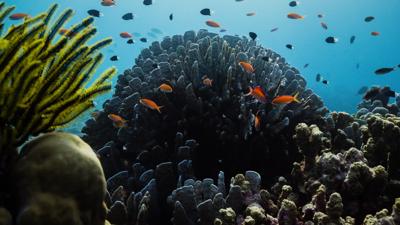
Key details of the Federal Court’s decision and the underlying challenge
The NWS gas project is one of Australia’s largest and longest-operating liquefied natural gas facilities, located off the Pilbara coast of Western Australia. The conditional approval granted by Minister Plibersek extended the project’s operational licence to 2070, a period of approximately 40 years from the date of the decision. The ACF and FARA argue that by confining the assessment to localised, at-the-fence-line environmental impacts and excluding the downstream greenhouse gas emissions generated by burning the gas once exported and consumed, the Minister misapplied her statutory duties under the EPBC Act 1999 (Cth).
The Federal Court ruled that the UN Special Rapporteur could participate as amicus curiae, a procedural mechanism that allows a non-party to assist the court by providing expertise or perspective on matters before it. Puentes Riaño’s submissions are expected to address how Australia’s obligations under international human rights and climate law, particularly as crystallised in the ICJ’s Advisory Opinion, bear on the domestic statutory meaning of “impact.” The ICJ Advisory Opinion addressed state responsibilities concerning climate change and the right to a clean, healthy, and sustainable environment, providing an authoritative international law reference point on how states must account for climate consequences when making decisions affecting the environment.
The procedural significance of the admission is considerable. Woodside objected to the Special Rapporteur’s participation, but the court overruled that objection. This demonstrates a judicial willingness to treat international human rights and climate instruments as interpretively relevant to domestic environment legislation, rather than as externally applicable treaty obligations that operate only at the Commonwealth government-to-government level. If the court ultimately finds that downstream emissions fall within the statutory definition of “impact” under the EPBC Act, the legal test for what must be assessed in an Environmental Impact Statement for high-emission projects will shift materially.
The case also raises the prospect of what practitioners are beginning to term Environmental, Social, and Human Rights Impact Assessments (ESHRIAs). This integrated assessment model goes beyond the current convention of cataloguing direct ecological, heritage, and amenity impacts at a project boundary. It draws in transboundary climate consequences, the health and wellbeing of communities affected by climate change attributable in part to the project’s emissions, and the human rights dimensions of environmental harm. No Australian jurisdiction currently mandates ESHRIAs as standard practice, but the NWS litigation may provide the legal architecture for requiring them in future high-emission project approvals.
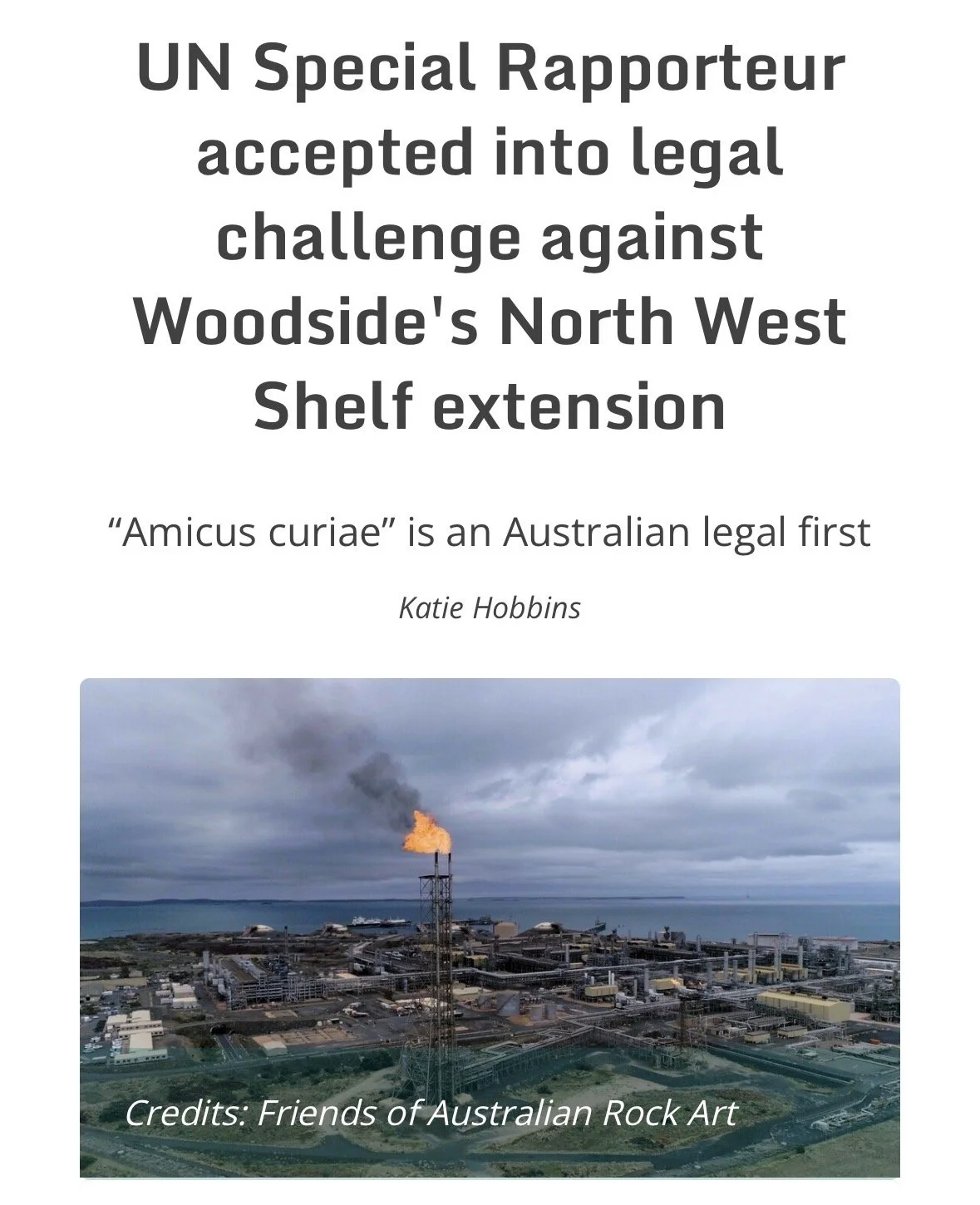
Australian context: EPBC Act interpretation, ICJ Advisory Opinion, and the evolving scope of impact assessment in Australian regulatory practice
Australia’s primary federal environment legislation, the Environment Protection and Biodiversity Conservation Act 1999 (Cth), requires the Minister to assess the “impact” of a controlled action on relevant matters of national environmental significance before granting approval. The Act does not exhaustively define “impact,” and this interpretive gap is precisely what is being tested in the NWS proceedings. Previous approvals have generally treated “impact” as referring to direct and reasonably proximate physical or ecological consequences occurring at or near the project site. The ACF’s challenge, supported by the Special Rapporteur’s submissions, argues for a broader reading that would require decision-makers to account for the full climate consequences of a project’s emissions, including those arising from the downstream combustion of exported gas.
References and related sources
- Primary source: www.acf.org.au
- fara.com.au
- wtvbam.com
- ohchr.org
- envirojustice.org.au
- EPBC Act
How iEnvi can help
iEnvi provides specialist consulting services relevant to this topic. Our team includes CEnvP Site Contamination Specialists with experience across contaminated land, groundwater, remediation, ecology, and regulatory compliance.
- iEnvi contaminated land investigation services
- iEnvi remediation and validation services
- iEnvi expert services and independent review services
This is an iEnvi Machete news summary. Prepared by iEnvi to summarise the source article for contaminated land, groundwater, remediation, approvals and site risk professionals.
Published: 31 May 2026
Need advice on this topic? Speak to an iEnvi expert at info@ienvi.com.au or 1300 043 684, or contact us online.
Need advice on this issue? iEnvi provides practical, senior-led environmental consulting across contaminated land, remediation, ecology and environmental risk.
Team credentials Contaminated land services Remediation services Groundwater services Talk to iEnvi