
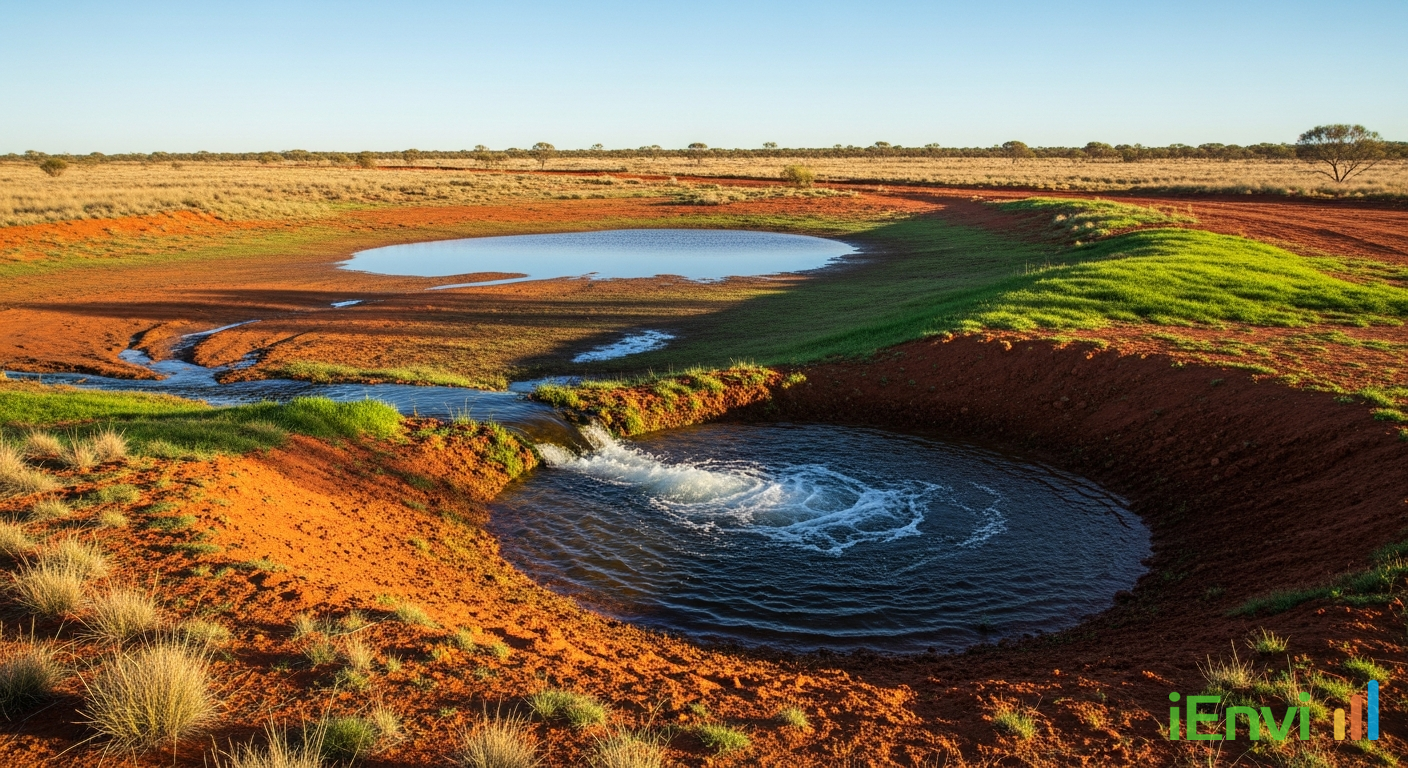
Great Artesian Basin Water Savings Overview
The Australian and Queensland Governments announced on 22 July 2024 that the Great Artesian Basin Rehabilitation Program (GABRP) has saved 4,923 megalitres (ML) of water over the 2023-24 financial year, representing one of the most tangible groundwater conservation outcomes delivered by a joint government infrastructure programme in recent Australian history. The result was achieved through the rehabilitation of 30 artesian bores, the installation of seven controlled watering systems, and the decommissioning of 150 kilometres of open bore drains, which were replaced with efficient piped water distribution systems. The announcement was made jointly by the Australian Government’s Department of Climate Change, Energy, the Environment and Water (DCCEEW) and the Queensland Government.
Over its 35-year operational lifetime, the GABRP has rehabilitated 809 uncontrolled artesian bores and replaced more than 15,542 kilometres of open bore drains, generating cumulative water savings of nearly 232,000 ML per annum. The programme is not simply an infrastructure exercise. The sustained reduction in uncontrolled discharge has restored artesian pressure across the basin, bringing previously ceased-to-flow bores and ecologically critical natural mound springs back to functional condition. These mound springs are highly biodiverse, geologically unique habitats that support endemic flora and fauna found nowhere else on earth.
To consolidate these gains, both governments have committed $9.7 million in funding for 36 new projects in the coming financial year, with a projected additional saving of 4,960 ML per annum. For environmental consultants, hydrogeologists, water resource managers, and the developers and regional industries that depend on Great Artesian Basin groundwater, these announcements have direct consequences for project planning, regulatory compliance, and ecological baseline assessment. The Great Artesian Basin underpins water supply for over 80 regional towns and supports industries contributing $22.6 billion annually to the Australian economy, spanning grazing, cropping, mining, tourism, and geothermal energy.
Key details of the 2023-24 GABRP achievements and funding commitments
The 2023-24 result of 4,923 ML saved in a single financial year was driven by three discrete infrastructure interventions. Thirty artesian bores were rehabilitated to controlled flow, seven new controlled watering systems were installed, and 150 kilometres of open bore drains were decommissioned and replaced with piped systems. Each of these interventions directly reduces uncontrolled, free-flowing discharge from the confined aquifer system that underlies approximately 22 percent of the Australian continent, covering parts of Queensland, New South Wales, South Australia, and the Northern Territory.
The cumulative programme statistics are substantial. Since the GABRP commenced, 809 uncontrolled artesian bores have been rehabilitated and more than 15,542 kilometres of open bore drains have been replaced. The resulting cumulative water saving is nearly 232,000 ML per annum. To contextualise that figure, 232,000 ML per annum is equivalent to roughly 232 billion litres of water per year that is no longer lost to uncontrolled surface discharge, evaporation, and seepage. Open bore drains operating without flow control lose enormous volumes to evaporation in the arid and semi-arid environments through which the Great Artesian Basin extends. The conversion to piped systems eliminates these evaporative losses almost entirely and removes the seepage pathways that historically caused localised soil salinisation, erosion, and weed establishment along drain corridors.
The restoration of artesian pressure is the most ecologically significant consequence of this cumulative water saving. When confined aquifer pressure is reduced through uncontrolled discharge, bores that were once artesian (that is, where pressure was sufficient to push water to the surface without pumping) can cease to flow. The GABRP data confirms that pressure recovery has been sufficient to restore flow in previously ceased bores and to revive natural mound springs. Mound springs are formed where artesian pressure forces groundwater to the surface through geological conduits, depositing minerals that build characteristic mound structures over geological timescales. They are listed as threatened ecological communities under Queensland and Commonwealth legislation, and their hydrological condition is directly tied to aquifer pressure.
The forward commitment of $9.7 million across 36 new projects in 2024-25 projects an additional saving of 4,960 ML per annum, broadly consistent with the 2023-24 result. This continuity of investment signals that both governments regard the programme as delivering reliable, measurable returns on infrastructure expenditure, with each project independently auditable against flow metering data from rehabilitated bores.
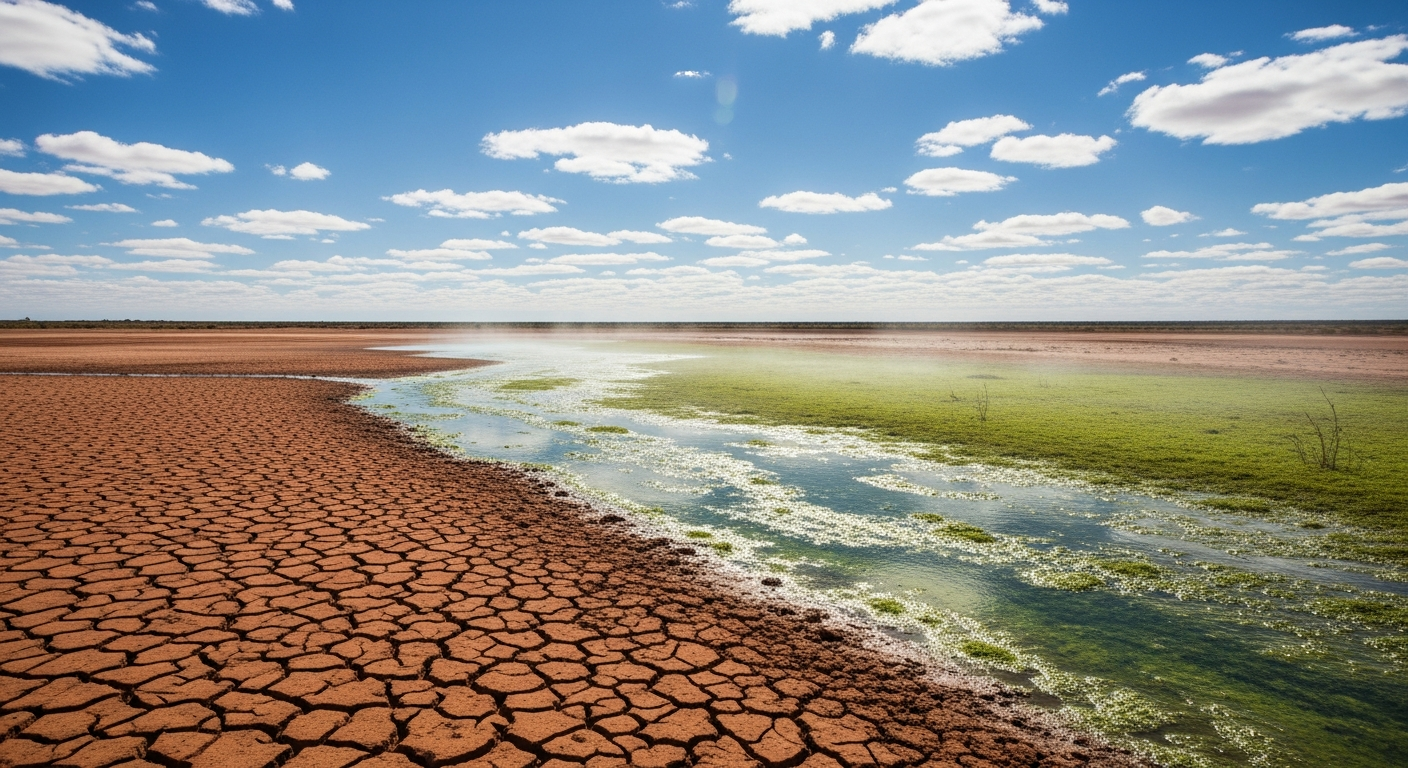
Australian regulatory context: Great Artesian Basin groundwater management and GDE protection frameworks
The Great Artesian Basin is managed under an interlocking set of Commonwealth and state instruments. At the Commonwealth level, the Water Act 2007 (Cth) establishes the overarching framework for water resource management in the Murray-Darling Basin and for the Commonwealth’s role in cooperative water management arrangements nationally. The Great Artesian Basin itself falls predominantly under Queensland’s Water Plan (Great Artesian Basin and Other Regional Aquifers) 2017, which governs water allocation, take, and use from the basin’s aquifer systems within Queensland. That plan sets the conditions under which licence holders, including pastoral operators, mining proponents, and resource companies, can draw on artesian and subartesian water. Hydrogeological models submitted in support of environmental impact statements (EIS) must align with these updated pressure recovery models to secure approvals.
References and related sources
- Primary source: minister.dcceew.gov.au
- murweh.qld.gov.au
How iEnvi can help
iEnvi provides specialist consulting services relevant to this topic. Our team includes CEnvP Site Contamination Specialists with experience across contaminated land, groundwater, remediation, ecology, and regulatory compliance.
- iEnvi groundwater services
- iEnvi remediation and validation services
- iEnvi expert services and independent review services
This is an iEnvi Machete news summary. Prepared by iEnvi to summarise the source article for contaminated land, groundwater, remediation, approvals and site risk professionals.
Published: 26 Jul 2026
Need advice on this topic? Speak to an iEnvi expert at info@ienvi.com.au or 1300 043 684, or contact us online.
Need advice on this issue? iEnvi provides practical, senior-led environmental consulting across contaminated land, remediation, ecology and environmental risk.
Team credentials Flora and fauna assessment Contaminated land services Remediation services Talk to iEnvi