
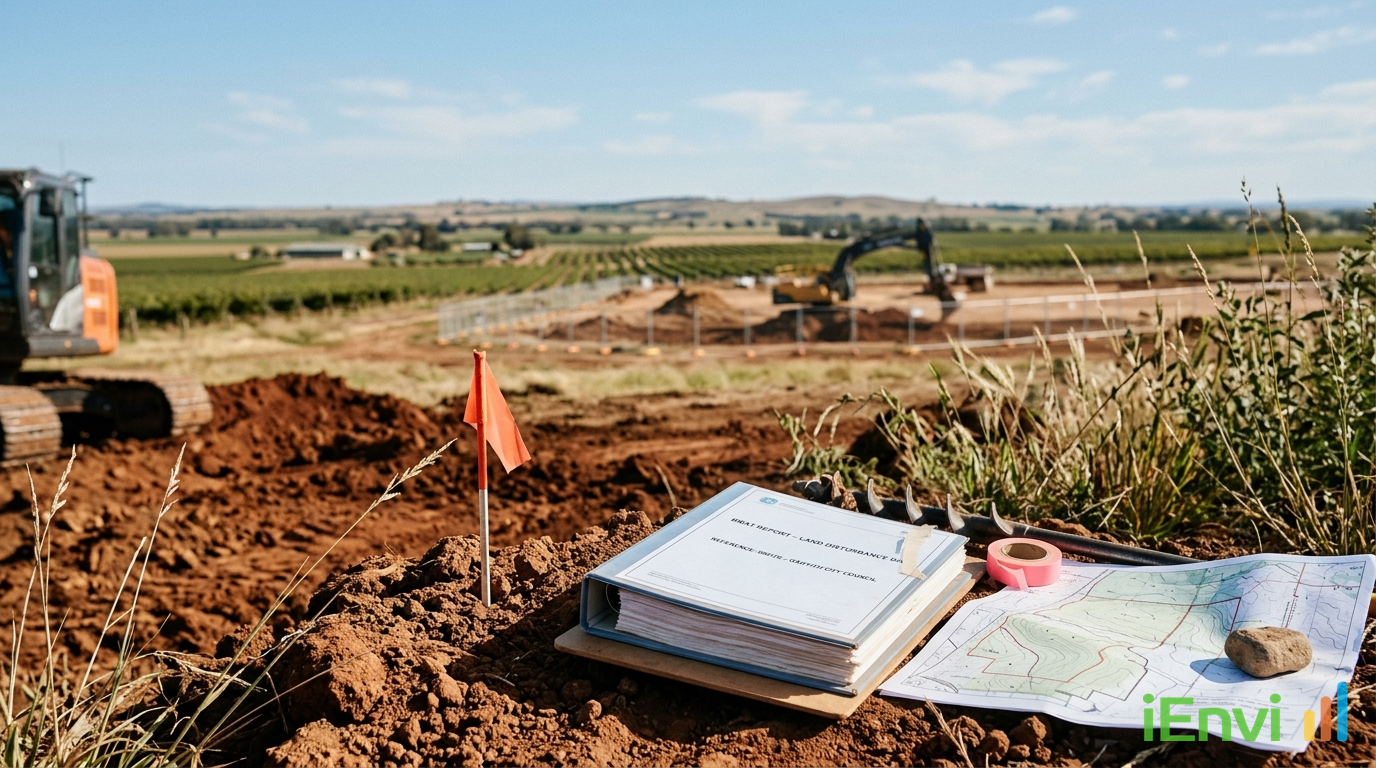
Mandatory BMAT Reports for Griffith Development Applications
Griffith City Council has confirmed that from 1 August 2024, every Development Application involving earthworks, land disturbance, native vegetation removal or potential impacts on biodiversity must include a Biodiversity Values Map and Threshold (BMAT) Report or Letter at the point of lodgement. The announcement, published on the council’s website on 29 July 2024, converts what was previously a discretionary, case-by-case request from council planning staff into a fixed lodgement requirement applied uniformly across all qualifying DAs.
This matters because it removes a procedural gap that developers, landholders and their consultants have relied on for years. Under the old approach, a proponent could lodge a DA, wait for council to assess it, and only then be asked to go back and obtain biodiversity screening if a planning officer flagged a potential issue. That sequencing allowed engineering designs, subdivision layouts and financial models to be locked in before anyone had confirmed whether the site actually triggered the state’s Biodiversity Offsets Scheme (BOS). Griffith’s change forces that question to be answered before the DA is even accepted.
For environmental consultants, town planners, developers, landholders and their legal advisers operating in regional NSW, this is a signal that local government is tightening the interface between the Environmental Planning and Assessment Act 1979 (NSW) and the Biodiversity Conservation Act 2016 (NSW). Councils are no longer willing to carry the administrative burden, or the legal risk, of processing DAs where biodiversity offset obligations have not been screened. Proponents planning subdivisions, rural residential development, infrastructure works or vegetation clearing in the Griffith local government area need to build BMAT screening into their pre-lodgement workflow, not their post-lodgement response to a council request.
Biodiversity Offsets Scheme Triggers and Compliance Workflow
The BMAT Report or Letter is generated through the NSW Biodiversity Values Map and Threshold Tool, a spatial screening tool administered by the NSW Department of Climate Change, Energy, the Environment and Water. The tool cross-references a proposed development footprint against the statutory Biodiversity Values Map and against clearing area thresholds that are set according to the minimum lot size applying to the land. A proposal enters the Biodiversity Offsets Scheme if it meets any one of three statutory triggers under the Biodiversity Conservation Regulation 2017 (NSW): clearing of native vegetation on land mapped on the Biodiversity Values Map, clearing that exceeds the area threshold linked to minimum lot size, or a likely significant impact on threatened species or ecological communities established through the Test of Significance under section 7.3 of the Biodiversity Conservation Act 2016.
If none of these triggers apply, the BMAT output confirms the development is not required to enter the BOS, and the DA can proceed through Griffith’s standard assessment pathway without further biodiversity offset documentation. If any trigger is met, the applicant must engage an accredited assessor to prepare a Biodiversity Development Assessment Report (BDAR) using the Biodiversity Assessment Method (BAM), which quantifies impacts on native vegetation and threatened species habitat and calculates the biodiversity credits required to offset them. That credit liability then has to be secured, typically through purchase of like-for-like biodiversity credits or payment into the Biodiversity Conservation Fund, before development consent can be finalised.
Griffith’s mandatory lodgement requirement applies to all relevant DAs, meaning council will not accept an application as complete unless the BMAT documentation is attached from the outset. This is a procedural change rather than a change to the underlying biodiversity legislation itself. The statutory triggers, thresholds and BOS mechanics under the Biodiversity Conservation Act 2016 and its Regulation remain unchanged. What has changed is the administrative checkpoint at which council enforces compliance, moving it from a discretionary mid-assessment query to a non-negotiable lodgement gate under the Environmental Planning and Assessment Act 1979 assessment process.
Practically, this means council will be positioned to reject or flag as incomplete any DA involving land disturbance, clearing or earthworks that arrives without a current BMAT output. Given that BMAT reports are tied to a specific development footprint and are generated against current mapping, proponents cannot simply reuse an old report from an earlier concept design if the footprint or lot boundaries have since changed. Consultants preparing DA packages for the Griffith LGA will need to confirm the BMAT report reflects the final disturbance area being lodged, not an earlier feasibility-stage layout.
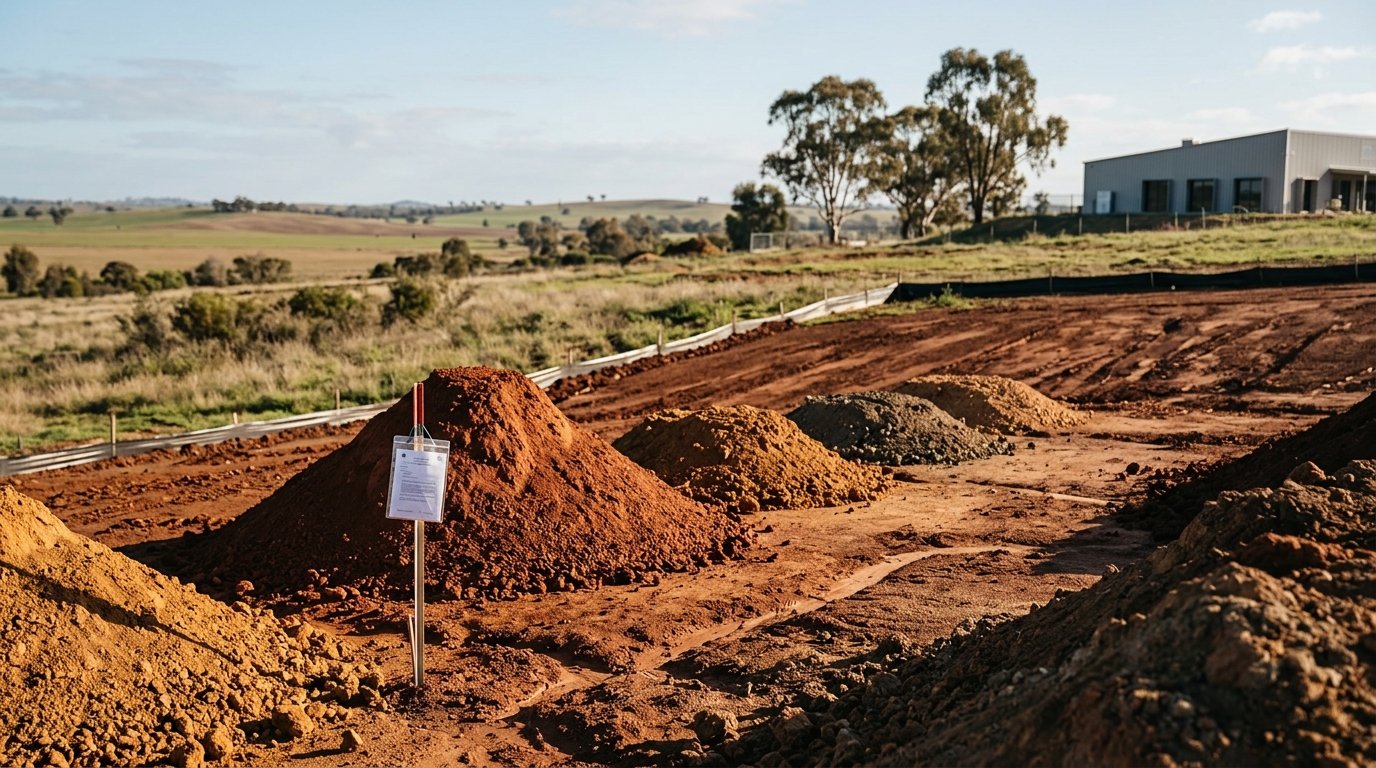
NSW biodiversity offsets scheme implications for regional councils
Griffith’s approach sits within a broader pattern of regional NSW councils tightening alignment between local DA processing and state biodiversity law. The Biodiversity Conservation Act 2016 and its associated BOS have applied statewide since 2017, but enforcement of upfront screening at the DA lodgement stage has historically varied significantly between local government areas. Metropolitan and larger regional councils with dedicated ecology teams have generally been more consistent in requesting BMAT or BDAR documentation early, while smaller regional councils have often relied on referral processes or post-lodgement information requests. Griffith’s move to a mandatory upfront requirement reduces that inconsistency and brings the council’s DA checklist closer to what practitioners already encounter in jurisdictions with more developed environmental planning teams.
For consultants working across multiple local government areas, the practical lesson is to treat BMAT screening as a standard early-stage deliverable regardless of which council the DA will be lodged with. If Griffith’s approach is adopted more widely, as the trend suggests it will be, proponents who run the BMAT tool at the feasibility stage will avoid the delays and redesign costs that come from discovering a BOS trigger after layouts and budgets have been settled. Landholders and developers active in the Griffith LGA should review any DAs currently in preparation to confirm that BMAT documentation matching the final development footprint is ready to accompany the application at lodgement.
References and related sources
- Primary source: www.griffith.nsw.gov.au
- https://www.griffith.nsw.gov.au/media-releases/biodiversity-information-required
- EPBC Act
How iEnvi can help
iEnvi provides specialist consulting services relevant to this topic. Our team includes CEnvP Site Contamination Specialists with experience across contaminated land, groundwater, remediation, ecology, and regulatory compliance.
- iEnvi due diligence services
- iEnvi remediation and validation services
- iEnvi expert services and independent review services
This is an iEnvi Machete news summary. Prepared by iEnvi to summarise the source article for contaminated land, groundwater, remediation, approvals and site risk professionals.
Published: 05 Aug 2026
Need advice on this topic? Speak to an iEnvi expert at info@ienvi.com.au or 1300 043 684, or contact us online.
Need advice on this issue? iEnvi provides practical, senior-led environmental consulting across contaminated land, remediation, ecology and environmental risk.
Team credentials Contaminated land services Remediation services Groundwater services Talk to iEnvi