
Overview
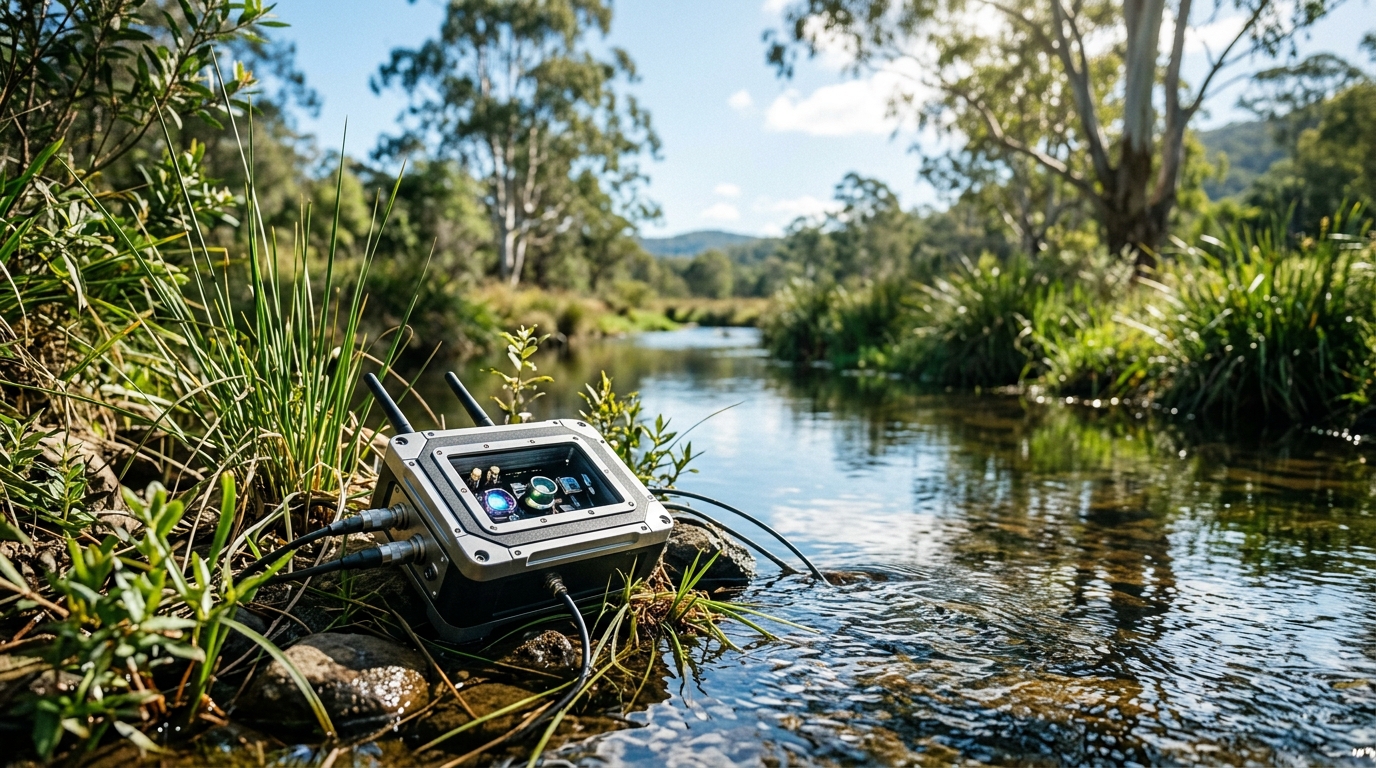
The development of a rapid, portable on-site sensor for perfluorooctanoic acid (PFOA) by Dr Ming Zhou, Lipeng Gan, and the research team at the Australian Rivers Institute, Griffith University, represents a substantial technical advancement in contaminated land management. Announced on 8 May 2026, this research introduces a field-deployable testing method designed to provide rapid, highly sensitive, and selective on-site detection of PFOA in water samples. For environmental professionals, property developers, and legal counsel, this technology addresses one of the most persistent bottlenecks in site characterisation: the long turnaround times and high costs associated with traditional laboratory analysis for per- and polyfluoroalkyl substances (PFAS).
Under current practice, characterising PFAS plumes in groundwater and surface water requires collecting samples and transporting them to commercial laboratories for analysis. This process frequently takes several business days or weeks, forcing projects into holding patterns or requiring multiple field mobilisations as consultants attempt to step out and delineate the boundaries of a plume. By providing an immediate analytical feedback loop directly in the field, this new portable sensor allows environmental consultants to map contamination pathways in real time, drastically reducing project timelines and helping clients make informed decisions during critical transaction or construction phases.
This technological shift represents a major change in how site investigations can be structured. Rather than relying solely on static sampling plans determined weeks in advance, practitioners can employ dynamic, adaptive sampling designs that respond directly to real-time field data. While laboratory verification remains essential for regulatory compliance, the ability to screen water samples rapidly on-site changes the economics of environmental due diligence, infrastructure construction, and remedial monitoring.
Key details
The technical foundation of this innovation lies in a molecularly imprinted polyaniline-functionalised lateral-flow membrane. Molecular imprinting is a process where synthetic receptor sites are created within a polymer matrix, designed to match the specific shape, size, and chemical charge of a target analyte. In this application, perfluorooctanoic acid (PFOA) is used as the template molecule during the synthesis of the polymer. When a water sample is applied to the lateral-flow membrane, any PFOA present in the sample binds selectively to these custom-designed cavities, ensuring high adsorption selectivity even in complex water matrices containing other dissolved organic compounds or salts.
Polyaniline, a conductive polymer, is integrated into the membrane to facilitate signal transduction. When PFOA molecules bind to the molecularly imprinted sites, they alter the electrical or optical properties of the membrane, allowing for quantitative detection without the need for complex, multi-step sample pretreatment. This is a significant departure from standard laboratory methodologies, such as liquid chromatography-tandem mass spectrometry (LC-MS/MS). While LC-MS/MS offers exceptional sensitivity and is capable of detecting PFAS compounds at parts-per-trillion levels, it requires sophisticated sample extraction, expensive consumables, and highly trained personnel, making it entirely unsuitable for rapid field application.
Despite these advantages, environmental practitioners must understand the limitations of the current prototype. The sensor has been specifically designed and validated for PFOA selectivity. In real-world contamination scenarios, PFOA is rarely the sole contaminant of concern. PFAS plumes typically consist of a complex mixture of multiple compounds, including perfluorooctane sulfonate (PFOS), perfluorohexane sulfonate (PFHxS), and various fluorotelomer precursor compounds. Because the current sensor relies on a highly specific molecular template, it does not detect these other compounds with the same sensitivity, meaning that multi-compound validation is still required before the sensor can be used as a comprehensive screening tool for general PFAS contamination.
Nevertheless, the ability to obtain highly sensitive PFOA measurements on-site, without complex sample preparation, represents a significant step forward. Commercial laboratory analysis for standard PFAS suites typically costs between 150 and 300 Australian dollars per sample. During a comprehensive site investigation, the cumulative cost of assessing multiple groundwater wells, surface water bodies, and soil stockpiles can escalate rapidly. The implementation of a cost-effective, portable sensor allows projects to increase their sampling density significantly, mapping the lateral and vertical extent of contamination with greater spatial resolution than is financially viable using laboratory testing alone.
Australian context
In Australia, the assessment and management of contaminated sites are heavily regulated under state-based legislation and national guidelines. The primary framework for site characterisation is the National Environment Protection (Assessment of Site Contamination) Measure 1999 (as amended in 2013), commonly referred to as the ASC NEPM. For PFAS specifically, the PFAS National Environmental Management Plan (PFAS NEMP) provides the definitive regulatory guidelines, with version 3.0 establishing the current national standards. Additionally, the Australian Drinking Water Guidelines (ADWG) were updated in June 2025 to introduce much lower, more conservative guideline values for several PFAS compounds, including PFOA. These regulatory changes have placed greater pressure on site owners and developers to demonstrate rigorous characterisation of potential PFAS risks.
The introduction of a rapid PFOA field sensor aligns with the data quality objectives (DQOs) process set out under the ASC NEPM, which requires investigators to define the type, quality, and quantity of data needed to support defensible decisions about site contamination. On-site screening data generated by the sensor can be used during the early stages of an investigation to refine conceptual site models, guide the placement of confirmatory sampling locations, and identify hotspots that warrant detailed laboratory analysis. Used in this tiered manner, the sensor supports a more efficient allocation of laboratory budget toward samples that carry the greatest regulatory weight, while still maintaining the evidentiary standard required under the PFAS NEMP and relevant state jurisdictional guidance. Laboratory analysis using LC-MS/MS will continue to be required for compliance reporting, site validation, and regulatory submissions, but the sensor offers a practical tool for accelerating the investigative phase and reducing the overall cost and duration of PFOA-focused assessments.
References and related sources
- Primary source: news.griffith.edu.au
- PFAS National Environmental Management Plan (NEMP)
- Australian Drinking Water Guidelines
How iEnvi can help
iEnvi provides specialist consulting services relevant to this topic. Our team includes CEnvP Site Contamination Specialists with experience across contaminated land, groundwater, remediation, ecology, and regulatory compliance.
- iEnvi groundwater services
- iEnvi remediation and validation services
- iEnvi expert services and independent review services
This is an iEnvi Machete news summary. Prepared by iEnvi to summarise the source article for contaminated land, groundwater, remediation, approvals and site risk professionals.
Published: 20 May 2026
Need advice on this topic? Speak to an iEnvi expert at info@ienvi.com.au or 1300 043 684, or contact us online.
Need advice on this issue? iEnvi provides practical, senior-led environmental consulting across contaminated land, remediation, ecology and environmental risk.
Team credentials Environmental management plans Contaminated land advice Remediation services Talk to iEnvi