

Summary
<h2>Overview</h2>
<p>Humanoid robotics has reached a significant milestone in 2026, with new hardware and learning architectures pushing automated systems well beyond the repetitive, structured tasks that defined the previous generation of industrial robots. Reporting from March 2026 highlights two intersecting developments: the emergence of the Sharpa Wave robotic hand, which incorporates 22 degrees of freedom and more than 1,000 tactile sensors per fingertip, and advances in latent learning algorithms that allow robots to operate in dynamic, unpredictable environments without relying on perfectly curated training data. Together, these developments signal a shift in what physically embodied AI systems can realistically do in commercial and industrial settings.</p>
<p>The significance of this shift lies in its practical reach. Until recently, robotic automation was largely confined to tasks with high repeatability and low variability: welding seams, picking uniform objects from conveyor belts, or performing scripted assembly in controlled environments. High-dexterity manipulation, the kind required to peel fruit, assemble small electronics, or handle fragile irregularly shaped objects, remained firmly in the domain of human labour. The Sharpa Wave system, combined with adaptive learning frameworks, appears to be narrowing that gap in a way that previous hardware generations could not.</p>
<p>It is worth noting that the primary source for this reporting is a secondary news aggregator, and independent verification against peer-reviewed technical literature or primary manufacturer documentation is advisable before drawing firm conclusions for procurement or operational planning. Nevertheless, the technical claims align with broader trends visible across the robotics research community in 2025 and 2026, and the directional shift they describe is consistent with what specialist publications have been anticipating for some time.</p>
<h2>Key details</h2>
<p>The Sharpa Wave robotic hand is reported to feature 22 degrees of freedom, a figure that is significant in biomechanical terms. The human hand operates with approximately 27 degrees of freedom when accounting for all joints and wrist articulation, so a system with 22 degrees of freedom achieves a level of kinematic complexity that closely mirrors human capability. This allows the end-effector to adopt a wide range of grip configurations, apply differentiated force across individual finger segments, and reorient objects with a precision that conventional industrial grippers, which typically operate with two to four degrees of freedom, cannot approach. The system also incorporates more than 1,000 tactile sensors per fingertip, enabling force-controlled manipulation where the robot can detect and respond to subtle variations in surface texture, resistance, and object deformation in real time.</p>
<p>Demonstrated applications include the assembly of personal computer components, which requires positioning and seating connectors with tolerances measured in fractions of a millimetre, and the peeling of fruit, a task that demands variable force application across an irregular, compliant surface. Both tasks are representative of a broader class of manipulation problems that have historically resisted automation: they involve high variability, require continuous tactile feedback, and cannot be reliably completed using pre-programmed positional commands alone.</p>
<p>The latent learning framework described in the reporting addresses a separate but equally important bottleneck. Traditional machine learning approaches for robotic control have required either large volumes of carefully curated training data or extensive simulation environments designed to mirror real-world conditions precisely. Both approaches are resource-intensive and time-consuming. Latent learning, as described here, refers to a policy-learning architecture that can extract usable control signals from noisy, imperfect human motion capture data. Rather than requiring demonstration data to be clean and consistent, the system learns generalised behavioural policies from datasets that include natural human variability, hesitation, and error. This has been demonstrated through real-time tennis rally participation, where the robot must respond to unpredictable ball trajectories and adjust its movements within fractions of a second, a closed-loop control problem of considerable complexity.</p>
<p>The practical consequence is a reduction in the data preparation overhead that has historically slowed the deployment of adaptive robotic systems. If training pipelines can accommodate imperfect human demonstration data, the cost and time required to stand up new robotic capabilities in varied industrial environments decreases substantially. This has direct implications for the economics of automation in sectors where production lines change frequently, product runs are short, or operating conditions vary across sites.</p>
<h2>Australian context</h2>
<p>Australia's professional services and industrial sectors are at a point where these developments carry genuine strategic relevance. The country has a comparatively high labour cost base, a concentration of industries that involve manual handling of variable or delicate materials (including food processing, mining equipment maintenance, pharmaceutical handling, and electronics logistics), and a growing policy interest in onshoring manufacturing capability. High-dexterity robotic systems capable of operating in unstructured environments could address several of these pressures simultaneously, though the pace at which such systems move from demonstration to reliable production deployment will determine how quickly that relevance becomes actionable.</p>
<p>From a regulatory and standards perspective, the deployment of advanced robotic systems in Australian workplaces is governed primarily through work health and safety legislation, including the model Work Health and Safety Act as adopted across jurisdictions, and relevant technical standards such as ISO 10218, which sets out safety requirements for industrial robots. Organisations evaluating these systems will need to consider both the evolving capability profile of the hardware and the compliance obligations that apply to human-robot collaboration in operational environments.</p>
Background and context
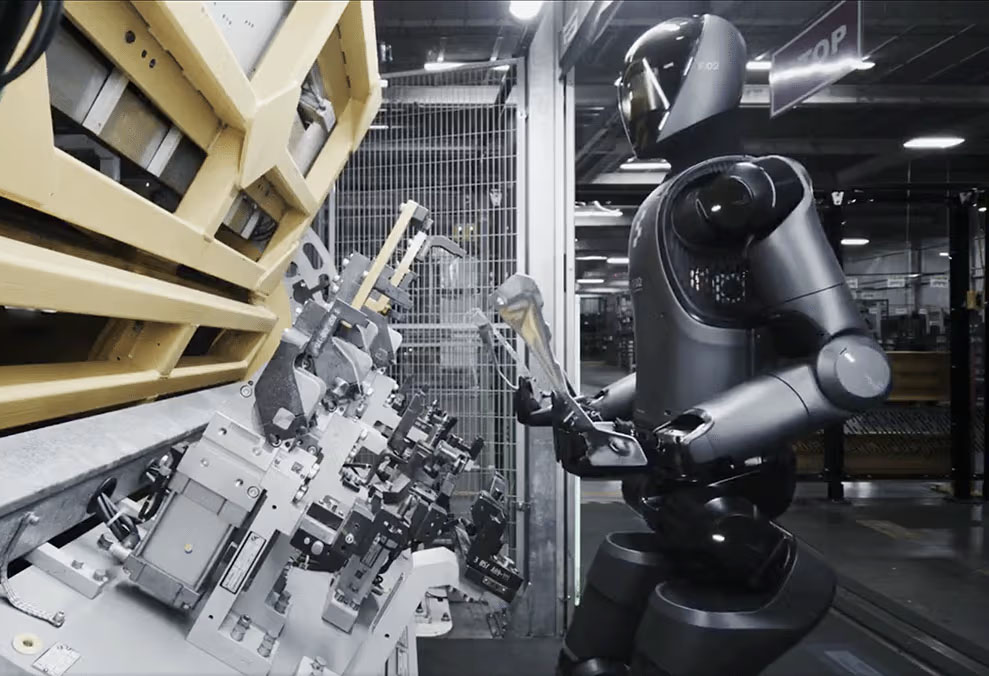
Core News: Breakthrough in Humanoid Robot Dexterity and Latent Learning
Recent reports from March 20, 2026, highlight significant breakthroughs in humanoid robotics, specifically in dexterous manipulation and real-time, adaptive learning. New robotic hands, branded as "Sharpa Wave," have achieved a high level of precision by utilizing 22 degrees of freedom and over 1,000 tactile sensors per fingertip. These hands have demonstrated the ability to perform complex, fine-motor tasks such as assembling personal computer components and peeling fruit. Simultaneously, advancements in "latent learning" algorithms are enabling humanoid robots to participate in dynamic, unpredictable activities—such as real-time tennis rallies—by training on imperfect human motion data, allowing them to adapt to environments without requiring perfectly curated datasets.
Why It Matters for Professionals and Businesses
This development marks a critical shift for industrial and service-oriented businesses. The ability of humanoid robots to move beyond repetitive, pre-programmed industrial tasks into unstructured, high-precision manipulation and dynamic interaction significantly lowers the barrier for automation in fields like electronics manufacturing, delicate food handling, and logistics. For consultants and enterprise leaders, this signals that the "embodied AI" wave is moving toward practical, high-dexterity deployment, moving beyond simple proof-of-concept demos to tasks that previously required human-level intuition and motor control. Companies that integrate these adaptive systems can expect to see reduced labor costs and increased flexibility in their production lines.
Humanoid robotics reach a new milestone in 2026 with Sharpa Wave’s high-dexterity hands and latent learning, enabling robots to perform fine-motor assembly and adapt in dynamic, real-world environments.
References and related sources
- Primary source: blockchain.news
- marketingprofs.com
- robot-magazine.fr
How iEnvi can help
iEnvi integrates technology and data-driven approaches into environmental consulting. We monitor AI and technology developments that affect how environmental professionals deliver services to clients.
This is an iEnvi Machete news summary. Prepared by iEnvi to summarise the source article for contaminated land, groundwater, remediation, approvals and site risk professionals.
Published: 22 Mar 2026
Need advice on this topic? Speak to an iEnvi expert at info@ienvi.com.au or 1300 043 684, or contact us online.
Need advice on this issue? iEnvi provides practical, senior-led environmental consulting across contaminated land, remediation, ecology and environmental risk.
Contaminated land services Remediation services Groundwater services Talk to iEnvi