
Overview
On 21 July 2026, the Heidelberg Magistrates Court handed down a $60,000 fine to Joseph Chetcuti, the owner of a 19,000 square metre property at Black Gully Road, Diamond Creek, Victoria, following his guilty plea to two charges brought by EPA Victoria under the Environment Protection Act 2017 (Vic). In addition to the fine, Chetcuti was ordered to pay $12,000 in prosecution costs and faces a court-mandated cleanup obligation on a site where EPA Victoria has estimated remediation costs will exceed $1 million. This prosecution is understood to represent the highest individual fine issued under the current Environment Protection Act 2017 (Vic) regime, which came into force in July 2021 and introduced substantially strengthened enforcement powers and personal liability provisions.
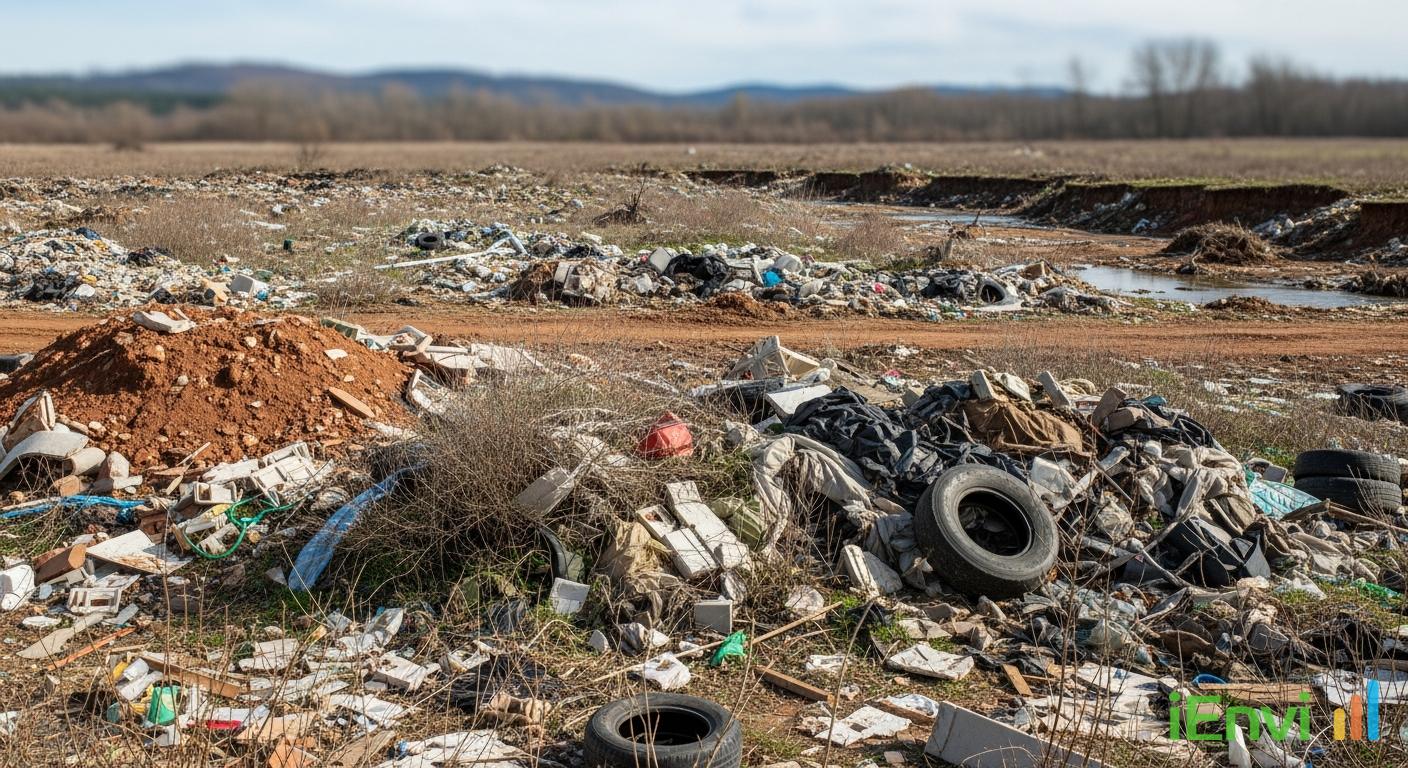
The case originated in May 2025 when EPA officers and emergency services attended the Diamond Creek property in response to a fire. What investigators discovered was not an isolated incident but a highly organised, ongoing illegal waste operation actively burning industrial waste, including construction and demolition materials, on unlicensed land. Subsequent investigation confirmed the presence of asbestos-contaminated soil across the site. EPA served an Environmental Action Notice (EAN) on Chetcuti on 14 May 2025, directing immediate corrective action. His failure to comply with that notice formed the basis of the second charge, and it is that non-compliance which elevated a serious environmental offence into a criminal prosecution with personal financial consequences that cannot be avoided through a property sale.
For environmental professionals, developers, property lawyers, and local councils in Victoria and across Australian jurisdictions, this case carries significant practical weight. It confirms that the post-2021 Victorian enforcement framework is functioning as its architects intended: holding individuals personally accountable, attaching remediation obligations to persons rather than titles, and using the courts to enforce compliance with regulatory notices. The Diamond Creek prosecution is not an outlier. It is a signal of enforcement culture and one that practitioners in Queensland, New South Wales, South Australia, and Western Australia should be watching closely as their own regulatory frameworks evolve in similar directions.
Key details of the Diamond Creek prosecution
Chetcuti pleaded guilty to two distinct charges. The first charge related to the depositing and receiving of waste, including reportable priority waste, at a site not licensed to receive such material. Under the Environment Protection Act 2017 (Vic), operating an unlicensed waste facility or accepting industrial and priority waste at an unlicensed premises is a serious offence. Reportable priority waste is a defined category under Victorian law encompassing waste streams that pose elevated risk to human health or the environment, including asbestos-containing materials, contaminated soils, and certain industrial residues. Accepting such materials at a site without the appropriate EPA licence is an offence regardless of whether the site owner had prior knowledge of every individual load delivered.
The second charge was non-compliance with an Environmental Action Notice under Section 290(1) of the Environment Protection Act 2017 (Vic). The EAN served on 14 May 2025 contained specific, actionable directions: stop accepting industrial waste at the premises immediately; stop all burning of industrial waste; engage a qualified person to classify the industrial waste present on site; remove that waste in accordance with its classification; and obtain verification from an occupational hygienist that all asbestos-containing materials had been removed to the required standard. The requirement for occupational hygienist verification is particularly significant because it sets a professional certification threshold for completion, not merely a physical cleanup milestone. Failure to comply with any direction within an EAN constitutes a standalone criminal offence under Section 290(1).
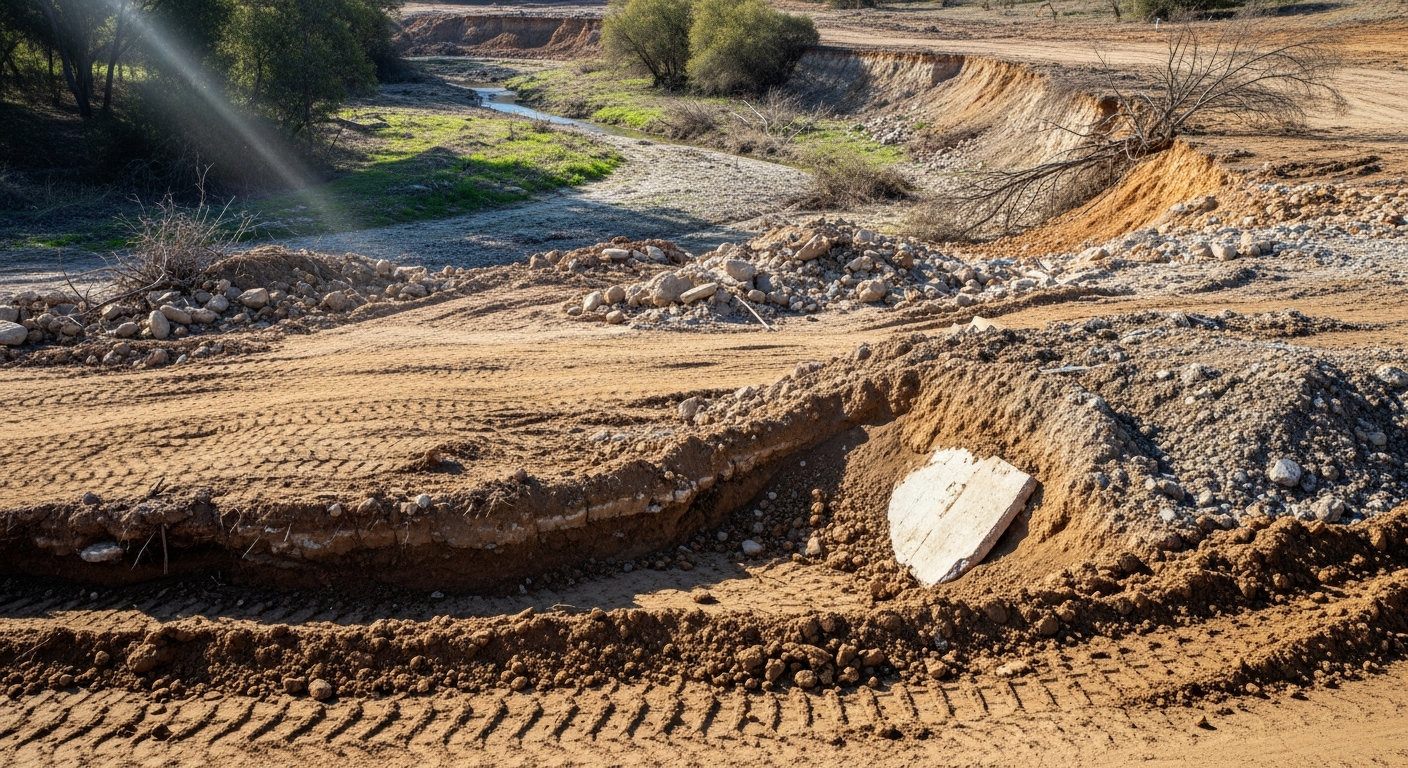
The property itself spans 19,000 square metres, roughly 1.9 hectares, in the Diamond Creek area of Melbourne’s outer north-east. The discovery of asbestos-contaminated soil across the site introduces the full suite of asbestos assessment and remediation obligations under Victorian law, including the requirement that removal of friable or bonded asbestos-containing materials be conducted by licensed removalists and verified by a qualified occupational hygienist. EPA Victoria’s estimate that cleanup costs will exceed $1 million reflects the scale of waste removed, the complexity of asbestos-in-soil characterisation and remediation, disposal at licensed facilities, and the verification sampling required to demonstrate completion. These costs are not speculative; they are the product of EPA’s own site assessment and represent what the regulator considers a minimum liability figure.
A critical feature of the court outcome is that the cleanup order attaches to Chetcuti as an individual, not to the title of the land. This means that if the property is sold, the remediation obligation does not transfer to the purchaser by default; the individual named in the order remains legally bound to complete and fund the cleanup regardless of ownership status. This is a deliberate feature of the Environment Protection Act 2017 (Vic) enforcement architecture, designed specifically to close the loophole where responsible parties historically divested contaminated land to avoid remediation costs. The practical effect is that a sale does not extinguish the personal liability already crystallised by a court order.
Australian context: personal liability, waste regulation, and the GED framework
The Diamond Creek case sits squarely within the enforcement trajectory that has defined Victorian environmental law since the 2021 reforms came into force. The Environment Protection Act 2017 (Vic) replaced the long-standing Environment Protection Act 1970 (Vic) and brought with it a general environmental duty, strengthened notice powers, and a clear legislative intent to hold individuals — not just corporations — personally accountable for environmental harm. The GED, codified at Section 25 of the Act, requires all persons who are aware that an activity may give rise to risks of harm to human health or the environment to understand those risks and take reasonably practicable steps to minimise them. Breach of the GED can itself ground enforcement action, and it underpins the broader culture of individual accountability that this prosecution reflects.
Across other Australian jurisdictions, the regulatory direction is comparable, though the pace and mechanics differ. In Queensland, the Environment Protection Act 1994 (Qld) contains environmental protection orders and notice powers that operate similarly to Victorian EANs. New South Wales relies on the Protection of the Environment Operations Act 1997 (NSW), which includes clean-up notices, prevention notices, and prohibition notices enforceable through the Land and Environment Court. South Australia’s Environment Protection Act 1993 (SA) and Western Australia’s Environmental Management Act 1994 (WA) each carry analogous provisions, though the personal liability architecture in those jurisdictions has historically been less aggressive than the post-2021 Victorian model.
What the Diamond Creek case adds to this national picture is a demonstrated willingness by a Victorian court to impose a fine at the upper range of individual penalties, attach personal remediation obligations that survive property transactions, and treat non-compliance with a regulatory notice as a criminal matter warranting court-ordered consequences. For practitioners advising clients in any Australian jurisdiction on land acquisition, development approvals, or waste management arrangements, this outcome reinforces the practical necessity of thorough environmental due diligence, clear contractual allocation of environmental liability, and genuine engagement with regulatory notices when they are served.
References and related sources
- Primary source: www.epa.vic.gov.au
- epa.vic.gov.au
- epa.vic.gov.au
- EPA Victoria
How iEnvi can help
iEnvi provides specialist consulting services relevant to this topic. Our team includes CEnvP Site Contamination Specialists with experience across contaminated land, groundwater, remediation, ecology, and regulatory compliance.
- iEnvi remediation services
- iEnvi asbestos services
- iEnvi contaminated land investigation services
- iEnvi expert services and independent review services
This is an iEnvi Machete news summary. Prepared by iEnvi to summarise the source article for contaminated land, groundwater, remediation, approvals and site risk professionals.
Published: 25 Jul 2026
Need advice on this topic? Speak to an iEnvi expert at info@ienvi.com.au or 1300 043 684, or contact us online.
Need advice on this issue? iEnvi provides practical, senior-led environmental consulting across contaminated land, remediation, ecology and environmental risk.
Team credentials Contaminated land services Remediation services Groundwater services Talk to iEnvi