

Transition to the Reef 2050 Catchment Water Quality Strategy
On 13 August 2026, Federal Minister for the Environment and Water Murray Watt and Queensland Minister for the Environment and Tourism Andrew Powell jointly released the Reef Water Quality Report Card 2023 to 2025. The report closes out the final evaluation period under the Reef 2050 Water Quality Improvement Plan and formally transitions catchment management to the Reef 2050 Catchment Water Quality Strategy, a whole of catchment systems approach with revised performance measures for landholder practices and inshore marine health.
For environmental professionals working across regional Queensland, this is not a routine reporting update. It resets the baseline data that underpins water quality modelling, offset design, and approval conditions for any project discharging to or affecting Great Barrier Reef catchments. Consultants preparing environmental impact statements, groundwater dependent ecosystem assessments, or stormwater management plans in these catchments now need to work against a different reference framework than the one used for the previous decade of reporting.
The report card is underpinned by more than 2 billion dollars in combined Australian and Queensland Government funding committed through to 2030. That funding has been directed at gully and streambank remediation, wetland restoration, and sustainable land management across the sugarcane, banana, grain, and grazing sectors, all of which are significant contributors to sediment and nutrient loads reaching the reef lagoon. For developers, agribusiness proponents, lawyers, and councils operating in these catchments, understanding what has changed in the underlying targets matters more than the headline messaging about reef health trends.
Key Pollutant Targets and Queensland Regulatory Impact
The report card tracks three principal pollutant categories entering Great Barrier Reef catchments: fine sediments, dissolved inorganic nitrogen (DIN), and agricultural pesticides. These three parameters have been the core performance indicators since the original Reef 2050 Water Quality Improvement Plan and remain the primary metrics carried forward into the new strategy, though the methodology for measuring progress against them has been revised to reflect a whole of catchment systems approach rather than sector by sector targets alone.
Progress documented in the 2023 to 2025 period is attributed to targeted, on ground works including gully remediation, streambank stabilisation, and wetland restoration, alongside changes in land management practice across sugarcane, banana, grain, and grazing operations. These are the same land use categories that drive most of the diffuse source pollutant loads modelled in the Great Barrier Reef catchment loads program, and the report card uses updated modelling outputs from that program to quantify reductions.
Regulatory oversight of activities in these catchments sits primarily under Chapter 4A of the Environmental Protection Act 1994 (Qld), which sets environmentally relevant activity standards specifically targeted at Great Barrier Reef protection. The updated strategy integrates catchment level modelling more directly into localised discharge requirements, meaning environmentally relevant activity conditions issued from this point forward are likely to reference the revised catchment baselines rather than the superseded 2050 Water Quality Improvement Plan targets. At the Commonwealth level, projects requiring assessment under the Environment Protection and Biodiversity Conservation Act 1999 must evaluate cumulative impacts on World Heritage Values, and the updated dissolved inorganic nitrogen and fine sediment baseline data released with this report card becomes the reference point for that cumulative impact modelling going forward.
The transition also formalises a sharper focus on wetland condition and inshore marine health indicators, which had previously been secondary or emerging metrics. This shift matters for practitioners because it signals that future report cards, and by extension future approval conditions, are likely to place greater weight on ecosystem condition outcomes rather than pollutant load reduction alone. Any remediation or offset project designed purely around load reduction targets without reference to receiving wetland or inshore condition may need re-evaluation against the new strategy’s broader performance measures.
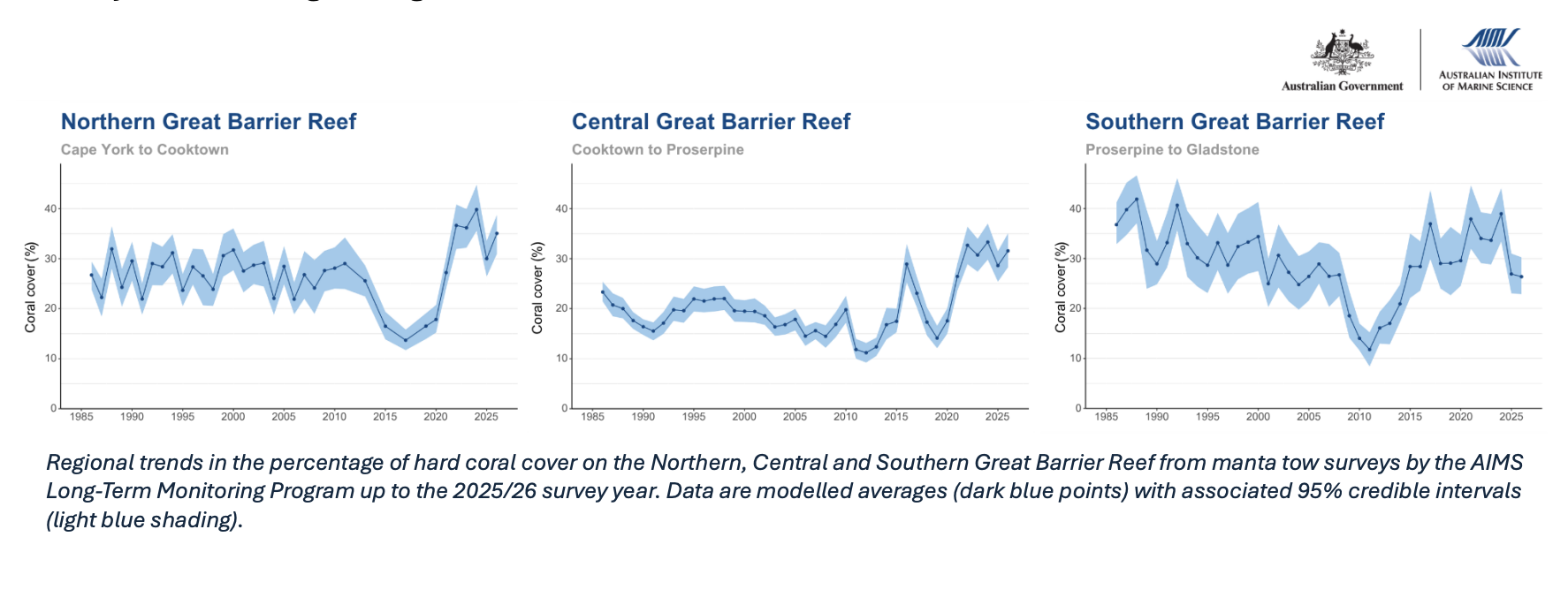
Australian context: Reef 2050 strategy and EPBC Act catchment assessments
For contaminated land and water quality practitioners outside Queensland, this development is a useful case study in how catchment scale regulatory frameworks evolve once a long running improvement plan reaches its evaluation endpoint. The mechanics here, superseding a plan with a strategy that broadens performance measures beyond the original pollutant load targets, is a pattern likely to be echoed in other jurisdictions managing catchment or receiving water quality obligations under state environmental protection legislation.
Within Queensland, the practical link to established frameworks is direct. Chapter 4A of the Environmental Protection Act 1994 already imposes reef protection regulations on agricultural environmentally relevant activities, and those regulations have historically referenced targets derived from the Reef 2050 Water Quality Improvement Plan. With that plan now formally retired in favour of the Reef 2050 Catchment Water Quality Strategy, environmentally relevant activity licence conditions, development approval conditions, and offset calculation methodologies that cite the old plan by name may require updating to remain technically accurate and legally defensible.
The Australian and New Zealand Guidelines for Fresh and Marine Water Quality (ANZG 2018) remain the default guideline value framework for aquatic ecosystem protection in these catchments, and nothing in the report card transition changes those default guideline values. What changes is the catchment scale context in which site specific trigger values are derived and applied. Practitioners deriving site specific guideline values or preparing receiving environment monitoring programs for reef catchment projects should confirm that the reference datasets they rely on align with the revised baselines released alongside this report card, rather than the superseded plan’s targets.
References and related sources
- Primary source: minister.dcceew.gov.au
- beefcentral.com
- sers.net.au
- ANZG Water Quality Guidelines
- EPBC Act
How iEnvi can help
iEnvi provides specialist consulting services relevant to this topic. Our team includes CEnvP Site Contamination Specialists with experience across contaminated land, groundwater, remediation, ecology, and regulatory compliance.
- iEnvi remediation services
- iEnvi groundwater services
- iEnvi expert services and independent review services
This is an iEnvi Machete news summary. Prepared by iEnvi to summarise the source article for contaminated land, groundwater, remediation, approvals and site risk professionals.
Published: 14 Aug 2026
Need advice on this topic? Speak to an iEnvi expert at info@ienvi.com.au or 1300 043 684, or contact us online.
Need advice on this issue? iEnvi provides practical, senior-led environmental consulting across contaminated land, remediation, ecology and environmental risk.
Team credentials Contaminated land services Remediation services Groundwater services Talk to iEnvi