
Overview
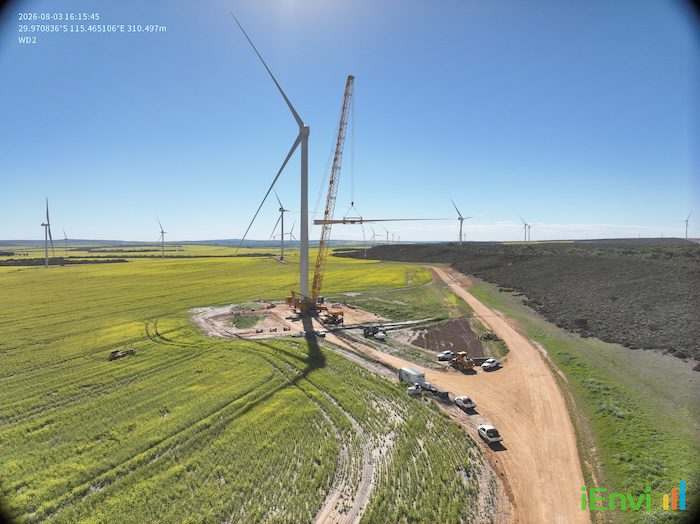
Lacour Energy, a Western Australian renewable energy developer, has referred its West Arthur Energy Project for federal assessment under the Environment Protection and Biodiversity Conservation Act 1999 (Cth) (EPBC Act). The project combines up to 92 wind turbines, totalling 736 MW of generation, with a 500 MW / 4,000 MWh Battery Energy Storage System (BESS). The site is about 3 km south of Darkan and 40 km east of Collie in the WA Wheatbelt. RenewEconomy reported the referral on 13 November 2026. Public comment on the referral closes on 26 November 2026.
The referral matters for three reasons. First, the project is a large hybrid generation and storage proposal in a region with recognised threatened fauna and vegetation values. Second, it would connect through existing transmission corridors that serve Collie’s retiring coal-fired power stations, rather than relying on an entirely new line. Third, the project is listed on the Commonwealth’s National Renewable Energy Priority List, which gives it access to faster federal decision-making. It is also running state and federal approvals at almost the same time.
The referral is relevant to several groups. Landholders and shire councils in the Darkan and Collie area have a short window to comment. Lawyers drafting option, lease and access agreements for wind and battery hosts need to understand how environmental conditions and baseline data feed into decommissioning obligations. Consultants preparing referrals for similar projects can see what a priority-listed proposal is expected to put on the table at the referral stage.
Key details
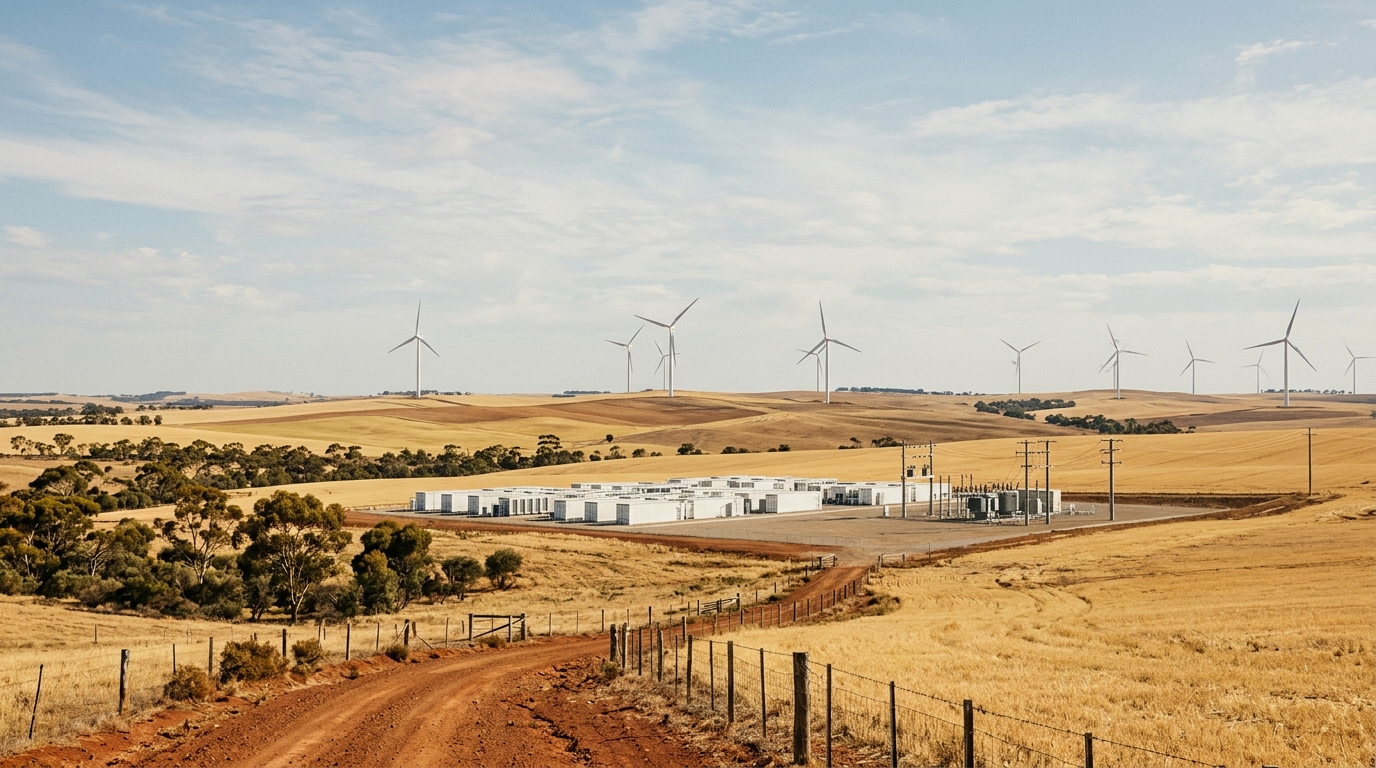
The West Arthur Energy Project proposes up to 92 wind turbines with a combined capacity of 736 MW, integrated with a 500 MW / 4,000 MWh battery. Dividing storage capacity by power rating gives an 8-hour discharge duration. That makes this a long-duration battery by current Australian standards, and a duration of that length could allow wind output to be shifted into the evening peak as well as providing short-term grid services. A battery of this scale means a large hardstand footprint, a substantial volume of battery modules, transformers and cooling systems, and ongoing fire and hazardous materials management for the operating life of the asset.
The project would connect to the South West Interconnected System (SWIS) using Western Power’s existing transmission corridor serving the Collie coal-fired power stations, via the Clean Energy Link East. Reusing transmission capacity as coal units retire reduces the length of new high-voltage line needed through farmland and remnant bush. However, the connection still needs substation works and connection infrastructure, and each of those components carries its own clearing, access and constraints footprint.
On approvals, the project was referred for WA state environmental assessment less than a month before the federal referral. The federal referral sits under Part 7 of the EPBC Act, which covers the referral of actions that may have a significant impact on Matters of National Environmental Significance (MNES) under Part 3. Under the EPBC process, the referral is published and public comment is invited for 10 business days. That is why the window for this project runs only to 26 November 2026. Listing on the National Renewable Energy Priority List is intended to speed up Commonwealth decision-making for projects considered important to the energy transition.
According to the referral documentation, about 98% of the project footprint is on land previously cleared for agricultural grazing. Lacour Energy proposes a Construction Environmental Management Plan (CEMP) to manage residual impacts on biodiversity and habitat. The remainder of the footprint is likely to include access tracks, internal cable routes, substations and connection works that cross or sit beside remnant vegetation, roadside reserves and paddock trees. Although small, that remaining area can attract a large share of the ecological assessment effort, because it is where remnant habitat is most likely to be affected.
Australian context
The West Arthur project is moving through two separate statutory pathways. In WA, a proposal is referred to the Environmental Protection Authority under section 38 of the Environmental Protection Act 1986 (WA). The EPA then decides whether to assess it under Part IV and at what level. At Commonwealth level, the Minister or delegate decides under the EPBC Act whether the action is a controlled action and, if so, which assessment approach applies. WA and the Commonwealth have an assessment bilateral arrangement that can allow one assessment process to serve both regimes. Whether that applies here depends on the decisions made after referral. Priority listing directs departmental resources towards a quicker decision, but it does not lower the evidence threshold for showing how impacts on MNES have been avoided, mitigated or offset.
In this part of the Wheatbelt, likely MNES issues can include foraging, breeding and roosting habitat for Carnaby’s black cockatoo, Baudin’s black cockatoo and the forest red-tailed black cockatoo, all listed threatened species under the EPBC Act. The Eucalypt Woodlands of the Western Australian Wheatbelt is a listed threatened ecological community that occurs in remnant patches across the region. For wind farms, collision risk to cockatoos, raptors and bats must be considered alongside direct clearing. Paddock trees, which may look minor in a cleared setting, can hold hollows used for breeding. Survey timing is critical, because breeding and flowering seasons set when credible fauna and flora surveys can be completed. Missing a seasonal window can delay a referral until the next suitable survey season.
From a land contamination view, the relevant WA instruments are the Contaminated Sites Act 2003 (WA) and the Department of Water and Environmental Regulation (DWER) contaminated sites guidelines. Battery storage, transformer oils and fuel held on site during construction are potential sources of contamination. Soil and groundwater baseline data collected before construction gives a reference point for later decommissioning and rehabilitation, and for any lease or access conditions that require host land to be returned to its prior condition.
Next steps
Submissions on the EPBC referral close on 26 November 2026. The Commonwealth will then decide whether the project is a controlled action and, if so, how it will be assessed. Separately, the WA EPA will decide whether to assess the proposal under Part IV of the Environmental Protection Act 1986 (WA). Landholders, councils and other interested parties who want their views considered at the federal referral stage need to lodge comments before the closing date.
References and related sources
- Primary source: reneweconomy.com.au
- reneweconomy.com.au
- EPBC Act
How iEnvi can help
iEnvi provides specialist consulting services relevant to this topic. Our team includes CEnvP Site Contamination Specialists with experience across contaminated land, groundwater, remediation, ecology, and regulatory compliance.
- iEnvi groundwater services
- iEnvi ecology services
- iEnvi remediation and validation services
- iEnvi expert services and independent review services
This is an iEnvi Machete news summary. Prepared by iEnvi to summarise the source article for contaminated land, groundwater, remediation, approvals and site risk professionals.
Published: 14 Nov 2026
Need advice on this topic? Speak to an iEnvi expert at info@ienvi.com.au or 1300 043 684, or contact us online.
Need advice on this issue? iEnvi provides practical, senior-led environmental consulting across contaminated land, remediation, ecology and environmental risk.
Team credentials Environmental management plans Contaminated land services Remediation services Talk to iEnvi