
Overview
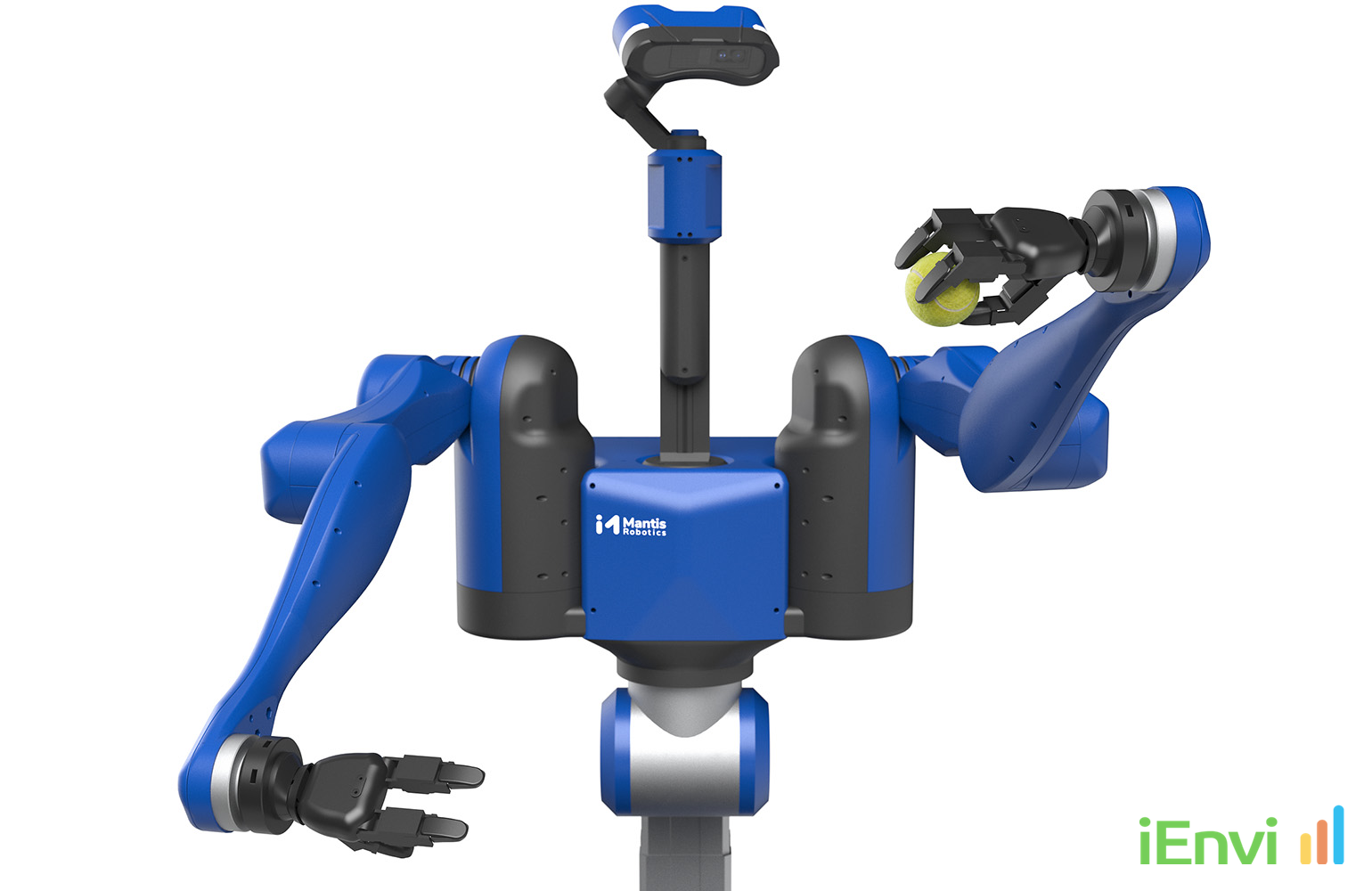
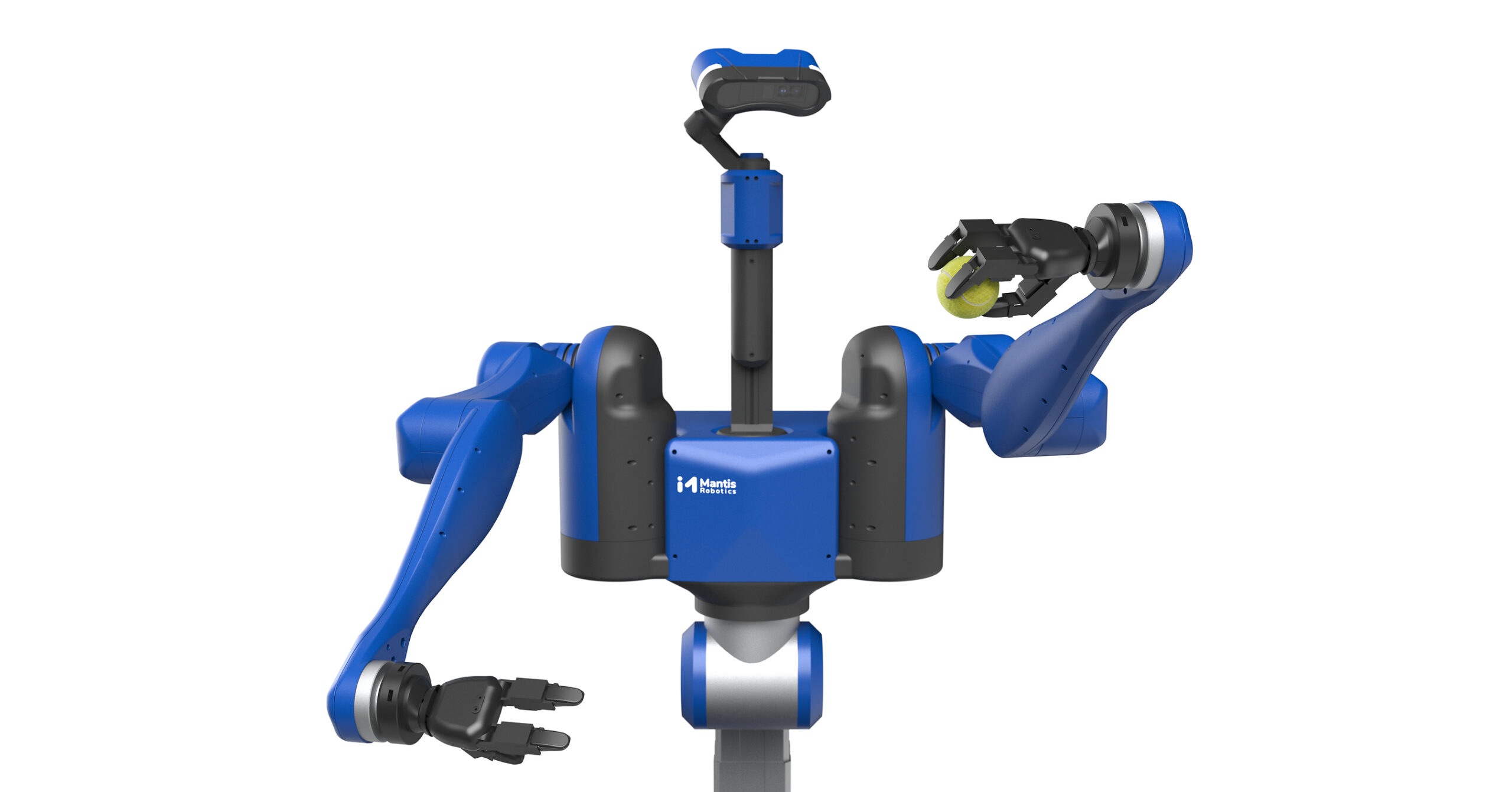
In May 2024, Mantis Robotics officially unveiled the MR-X at the Automate 2024 conference in Chicago, marking a substantive shift in the trajectory of industrial automation. The MR-X is a biomimetic, dual-arm industrial robot engineered to operate at full industrial speeds without safety fencing or cages, a combination that until now has not been commercially viable in a single platform. Powered by Mantis Robotics’ proprietary SafetyCore platform, the system is designed to close the longstanding performance gap between high-speed industrial robots and the slower collaborative robots, known as cobots, that have been the only fenceless option available to manufacturers and logistics operators.
The announcement has drawn significant attention from automation professionals and operations managers globally because it directly challenges one of the most entrenched compromises in factory and warehouse design. Traditional industrial robots require physical barriers to protect workers, which consumes floor space, increases capital costs, and limits flexibility in brownfield facilities where reconfiguring layouts is expensive. Cobots removed that constraint but introduced a different limitation: their safety profiles require them to slow down dramatically when humans are present, capping productivity. The MR-X is positioned as a resolution to both constraints simultaneously, which, if it performs as specified in production environments, has genuine implications for how automation is planned and deployed across manufacturing, logistics, and materials handling operations.
The development is also commercially notable because the underlying fenceless technology has attracted investment from Amazon’s Industrial Innovation Fund, signalling that major logistics operators are treating fenceless physical AI as a near-term operational priority rather than a speculative research direction. For Australian businesses operating warehousing, assembly, and distribution facilities, the implications of this class of technology are worth understanding now, well before procurement decisions arise.
Key details of the Mantis MR-X and SafetyCore platform
The MR-X is built around a biomimetic dual-arm architecture designed to replicate the mechanical structure and reflex speed of the human upper body. This design choice is deliberate: bimanual tasks such as component assembly, coordinated material transfer, and high-speed package sorting require the kind of spatial coordination that single-arm industrial robots cannot achieve without complex end-of-arm tooling or multi-robot cell arrangements. The dual-arm configuration allows the MR-X to handle objects that require simultaneous grip points, orientation corrections, or force-balanced manipulation, tasks that are common in light manufacturing and fulfilment operations.
In terms of raw performance specifications, the MR-X is rated to lift payloads of up to 31.7 kilograms (70 pounds) while sustaining movement speeds of up to 10.6 metres per second. To contextualise that speed, conventional cobots typically operate at movement speeds in the range of 1.5 to 2.0 metres per second under human-present conditions, meaning the MR-X moves at approximately six times the speed of comparable fenceless systems. This performance profile places the MR-X in direct competition with caged industrial robots on throughput metrics, while retaining the spatial flexibility of a fenceless cobot deployment.
The safety architecture underpinning these specifications is the SafetyCore platform, which Mantis describes as a human-like reflex system. Rather than relying on fixed exclusion zones, light curtains, or pressure-sensitive floor mats, SafetyCore continuously processes three-dimensional spatial data from the robot’s environment in real time. When a human worker enters the operating envelope, the system autonomously recalculates and executes an alternative motion path without halting the task sequence. This is a meaningful architectural distinction from earlier safety approaches, which typically defaulted to a full stop or speed reduction when a proximity threshold was breached. The practical consequence is that workflow continuity is maintained even in dynamic human-robot shared spaces.
From a compliance perspective, the MR-X is designed to satisfy ISO 10218-1, which governs safety requirements for industrial robots and robot systems, and ISO 13849-1, which provides the framework for safety-related parts of control systems, including performance level categorisation. Meeting both standards is a prerequisite for deployment in most regulated manufacturing environments across the European Union, North America, and Australian workplaces operating under harmonised machinery safety requirements. Mantis has also incorporated code-free flow programming and digital twin technology into the deployment package, which is intended to allow non-technical operations staff to configure and redeploy the robot for new tasks without requiring specialist robotics programming skills.
Australian context: workplace automation, WHS compliance, and brownfield deployment
For Australian businesses, the MR-X sits at the intersection of two regulatory environments: workplace health and safety legislation and the broader push toward advanced manufacturing competitiveness. Australia’s harmonised Work Health and Safety (WHS) Act framework, adopted across most jurisdictions following the model WHS laws developed by Safe Work Australia, requires that workplace machinery be designed, installed, and maintained to eliminate or minimise risks to workers so far as is reasonably practicable. The question of whether a fenceless robot operating at 10.6 metres per second with a 31.7-kilogram payload can satisfy that standard will depend heavily on the SafetyCore platform’s demonstrated performance level under ISO 13849-1, specifically with respect to the performance level rating achieved and the robustness of the spatial sensing system under real-world facility conditions.
References and related sources
- Primary source: www.therobotreport.com
- prnewswire.com
- mantis-robotics.com
- ien.com
- mantis-robotics.com
How iEnvi can help
iEnvi integrates technology and data-driven approaches into environmental consulting. We monitor AI and technology developments that affect how environmental professionals deliver services to clients.
This is an iEnvi Machete news summary. Prepared by iEnvi to summarise the source article for environmental professionals tracking AI, data, and technology developments that affect consulting and project delivery.
Published: 27 Jun 2026
Need advice on this topic? Speak to an iEnvi expert at info@ienvi.com.au or 1300 043 684, or contact us online.
Need advice on this issue? iEnvi provides practical, senior-led environmental consulting across contaminated land, remediation, ecology and environmental risk.
Contaminated land advice Remediation services Discuss your site Talk to iEnvi