
Overview
The international MAR2PROTECT consortium recently detailed its new M-AI-R Decision Support System at the TIAC 2026 symposium. This system represents a major advancement in groundwater management, utilising artificial intelligence to ingest real-time sensor data from high-risk zones and combining it with continuous climate modelling and pollution tracking. For Australian environmental professionals, developers, municipal planners, and legal advisors, this technology signals a critical transition from periodic, reactive groundwater sampling to predictive, real-time contamination prevention. As water scarcity intensifies across Australia, Managed Aquifer Recharge (MAR) has become a vital tool for regional water security, yet it introduces significant long-term liabilities if source water quality changes unexpectedly.
Historically, MAR schemes have relied on retrospective compliance monitoring, where groundwater quality is verified through scheduled grab sampling and laboratory analysis. While this satisfies basic regulatory reporting, it leaves a dangerous exposure gap during extreme weather events, sudden industrial discharges, or agricultural runoff spikes. If contaminated water is injected or allowed to infiltrate into a pristine aquifer, the resulting remediation costs, legal liabilities, and regulatory penalties can be catastrophic for developers and councils. The introduction of the M-AI-R Decision Support System addresses this vulnerability by actively predicting water quality risks before the injectant or recharge water enters the receiving aquifer system.
By integrating predictive machine learning with continuous physical and chemical sensor feeds, the MAR2PROTECT framework provides an active safeguard against emerging contaminant threats. This is particularly relevant for Australian practitioners managing groundwater resources in drought-prone agricultural regions, urban-fringe developments, and coastal areas facing heightened risks of saltwater intrusion. Implementing such predictive frameworks allows operators to dynamically adjust recharge activities, protecting groundwater-dependent ecosystems and securing municipal water assets against sudden environmental fluctuations.
Key details
The technical architecture of the M-AI-R Decision Support System is designed to bridge the gap between complex environmental data and operational decision-making. Developed by the MAR2PROTECT consortium, the system uses machine learning algorithms to process continuous data streams from sensors positioned in high-risk zones upstream of, or adjacent to, aquifer recharge points. This sensor network measures key physical and chemical surrogate parameters, such as electrical conductivity, pH, turbidity, dissolved oxygen, and temperature, which serve as real-time indicators of potential contamination events.
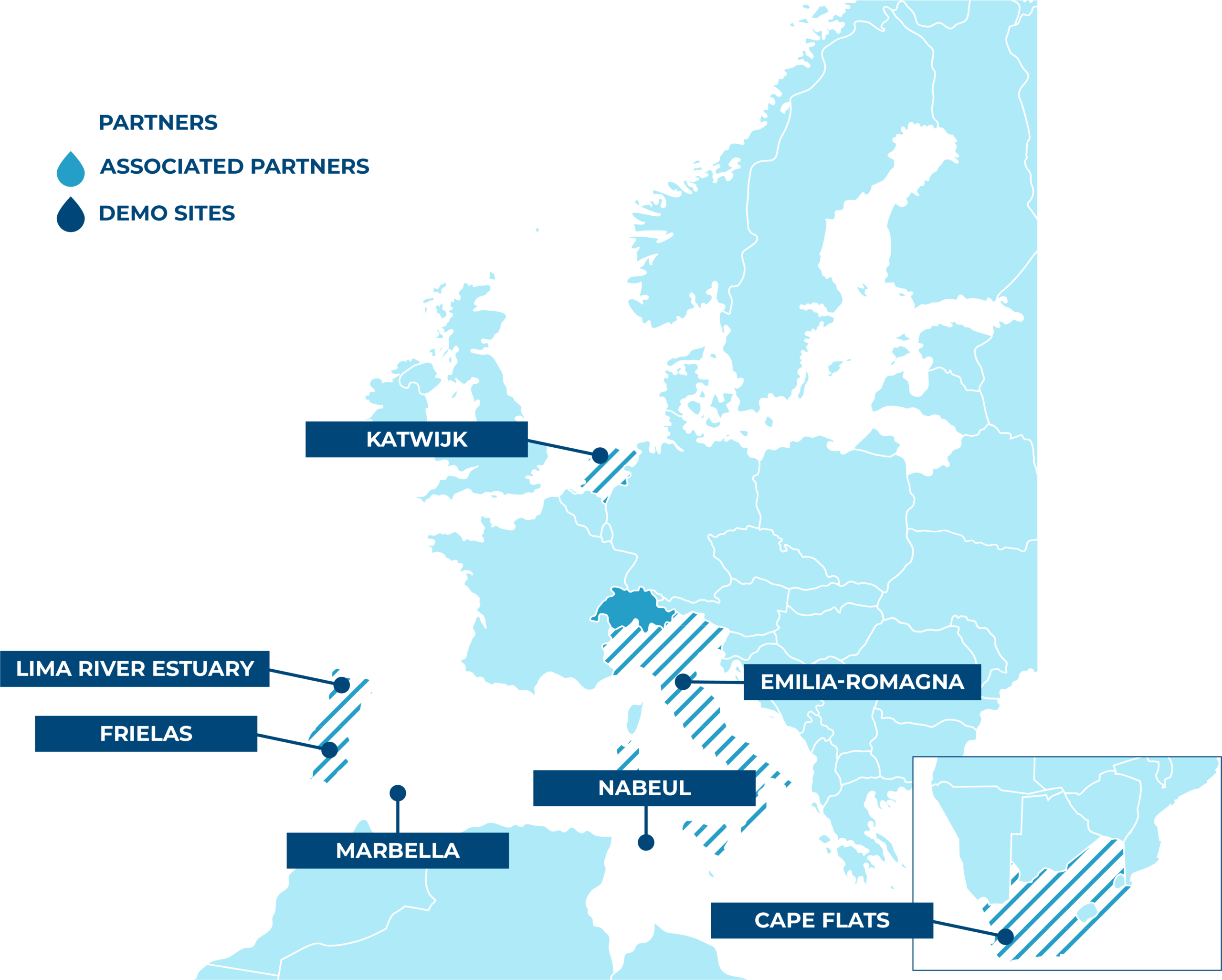
To validate and refine this technology, the MAR2PROTECT project has established seven diverse global demonstration sites. These sites represent a wide range of geological, climatic, and social contexts, including Katwijk in the Netherlands, Nabeul in Tunisia, Frielas in Portugal, Emilia-Romagna in Italy, Cape Flats in South Africa, Marbella in Spain, and the Lima river estuary in Portugal. Each demonstration site features unique contamination risks, from agricultural nitrate runoff and pesticide infiltration to industrial effluent discharges and coastal saltwater intrusion. By training the AI models across these varied environments, the consortium has ensured the system can adapt to different hydrogeological settings and diverse contaminant profiles.
The core innovation of the M-AI-R system lies in its ability to combine real-time sensor observations with predictive climate models and local pollution tracking data. Rather than waiting for laboratory results (which typically take five to ten business days), the system utilises predictive algorithms to forecast water quality trends. If a spike in rainfall is predicted to wash agricultural nutrients or urban pollutants into a recharge catchment, the AI models calculate the expected contaminant transport and concentration at the infiltration point. The system operates on a traffic-light risk alert framework, allowing operators to preemptively halt recharge pumps, divert incoming runoff to retention basins, or adjust pre-treatment parameters before the threshold limits are breached.
By utilising these continuous data streams, the system is capable of detecting subtle, cumulative shifts in water quality that might be missed during quarterly or biannual sampling events. This real-time analytical capability is critical for identifying transient pollution plumes, such as those caused by short-lived storm events or illicit industrial discharges. By providing immediate, actionable intelligence, the M-AI-R Decision Support System mitigates the risk of introducing persistent organic pollutants, heavy metals, or pathogens into precious underground water reserves.

Australian context
In Australia, Managed Aquifer Recharge is governed by a comprehensive, risk-based regulatory framework. The primary national standard is Document 24 of the National Water Quality Management Strategy, which comprises the Australian Guidelines for Water Recycling: Managing Health and Environmental Risks in Managed Aquifer Recharge (2009). This guideline mandates that proponents demonstrate strict control over injectant water quality to protect the environmental values of the receiving aquifer. This requirement is reinforced by state-specific policies, such as the New South Wales Aquifer Interference Policy, the Victorian Environmental Reference Standards under the Environment Protection Act 2017, and Queensland’s Environmental Protection (Water and Wetland Biodiversity) Policy 2019.
The traditional compliance pathway in Australia heavily relies on static, retrospective monitoring programs, with scheduled sampling rounds and laboratory turnaround times that can extend well beyond the duration of a contamination event. Predictive systems such as M-AI-R offer Australian operators a pathway to move beyond this reactive posture, enabling earlier intervention and stronger evidence of due diligence in the event of regulatory scrutiny. For developers, councils, and water utilities navigating drought cycles, urban expansion, and intensifying climate variability, the integration of continuous sensing and AI-driven forecasting could become an important layer of risk management, supporting both environmental protection and the long-term security of groundwater assets.
References and related sources
- Primary source: mar2protect.eu
How iEnvi can help
iEnvi provides specialist consulting services relevant to this topic. Our team includes CEnvP Site Contamination Specialists with experience across contaminated land, groundwater, remediation, ecology, and regulatory compliance.
- iEnvi remediation services
- iEnvi groundwater services
- iEnvi expert services and independent review services
This is an iEnvi Machete news summary. Prepared by iEnvi to summarise the source article for contaminated land, groundwater, remediation, approvals and site risk professionals.
Published: 17 Jun 2026
Need advice on this topic? Speak to an iEnvi expert at info@ienvi.com.au or 1300 043 684, or contact us online.
Need advice on this issue? iEnvi provides practical, senior-led environmental consulting across contaminated land, remediation, ecology and environmental risk.
Team credentials Contaminated land services Remediation services Groundwater services Talk to iEnvi