
NASA’s AI-Ready Space Processor: Implications for Remote Environmental Monitoring
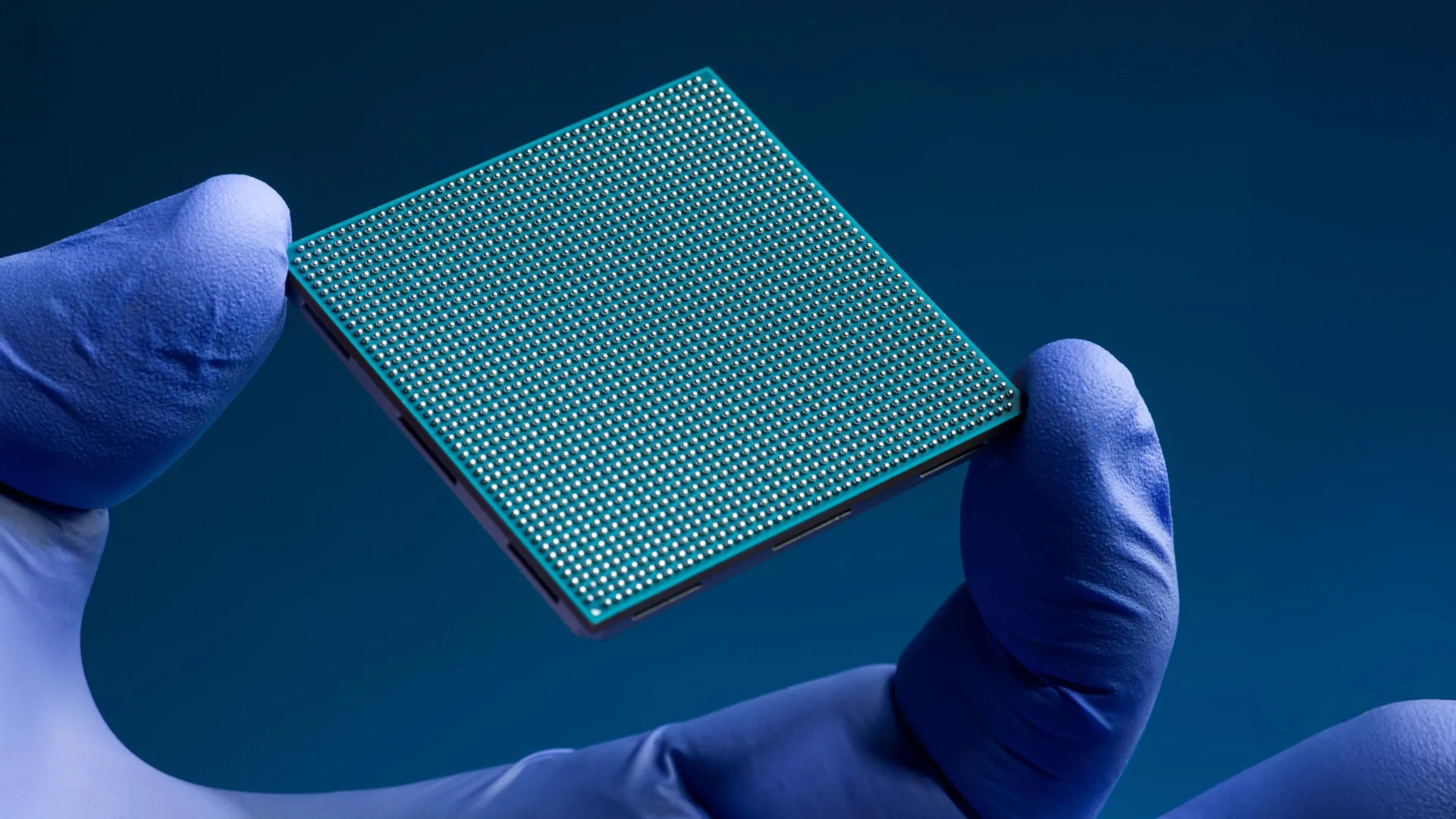
On May 15, 2026, NASA’s Jet Propulsion Laboratory (JPL) confirmed the successful testing of a next-generation, artificial intelligence-ready space computer processor designed for autonomous mission capabilities. This radiation-hardened system-on-a-chip represents a monumental leap in edge-computing power, delivering computational performance reported to be hundreds of times higher than current flight-qualified hardware. For environmental consultants, infrastructure developers, resource sector managers, and legal advisers, this development marks the beginning of a profound shift in how we monitor, model, and manage environmental risks in extreme or disconnected environments.
The core engineering breakthrough of running complex, high-throughput machine learning models on highly constrained hardware, completely independent of centralised networks, directly mirrors the challenges of remote environmental monitoring on Earth. Traditionally, both space exploration and terrestrial site assessments have been severely bottlenecked by data telemetry. Whether a sensor platform is orbiting a distant planet or situated in a deep groundwater monitoring bore in a remote mining basin, transmitting massive volumes of raw physical data to a central server is energy-intensive, cost-prohibitive, and vulnerable to frequent communication failures. By migrating analytical capabilities directly to the edge, the hardware itself can interpret raw scientific data, isolate critical environmental anomalies, and execute real-time decisions without waiting on communication windows or human intervention.
This technology arrives at a critical juncture for the Australian environmental sector. As developers and municipal councils face increasingly strict regulatory frameworks for site contamination, water quality, and ecological protection, the demand for high-resolution, continuous data has never been greater. By understanding how space-grade edge processing resolves the historic trade-off between power consumption, physical durability, and raw computational speed, Australian environmental practitioners can begin designing the next generation of resilient, autonomous monitoring networks capable of delivering real-time, legally defensible compliance data from the most hostile environments.
Inside JPL’s Radiation-Hardened System-on-a-Chip
The technical specifics of NASA’s new processor, as reported by JPL, reveal a highly advanced system-on-a-chip (SoC) architecture engineered to overcome the computing limits of extreme environments. Standard spaceflight-rated computers are notoriously slow, frequently relying on architectures developed decades ago to guarantee stability under intense cosmic radiation. The new JPL chip breaks this bottleneck by integrating high-performance processing cores with advanced radiation-hardening-by-design (RHBD) methodologies. During rigorous testing designed to simulate extreme thermal cycles, intense vibration, and heavy ionising radiation bombardment, the processor consistently demonstrated computational throughput hundreds of fold higher than existing space-grade platforms.
A central feature of this architecture is its capacity for local edge inference, which allows complex machine learning models to run directly on the silicon. In typical remote sensing applications, instruments capture raw voltage, temperature, or spectral readings, converting them to digital signals that must be transmitted in full for external analysis. This new chip allows the raw data to be interpreted at the point of collection. Rather than transmitting megabytes of continuous baseline data, an edge-enabled device can execute local algorithms to filter out background noise, perform dynamic calibrations, check data against multi-variable historical trends, and verify whether a genuine anomaly has occurred before sending a compressed, high-priority alert.
Power and thermal management are also critical milestones of this new system-on-a-chip. Remote field instruments, much like spacecraft, are governed by strict energy budgets, frequently relying on small solar panels and batteries that must survive extreme temperature swings. Running high-performance processors usually demands significant wattage and generates substantial heat, which is difficult to dissipate in a vacuum or a sealed, underground housing. The JPL processor addresses this by dynamically scaling its active power draw based on the immediate computational workload. It achieves exceptionally high efficiency per watt, allowing the chip to perform intensive mathematical operations within a highly restricted power envelope, preventing rapid battery depletion and thermal stress.
The JPL testing also demonstrated the chip’s ability to perform autonomous hazard avoidance, target identification, and real-time decision-making. By executing complex scientific algorithms on board, the hardware can dynamically alter its sensor scanning patterns when it detects transient physical events. This capability means a sensor array is no longer a passive recorder, but an active participant in environmental surveillance. It can detect a rapid change in environmental conditions, automatically increase its sampling frequency, and allocate its limited communication bandwidth to transmitting the most critical data points, optimising both energy use and data value.

Australian context
The relevance of this extreme-environment computing breakthrough to Australian environmental practice is rooted in our unique geography. Australia contains some of the most geographically isolated and environmentally harsh resource projects, agricultural assets, and contaminated sites in the world. Environmental due diligence, regulatory compliance monitoring, and post-closure surveillance frequently occur in regional areas with zero cellular coverage, where satellite telemetry remains expensive and bandwidth-limited. Whether tracking a contaminant plume migrating through a fractured rock aquifer beneath a remote Pilbara mine site, monitoring acid sulfate soil disturbance across a coastal development in northern Queensland, or recording fauna movement through a rehabilitated woodland corridor in the Murray-Darling Basin, the practical limitations of telemetry have long forced consultants to accept lower sampling rates, delayed data review, and reactive rather than predictive compliance reporting.
Edge processing of the kind validated by JPL offers a direct path around these constraints. A groundwater logger equipped with a comparable low-power inference chip could continuously screen for trigger exceedances under the National Environment Protection (Assessment of Site Contamination) Measure without streaming raw data, transmitting only verified exceedances and supporting context to the consultant or regulator. Similarly, dust and air quality monitors deployed under state EPA licence conditions could autonomously distinguish between background variation and genuine breach events, reducing both false positives and the volume of data requiring expert review. For legal advisers, the prospect of on-device timestamping, integrity hashing, and anomaly verification strengthens the evidentiary weight of compliance data when matters proceed to enforcement or litigation.
The longer-term implication for Australian practitioners is a shift in how monitoring networks are designed and procured. Rather than specifying dense arrays of dumb sensors backhauled to a central server, environmental teams will increasingly be able to deploy smaller numbers of autonomous, decision-capable nodes that operate reliably for years in cyclone-prone coastlines, arid inland basins, or sub-surface bores. As space-grade edge architectures filter into commercial sensor platforms, consultants, developers, and resource sector managers who understand the underlying capabilities will be best placed to specify monitoring solutions that meet tightening regulatory expectations while controlling whole-of-life project costs.
References and related sources
- Primary source: www.sciencedaily.com
How iEnvi can help
iEnvi provides specialist consulting services relevant to this topic. Our team includes CEnvP Site Contamination Specialists with experience across contaminated land, groundwater, remediation, ecology, and regulatory compliance.
- iEnvi groundwater services
- iEnvi remediation and validation services
- iEnvi expert services and independent review services
This is an iEnvi Machete news summary. Prepared by iEnvi to summarise the source article for contaminated land, groundwater, remediation, approvals and site risk professionals.
Published: 17 Jun 2026
Need advice on this topic? Speak to an iEnvi expert at info@ienvi.com.au or 1300 043 684, or contact us online.
Need advice on this issue? iEnvi provides practical, senior-led environmental consulting across contaminated land, remediation, ecology and environmental risk.
Team credentials Contaminated land services Remediation services Groundwater services Talk to iEnvi