

Overview
On 1 July 2026, the independent Nature Repair Committee opened statutory public consultation on the draft Enhancing Native Vegetation (ENV) method under the Nature Repair Act 2023 (Cth). This is the first proposed method under that Act designed to be “offset-capable,” meaning biodiversity certificates generated through it will be legally available to satisfy environmental offset conditions imposed under the Environment Protection and Biodiversity Conservation Act 1999 (Cth) (EPBC Act). Submissions close at 10:00 pm AEST on Wednesday, 29 July 2026, leaving a narrow window for industry, landholders, consultants, and project proponents to shape the final rules that will govern this market.
The significance of this development extends well beyond the Nature Repair Market itself. For the first time since the EPBC Act was enacted, a structured, transparent, market-based mechanism is being proposed to discharge federal biodiversity offset obligations. Previously, proponents faced complex, time-consuming, and often bespoke negotiations to identify and secure offset sites, frequently requiring direct land acquisition, conservation covenants, or management agreements that were difficult to value and even harder to execute within project timelines. The ENV method, once finalised, would replace much of that process with a standardised certificate that can be purchased from the Nature Repair Market registry.
For environmental professionals advising developers, infrastructure proponents, resources companies, and councils across Australia, this consultation period is a rare opportunity to influence the technical integrity standards and assessment methodologies that will underpin market confidence and regulatory acceptance. The method targets productive agricultural and historically cleared landscapes, which represent a substantial proportion of the land area across Queensland, New South Wales, Victoria, and South Australia where large-scale development projects routinely trigger EPBC Act obligations.
Key details of the draft Enhancing Native Vegetation method and Biodiversity Integrity Standards
The draft ENV method establishes three primary project activity types. The first is restoration of native vegetation through active revegetation and facilitated natural regeneration on land that has been cleared or substantially degraded, typically productive agricultural land. The second is enhancement of the ecological condition of existing remnant vegetation where condition is below its potential but the vegetation community is still present. The third is maintenance of high-quality remnant vegetation where the objective is to prevent further decline and preserve existing ecological values. Each activity type carries different measurability and verification requirements, and the certificate yield per hectare will differ accordingly based on demonstrated ecological uplift.
To generate offset-capable certificates, projects must satisfy the Biodiversity Integrity Standards (BIS) established under the Nature Repair Act 2023. The BIS are the legislative foundation for ensuring certificates carry genuine ecological value. A project cannot generate certificates simply by fencing remnant vegetation and doing nothing further. The BIS require demonstration of additionality, meaning the ecological outcome would not have occurred in the absence of the project, and measurable improvement against a credible baseline. The assessment framework that underpins this verification is the Nature Repair (Biodiversity Assessment) Instrument 2025, which sets out the field methodologies, ecological indicators, and modelling approaches that assessors must apply when designing and auditing ENV method projects.
The procedural rules governing market participation, certificate issuance, project registration, and reporting obligations are set out in the Nature Repair Rules 2024. These rules operate alongside the Nature Repair Act 2023 and the Biodiversity Assessment Instrument to create the full regulatory architecture for the market. Ecological assessors engaged to prepare project design documentation and verification reports will need to demonstrate competency against the requirements of both the Rules and the Instrument. This is not a light-touch accreditation framework, and there is a reasonable expectation that the depth of field assessment required will be comparable to, if not more rigorous than, existing state-based offset methodology assessments under frameworks such as the NSW Biodiversity Assessment Method.
The consultation process is statutory, conducted by the Nature Repair Committee, which is an independent body established under the Nature Repair Act 2023. The Committee’s role in developing and recommending methods to the Minister carries formal weight, and submissions made during this period are part of the official record. Proponents, consultants, and peak bodies who wish to influence the final design of the ENV method, particularly the technical thresholds, monitoring intervals, and acceptable revegetation species lists, should prioritise preparing substantive submissions before the 29 July 2026 deadline.
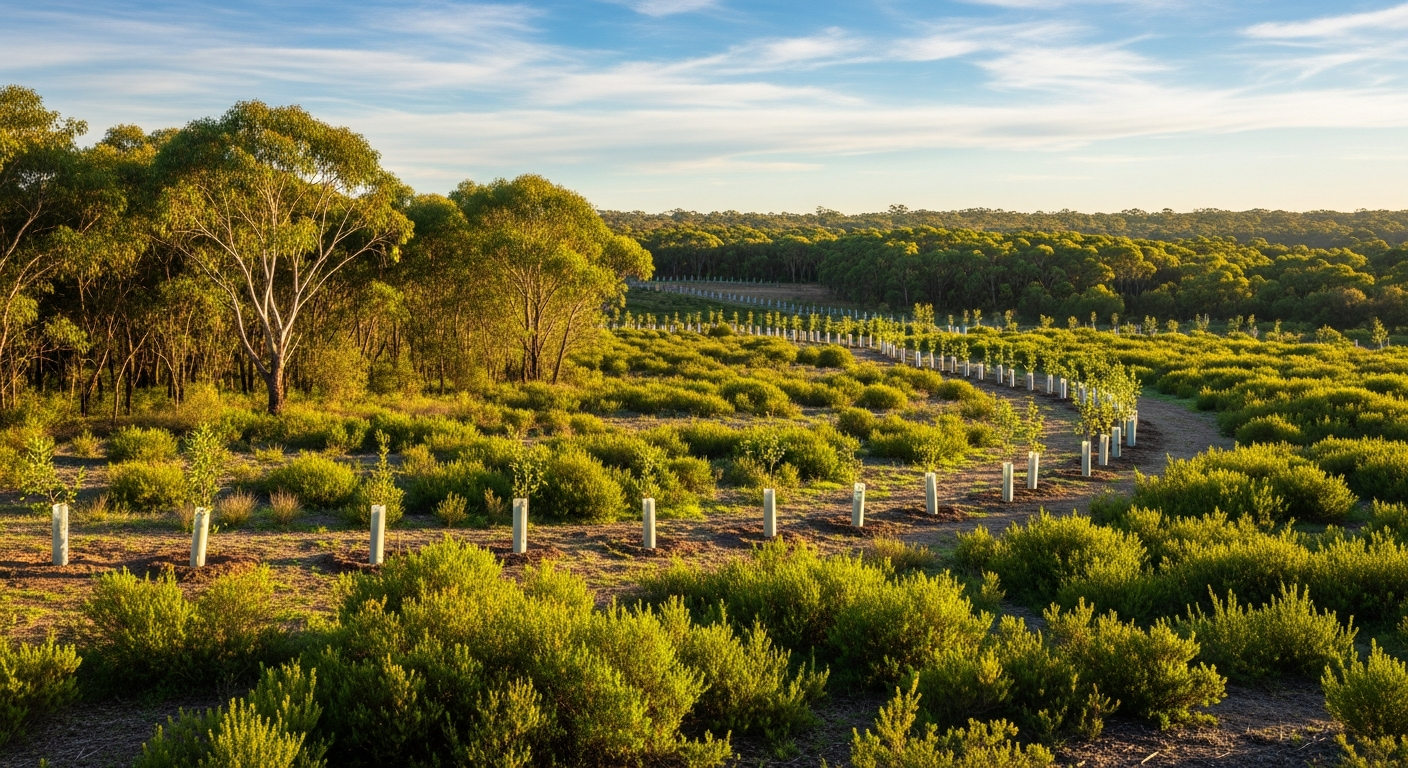
Australian context: how the ENV method fits within federal and state offset frameworks
Australia’s federal biodiversity offset framework has operated under the EPBC Act for over two decades, with offset conditions attached to referral decisions and approvals for actions that are likely to have a significant impact on matters of national environmental significance (MNES). Until now, satisfying those conditions has required proponents to identify an offset site of sufficient ecological equivalence, secure a legal mechanism over that site such as a conservation covenant or management agreement, and in some cases manage that site in perpetuity. The transaction costs, search times, and legal complexity involved have long been identified as a significant barrier to timely project delivery, particularly for linear infrastructure, mining, and urban development projects where offset site identification in ecologically equivalent landscapes can be extremely difficult.
The ENV method’s offset-capable design directly addresses this problem by creating a liquid, registry-based market through which proponents can acquire biodiversity certificates to meet federal offset obligations without the need to negotiate individual site agreements. This does not remove the requirement for ecological equivalence assessment — proponents will still need to demonstrate that certificates purchased correspond to the type and magnitude of impact being offset — but it substantially simplifies and standardises the transaction process. For environmental consultants, this means a shift in focus from bespoke offset site negotiation toward certificate procurement strategy and equivalence documentation.
State-based offset frameworks across Queensland, New South Wales, Victoria, and South Australia each operate under their own legislation and methodologies, and the ENV method does not displace those frameworks for state-triggered offset obligations. However, for projects that trigger both federal EPBC Act approvals and state-based assessment processes, the availability of a federally recognised certificate market may create opportunities to streamline offset procurement across jurisdictions, subject to the relevant state frameworks recognising or accepting federal certificates. This is an area that peak bodies and state environment agencies are likely to address in their submissions, and the outcome of those discussions will have significant practical implications for how dual-trigger projects are managed going forward.
Environmental professionals and project proponents with an interest in the ENV method’s final design should review the draft method documentation and submit before the 29 July 2026 deadline. The Nature Repair Committee’s contact details and submission portal are available through the Department of Climate Change, Energy, the Environment and Water.
References and related sources
- Primary source: www.dcceew.gov.au
- miragenews.com
- carbon-pulse.com
- claytonutz.com
- EPBC Act
How iEnvi can help
iEnvi provides specialist consulting services relevant to this topic. Our team includes CEnvP Site Contamination Specialists with experience across contaminated land, groundwater, remediation, ecology, and regulatory compliance.
- iEnvi contaminated land investigation services
- iEnvi remediation and validation services
- iEnvi expert services and independent review services
This is an iEnvi Machete news summary. Prepared by iEnvi to summarise the source article for contaminated land, groundwater, remediation, approvals and site risk professionals.
Published: 01 Jul 2026
Need advice on this topic? Speak to an iEnvi expert at info@ienvi.com.au or 1300 043 684, or contact us online.
Need advice on this issue? iEnvi provides practical, senior-led environmental consulting across contaminated land, remediation, ecology and environmental risk.
Team credentials Contaminated land services Remediation services Groundwater services Talk to iEnvi