
Meta and Nebius Partner on Next-Gen AI Infrastructure
Amsterdam-based Nebius Group N.V. (NASDAQ: NBIS) announced a massive, long-term artificial intelligence infrastructure supply agreement with Meta Platforms, Inc. This five-year contract, valued at up to approximately 27 billion dollars, represents one of the most substantial hardware commitments in the history of the technology sector. Under the terms of the agreement, Nebius will provide 12 billion dollars of dedicated computing capacity utilising one of the first large-scale deployments of NVIDIA’s next-generation Vera Rubin platform, with deliveries slated to begin in early 2027.
For corporate developers, legal advisers, and professional planners, this development signals a structural shift in how computational power is secured and distributed globally. The transition from general-purpose public cloud services to dedicated AI factories highlights a growing recognition that high-performance compute is a scarce physical resource. As autonomous systems, complex spatial modelling, and data-intensive regulatory compliance checks become standard practice, securing the underlying hardware capacity has become a critical strategic priority.
This massive agreement outlines the beginning of an era of infrastructure consolidation, where hyperscalers are actively locking up next-generation chip architectures years before they are physically deployed. For professional services firms and their clients in Australia, this trend introduces new risks related to technological access, operational costs, and the feasibility of running sophisticated data analysis programmes. Understanding the physical supply chains of digital technology is no longer solely an IT concern: it is a fundamental business risk that impacts project delivery timelines and strategic planning.
Technical Specifications of the NVIDIA Vera Rubin Deployment
The technical specifics of this agreement highlight the immense scale of the physical infrastructure required to support modern artificial intelligence. Under the primary five-year contract, Nebius will deliver 12 billion dollars of dedicated computing capacity across multiple geographic locations starting in early 2027. This capacity is specifically built around the NVIDIA Vera Rubin platform, which represents a significant technological advancement over the previous Blackwell architecture.
In addition to the initial 12 billion dollar commitment, the agreement includes a flexible capacity procurement mechanism. Meta has committed to purchase additional available compute capacity across certain upcoming Nebius data clusters up to a total value of 15 billion dollars over the five-year period. Nebius intends to market and sell this upcoming cluster capacity to third-party customers of its AI cloud business, with Meta purchasing any remaining or unallocated capacity. This structure brings the potential total value of the contract to 27 billion dollars, providing Nebius with the financial certainty required to fund capital-intensive data centre developments.
The deployment of the NVIDIA Vera Rubin platform represents a fundamental change in chip design and processing capability. While current architectures like Blackwell were optimised for training large language models and handling standard inference tasks, the Vera Rubin platform is engineered specifically for the highly parallelised, continuous processing demands of agentic AI workflows and autonomous systems. These next-generation systems run multi-step reasoning loops that require sustained high throughput, advanced thermal management, and ultra-low latency data transfer across thousands of interconnected processing units.
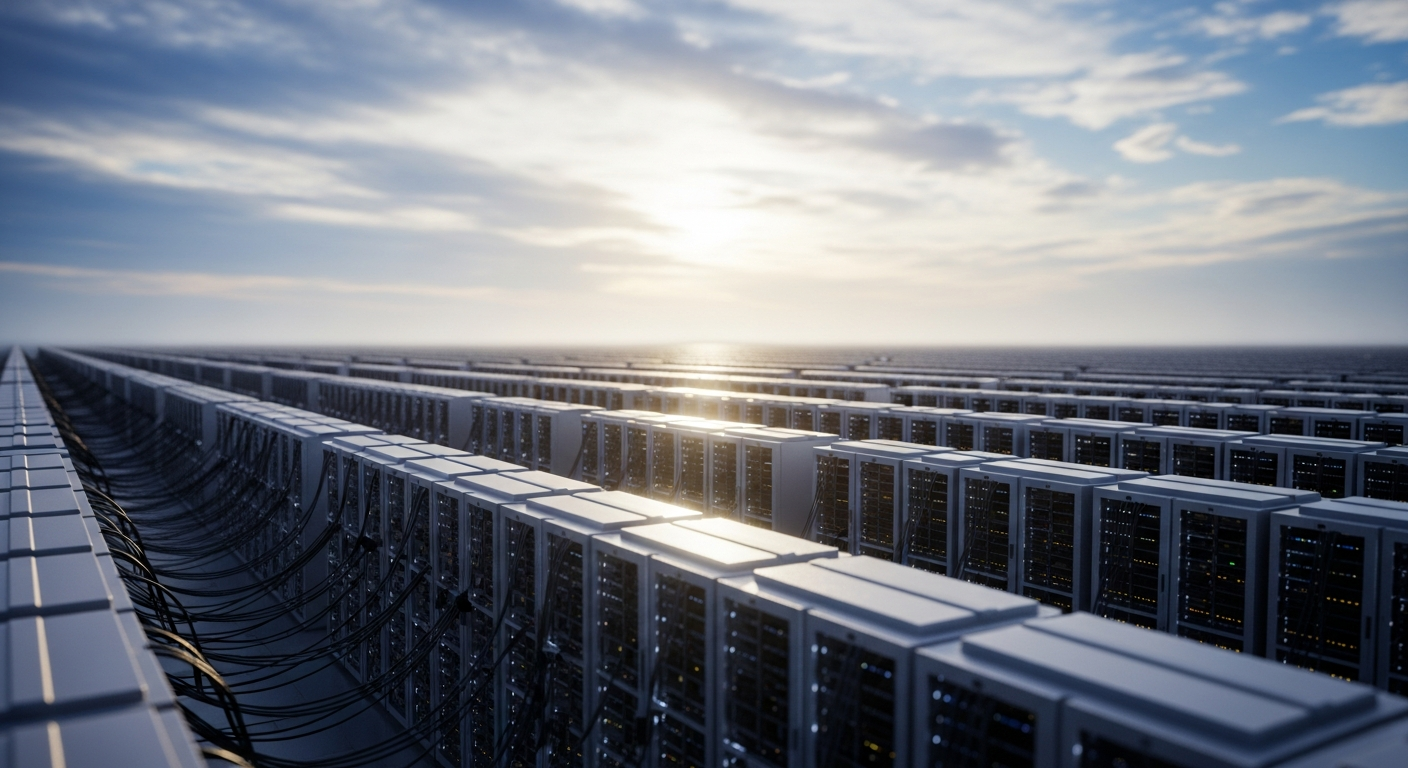
To support these massive chip deployments, Nebius is constructing specialised physical facilities known as AI factories. Unlike traditional corporate data centres, these facilities require significant power allocations, often measuring in hundreds of megawatts, as well as specialised liquid cooling infrastructure to manage the extreme heat generated by dense GPU clusters. The geographic distribution of these clusters across multiple locations is a strategic necessity, designed to distribute load across power grids, comply with regional energy regulations, and manage the physical constraints of high-performance data processing.
Australian context
Although this multi-billion dollar agreement is centred in Europe and North America, its structural implications will directly impact the Australian business and professional services landscape. Australian engineering, planning, and scientific advisory firms rely heavily on data-intensive workloads to deliver spatial modelling, resource assessments, and environmental planning documents. Currently, the vast majority of these local operations are hosted on general-purpose public cloud platforms, which are highly susceptible to global capacity fluctuations and hardware shortages.
Furthermore, Australian practitioners must navigate strict regulatory and data sovereignty frameworks, including the Security of Critical Infrastructure Act 2018 and the Privacy Act 1988. These laws place rigid restrictions on where sensitive spatial data, critical infrastructure designs, and corporate information can be processed and stored. As major cloud providers and hyperscalers consolidate the world’s most advanced processing hardware in northern hemisphere data centres, Australian organisations may struggle to access high-performance, locally compliant computing power, potentially leading to operational delays or increased compliance costs.
The consolidation of next-generation hardware also threatens to disrupt the software ecosystem that Australian professional services depend upon. Many local firms have built custom tools, automated compliance checkers, and spatial databases on the assumption that API-based access to advanced foundational models will remain inexpensive and unlimited. The Nebius-Meta deal demonstrates that the largest buyers are now securing dedicated, long-term capacity directly from infrastructure providers, which may push smaller Australian operators toward higher per-unit costs, longer queues for compute time, or the need to renegotiate vendor contracts to guarantee access to the processing power their workflows require.
References and related sources
- Primary source: nebius.com
- https://nebius.com/investor-hub
How iEnvi can help
iEnvi provides specialist consulting services relevant to this topic. Our team includes CEnvP Site Contamination Specialists with experience across contaminated land, groundwater, remediation, ecology, and regulatory compliance.
- iEnvi contaminated land investigation services
- iEnvi remediation and validation services
- iEnvi expert services and independent review services
This is an iEnvi Machete news summary. Prepared by iEnvi to summarise the source article for contaminated land, groundwater, remediation, approvals and site risk professionals.
Published: 17 Jun 2026
Need advice on this topic? Speak to an iEnvi expert at info@ienvi.com.au or 1300 043 684, or contact us online.
Need advice on this issue? iEnvi provides practical, senior-led environmental consulting across contaminated land, remediation, ecology and environmental risk.
Team credentials Contaminated land services Remediation services Groundwater services Talk to iEnvi