
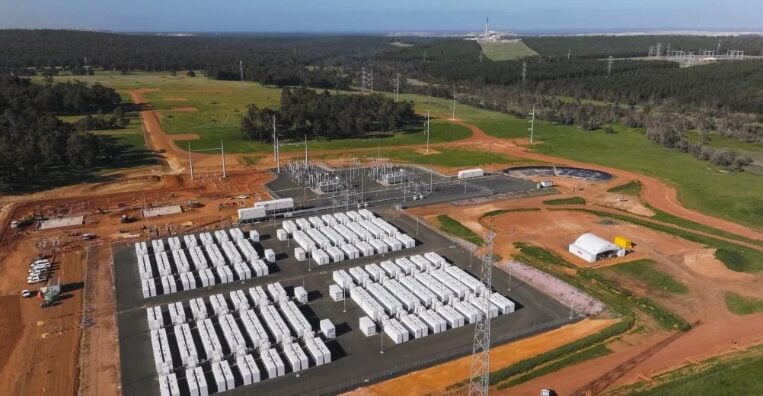
Overview of the Bondo Wind and Storage Project
The transition of the Australian energy sector towards renewable sources has entered a phase of unprecedented scale, bringing the inherent tension between green infrastructure development and biodiversity conservation into sharp focus. The recent federal referral of the Bondo Wind and Storage Project by Neoen Australia represents a significant moment in utility scale project design and site selection. Sited across southern New South Wales, the project proposes a massive 1.2 gigawatt wind generation capacity paired with 3.2 gigawatt hours of battery energy storage, making it one of the largest co-located renewable energy initiatives in the country. The referral of this project under the Environment Protection and Biodiversity Conservation Act 1999 (EPBC Act) highlights how early spatial planning can mitigate complex environmental constraints.
For Australian environmental practitioners, developers, infrastructure lawyers, and planning authorities, the project represents a departure from traditional greenfield site selection strategies. Historically, large scale onshore wind developments have faced intense regulatory and community opposition due to the clearing of native vegetation and the fragmentation of threatened ecological communities. By contrast, the strategic positioning of the Bondo infrastructure primarily within existing commercial softwood plantations demonstrates how developers can make use of highly modified landscapes to meet ambitious decarbonisation targets while maintaining a commitment to conservation. This approach aligns with the growing expectations of regulators who are increasingly prioritising projects that demonstrate genuine ecological avoidance over compensatory offsetting.
This development is particularly relevant as Commonwealth and state environmental protection agencies transition towards more stringent environmental frameworks, including the proposed Nature Positive reforms. As the regulatory assessment process commences, the project will serve as a valuable case study for the integration of commercial forestry operations with critical energy infrastructure. By examining the spatial design and regulatory pathways utilised in this referral, environmental consultants and planning professionals can gain critical insights into navigating the complex federal approvals landscape for the next generation of renewable energy projects.
Project Specifications and Environmental Footprint
The technical specifications of the Bondo Wind and Storage Project underline its immense scale and the precision of its spatial design. The project incorporates up to 164 wind turbine generators, which together will deliver a generation capacity of approximately 1.2 gigawatts. This substantial wind generation is supported by a large scale battery energy storage system (BESS) designed to manage grid stability and energy dispatchability. The storage infrastructure comprises two distinct installations, each rated at 400 megawatts and 1,600 megawatt hours, culminating in a combined energy storage capacity of 3.2 gigawatt hours. This dual configuration allows for significant operational flexibility and represents a major contribution to the firming capacity required for the national electricity market.
From a spatial and land use perspective, the project covers a expansive development envelope of nearly 42,000 hectares. However, through rigorous design refinement, the actual physical disturbance footprint has been capped at 1,591 hectares. This footprint represents approximately 0.7 percent of the state forest plantation area in which it is situated. Siting the majority of the turbines, access tracks, and electrical cabling within the commercial pine plantations managed by Forestry Corporation NSW has allowed the developer to entirely avoid the clearing of native forest. This is a crucial distinction that dramatically alters the risk profile of the federal referral.
In addition to utilising commercial plantation land, the project design has established a strict 165 hectare environmental avoidance zone. This avoidance footprint specifically targets identified pockets of native vegetation, sensitive watercourses, and known ecological constraints within the broader development envelope. Rather than proposing to clear these areas and offset the impacts later, the infrastructure layout was mapped around them. To facilitate this development on state forestry land, the project must comply with the relevant provisions of the Forestry Act 2012 (NSW). This requires a complex regulatory interface, including the formulation of compensatory planting strategies to offset the loss of commercial timber plantation area and ensure long term land use compatibility.
The submission of the EPBC Act referral initiates a formal assessment process by the Commonwealth Department of Climate Change, Energy, the Environment and Water. The referral documents details the methodology used to assess potential impacts on Matters of National Environmental Significance (MNES). By limiting the physical disturbance to monoculture plantation areas (primarily Pinus radiata) and incorporating dedicated avoidance zones, the project seeks to establish a low impact pathway through the federal assessment process. This methodology shifts the focus of the environmental assessment from high risk habitat destruction to the operational management of construction activities in a working commercial forest.
EPBC Act Referral and the Australian Regulatory Context
The regulatory pathway of the Bondo Wind and Storage Project must be understood within the broader context of Australian environmental legislation and state planning frameworks. At the federal level, the primary mechanism of assessment is the EPBC Act. When a project of this magnitude is referred, the Commonwealth minister must determine whether the proposal constitutes a controlled action. This decision is based on whether the project has, will have, or is likely to have a significant impact on Matters of National Environmental Significance (MNES).
References and related sources
- Primary source: www.energy-storage.news
- EPBC Act
How iEnvi can help
iEnvi provides specialist consulting services relevant to this topic. Our team includes CEnvP Site Contamination Specialists with experience across contaminated land, groundwater, remediation, ecology, and regulatory compliance.
- iEnvi contaminated land investigation services
- iEnvi remediation and validation services
- iEnvi expert services and independent review services
This is an iEnvi Machete news summary. Prepared by iEnvi to summarise the source article for contaminated land, groundwater, remediation, approvals and site risk professionals.
Published: 17 Jun 2026
Need advice on this topic? Speak to an iEnvi expert at info@ienvi.com.au or 1300 043 684, or contact us online.
Need advice on this issue? iEnvi provides practical, senior-led environmental consulting across contaminated land, remediation, ecology and environmental risk.
Team credentials Contaminated land services Remediation services Groundwater services Talk to iEnvi