

Overview of the TNFD Alternative Fuels Sector Guidance
The Taskforce on Nature-related Financial Disclosures (TNFD) released its sector-specific guidance for alternative fuels in June 2026, establishing a structured disclosure framework that goes substantially beyond carbon accounting. The guidance applies to organisations across the alternative fuels value chain, including producers of biofuels and synthetic fuel alternatives, as well as downstream buyers such as airlines, marine operators, and road transport fleets. For the first time, a widely adopted international framework explicitly requires these entities to measure and disclose localised ecological impacts, not merely greenhouse gas outcomes, as a condition of making credible sustainability claims.
The core mechanism is the TNFD’s four-phase LEAP approach: Locate, Evaluate, Assess, and Prepare. Under this methodology, organisations must map where their operations and supply chains interact with nature, evaluate their dependencies and impacts on biodiversity and water resources, assess the materiality of those interactions as financial risks and opportunities, and prepare disclosures and internal responses accordingly. The “comply or explain” model means organisations that cannot fully complete the LEAP process must explain their shortfalls, creating a transparency obligation that applies even where data gaps exist.
For Australian environmental professionals and their clients, this development is immediately relevant. It lands at precisely the moment when mandatory climate-related financial reporting is rolling out under the Australian Sustainability Reporting Standards (ASRS), and it signals that nature-related risks are moving from voluntary best-practice territory into the mainstream of corporate disclosure, project planning, and transactional due diligence. Developers, corporate legal teams, and planning authorities need to understand that a low-carbon fuel profile is no longer a sufficient answer to questions about ecological impact.
Key details of the TNFD alternative fuels sector guidance and LEAP methodology
The TNFD’s June 2026 sector guidance for alternative fuels identifies several categories of localised ecological risk that organisations must characterise under the LEAP framework. These include freshwater depletion associated with irrigated feedstock cultivation, land-use change driven by the expansion of biofuel crop agriculture, ocean and coastal ecosystem impacts from marine-sourced feedstocks, soil degradation from intensive cultivation, and environmental pollution from processing operations. The guidance is explicit that these impacts must be assessed at a site or regional level, not aggregated across a national or global footprint, because the ecological significance of water depletion or habitat loss depends heavily on local ecosystem condition and resilience.
The LEAP methodology’s first phase, Locate, requires organisations to identify the specific geographic areas where their operations and supply chains intersect with ecosystems that are sensitive, protected, or under existing stress. This is not a desktop-only exercise. The guidance expects organisations to draw on spatially resolved data, including mapping tools such as the TNFD’s own ENCORE database and globally accepted biodiversity risk screening tools, to determine whether feedstock sourcing regions overlap with water-stressed catchments, intact forest landscapes, or areas of high biodiversity value. The Evaluate phase then requires quantification of dependencies, specifically how much an organisation’s operations rely on ecosystem services such as water availability, pollination, and soil function, and how materially those dependencies could affect financial performance if the ecosystem is degraded.
The Assess phase introduces a concept that is particularly significant for legal and financial professionals: nature-related risks are to be categorised as physical risks, transition risks, and systemic risks, using a taxonomy directly analogous to the climate risk categories already embedded in the ASRS and the Task Force on Climate-related Financial Disclosures (TCFD) framework. A biofuel producer whose feedstock region faces increasing water stress faces a physical risk. A transport fleet operator whose fuel supplier is exposed to land-clearing regulations faces a transition risk. The Prepare phase requires organisations to translate this risk assessment into governance structures, targets, and disclosure statements suitable for inclusion in annual reports and sustainability reports.
The disclosure obligations extend across the entire value chain, not just to direct operators. Downstream buyers and fuel users, including corporate fleets, aviation operators, and utilities purchasing biomass for power generation, are expected to report on the nature-related impacts of the fuels they procure, even where they have no operational control over the production site. This is a significant extension of responsibility and mirrors the Scope 3 emissions disclosure logic already embedded in climate reporting frameworks. Organisations that purchase alternative fuels purely on the basis of a low-carbon certification, without scrutinising the upstream ecological footprint, will face increasing exposure to greenwashing claims and potentially material misstatement risks in their financial disclosures.
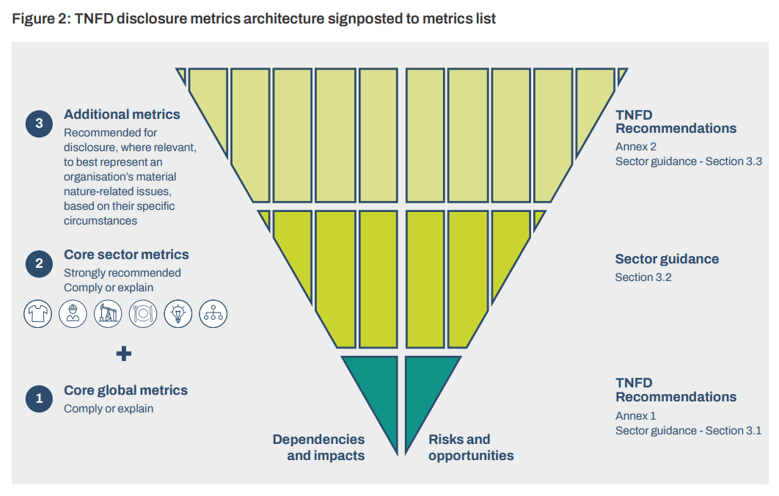
Australian context: TNFD guidance, ASRS mandatory reporting, and nature-related risk in Australian project planning
Australia’s mandatory climate-related financial reporting framework commenced for the largest entities (Group 1, with consolidated assets exceeding 5 billion dollars or revenue exceeding 500 million dollars) for financial years starting on or after 1 January 2025, and extends to Group 2 entities for financial years starting on or after 1 January 2026 under the Corporations Act 2001 (Cth), Chapter 2M. The Australian Sustainability Reporting Standards, issued by the Australian Accounting Standards Board
References and related sources
- Primary source: www.claytonutz.com
- minterellison.com
- allens.com.au
- claytonutz.com
How iEnvi can help
iEnvi provides specialist consulting services relevant to this topic. Our team includes CEnvP Site Contamination Specialists with experience across contaminated land, groundwater, remediation, ecology, and regulatory compliance.
- iEnvi due diligence services
- iEnvi remediation and validation services
- iEnvi expert services and independent review services
This is an iEnvi Machete news summary. Prepared by iEnvi to summarise the source article for contaminated land, groundwater, remediation, approvals and site risk professionals.
Published: 29 Jul 2026
Need advice on this topic? Speak to an iEnvi expert at info@ienvi.com.au or 1300 043 684, or contact us online.
Need advice on this issue? iEnvi provides practical, senior-led environmental consulting across contaminated land, remediation, ecology and environmental risk.
Team credentials Contaminated land services Remediation services Groundwater services Talk to iEnvi