
NSW EPA Tuggerah Lakes PFAS Monitoring: What the Results Mean for Ambient Baseline Data and Contaminated Land Practice
NSW EPA Tuggerah Lakes Study Overview
The NSW Environment Protection Authority (EPA), working jointly with the Department of Climate Change, Energy, the Environment and Water (DCCEEW), has released the final results of its six-month ambient surface water sampling programme at Tuggerah Lakes on the NSW Central Coast. Announced on 28 May 2024, the findings confirm that PFAS concentrations across the lake system remain below current recreational and ecological water quality guidelines. For environmental practitioners, this is more than a reassuring community health update. It represents the first completed output from what will become the largest ambient PFAS monitoring dataset in NSW history.
Tuggerah Lakes was selected as the pilot site for the NSW EPA’s Statewide PFAS Ambient Monitoring Programme, a significant regulatory initiative now expanding to collect water, sediment, and fish tissue samples at more than 200 sites across New South Wales. The programme’s completion at Tuggerah Lakes establishes a methodological template for ambient characterisation that practitioners and their clients should understand thoroughly, particularly those working on development sites, transaction due diligence, or regulatory notice responses in catchments with complex industrial histories.
The catchment presents a genuinely challenging test case. It contains multiple potential PFAS source categories, including historical firefighting activities, landfills, and power station infrastructure. The fact that 114 surface water samples collected across 19 distinct locations all returned concentrations below the applicable guidelines is technically significant. It demonstrates that the presence of historical source areas within a catchment does not automatically produce ambient surface water concentrations that exceed regulatory thresholds. NSW EPA Director of Incident Management and Environmental Health, Jacinta Hanemann, confirmed the community could continue to enjoy swimming and boating at the lakes without concern. The regulatory and technical implications, however, extend well beyond recreational use.
Key details of the Tuggerah Lakes PFAS sampling programme
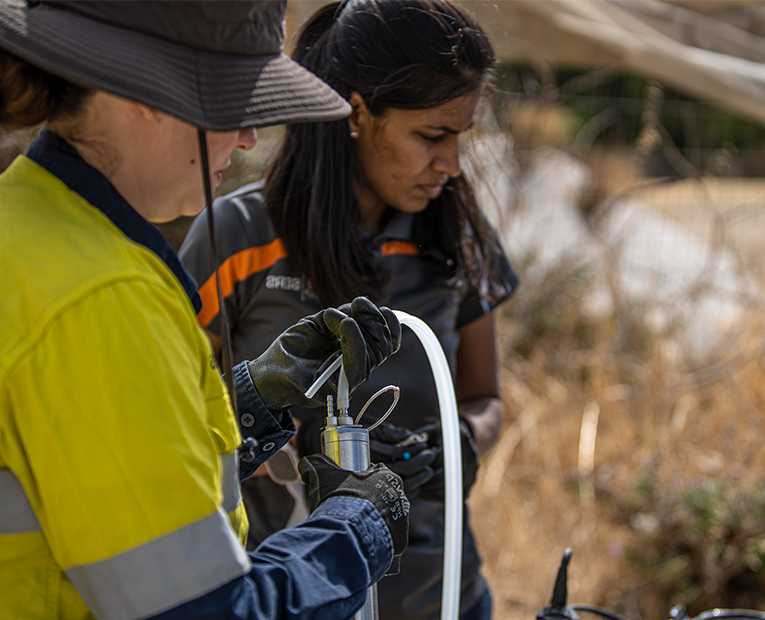
The sampling programme commenced in September 2023 and ran for six months, concluding with the May 2024 results release. Scientists collected a total of 114 surface water samples across 19 locations distributed throughout the Tuggerah Lakes catchment. The spatial coverage across 19 distinct sampling nodes is methodologically important. A programme of this scale, with multiple discrete locations rather than a single representative point, provides the statistical depth needed to characterise ambient variability across a complex, multi-source catchment. The results were assessed against two principal regulatory frameworks: the PFAS National Environmental Management Plan version 3.0 (PFAS NEMP 3.0), published in March 2025, and the Australian and New Zealand Guidelines for Fresh and Marine Water Quality (ANZG 2018).
The PFAS NEMP 3.0, released by the National Environment Protection Council in March 2025, represents the current benchmark for PFAS assessment in Australia. It supersedes earlier versions and incorporates updated health-based and ecological guideline values reflecting the evolving understanding of PFAS toxicology, particularly for long-chain perfluoroalkyl acids such as PFOS (perfluorooctane sulfonate) and PFOA (perfluorooctanoic acid). The ANZG 2018 water quality guidelines provide ecological protection values for fresh and marine water. Assessing ambient surface water concentrations against both frameworks simultaneously, as this programme did, is the correct dual-framework approach for catchments where both human recreational exposure and ecological receptor pathways are relevant. All 114 samples remained below the applicable values under both frameworks.
The three primary PFAS source categories identified within the Tuggerah Lakes catchment are landfills, power station operations, and historical use of aqueous film-forming foam (AFFF) in firefighting activities. AFFF-derived PFAS contamination, in particular, is well-documented as a source of high-concentration point releases, typically dominated by PFOS. The fact that diffuse catchment-scale concentrations remained within guideline limits, despite the presence of these source categories, suggests that either source contributions to the lake system are relatively low, or that natural attenuation and dilution processes within the catchment are effective. The monitoring programme was not designed to quantify individual source contributions, so the relative role of each category cannot be resolved from this dataset alone. That distinction matters for how practitioners interpret these findings in site-specific assessments.
The statewide programme now expanding to over 200 sites will collect not only surface water samples but also sediment and fish tissue. This is a critical methodological expansion. PFAS compounds, particularly longer-chain variants, partition to sediment and bioaccumulate in aquatic organisms. Surface water concentrations alone can understate ecological and human exposure risks where fish consumption or sediment contact pathways are relevant. The inclusion of sediment and biota sampling in the expanded programme will enable a more complete ambient characterisation and will allow practitioners to assess bioaccumulation-related exposure pathways in addition to direct water contact.

Australian context: PFAS ambient data and contaminated land regulation in NSW, QLD, VIC and SA
Under the Contaminated Land Management Act 1997 (NSW), the EPA has powers to investigate, regulate, and require remediation of contaminated land where a significant risk of harm exists. A persistent challenge in PFAS site assessment has been the absence of robust ambient background data against which site-specific concentrations can be benchmarked. Without reliable ambient reference values, practitioners face difficulty distinguishing between localised contamination attributable to an on-site source and broader background concentrations present across a catchment. The Tuggerah Lakes dataset begins to address this gap for one significant NSW water body, and the statewide programme will progressively build the ambient reference library needed to support more defensible site characterisation across the state.
In Queensland, PFAS assessment is guided by the Environmental Protection Act 1994 and associated guidance from the Department of Environment and Science. Queensland has been among the more active jurisdictions in PFAS regulatory enforcement, particularly in relation to legacy AFFF use at airports and defence sites. Ambient monitoring data from programmes such as the NSW statewide initiative will be relevant to Queensland practitioners where catchment-scale background concentrations are disputed in site-specific regulatory proceedings.
Victoria’s contaminated land framework operates under the Environment Protection Act 2017, which introduced a general environmental duty and strengthened the regulatory basis for PFAS investigation and remediation. The EPA Victoria has published PFAS guidance that references the PFAS NEMP, and Victorian practitioners similarly rely on ambient data to contextualise site-specific findings, particularly in peri-urban catchments with mixed land use histories.
In South Australia, the Environment Protection Act 1993 and guidance from the EPA SA govern contaminated land assessment. SA has a significant legacy PFAS liability associated with defence and firefighting training sites. As ambient monitoring programmes mature nationally, the availability of catchment-scale reference data will increasingly influence how regulators and responsible parties negotiate investigation scope, assessment criteria, and remediation objectives across all jurisdictions.
References and related sources
- Primary source: www.epa.nsw.gov.au
- nsw.gov.au
- nsw.gov.au
- nsw.gov.au
- nsw.gov.au
- PFAS National Environmental Management Plan (NEMP)
- NSW EPA
How iEnvi can help
iEnvi provides specialist consulting services relevant to this topic. Our team includes CEnvP Site Contamination Specialists with experience across contaminated land, groundwater, remediation, ecology, and regulatory compliance.
- iEnvi contaminated land services
- iEnvi remediation services
- iEnvi expert services and independent review services
This is an iEnvi Machete news summary. Prepared by iEnvi to summarise the source article for contaminated land, groundwater, remediation, approvals and site risk professionals.
Published: 30 May 2026
Need advice on this topic? Speak to an iEnvi expert at info@ienvi.com.au or 1300 043 684, or contact us online.
Need advice on this issue? iEnvi provides practical, senior-led environmental consulting across contaminated land, remediation, ecology and environmental risk.
Team credentials Environmental management plans Contaminated land advice Remediation services Talk to iEnvi