
Overview
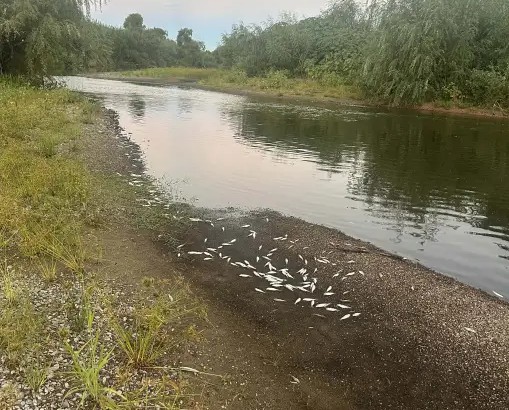
The NSW Environment Protection Authority (EPA) has launched an urgent investigation following a significant fish kill event in the Hunter River near Mount Thorley, in the heart of the Hunter Valley’s industrial corridor. Hundreds of dead fish were discovered in the waterway downstream of major mining and industrial operations. EPA officers are conducting intensive sampling and have issued precautionary advisories to downstream water users. For environmental practitioners and Environment Protection Licence (EPL) holders operating in the Hunter River catchment, this event triggers immediate compliance obligations and potential enforcement exposure under the Protection of the Environment Operations Act 1997 (POEO Act).
Key details
The fish kill was reported by members of the public, prompting a rapid response from NSW EPA investigators. Officers deployed to the site to collect water, sediment, and biological samples across multiple locations upstream and downstream of the affected reach. The sampling programme is designed to identify the contaminant or combination of contaminants responsible for the mortality event, with full analytical results expected within approximately one week.
A precautionary advisory has been issued to downstream water users, recommending that unnecessary extraction from the Hunter River be halted until the investigation is complete. This advisory affects agricultural irrigators, industrial water users, and potentially town water supply operators depending on the location and extent of the contamination plume.
The Mount Thorley area is home to several large-scale open-cut coal mining operations, coal processing facilities, and associated industrial infrastructure. The concentration of EPL holders in this stretch of the Hunter River means that the EPA’s investigation will necessarily examine multiple potential point sources, including licensed discharge outlets, tailings dam overflows, process water runoff, and stormwater management systems.
Fish kills of this scale in regulated waterways are treated with high priority by the NSW EPA. Under Section 120 of the POEO Act, it is an offence to pollute waters, and strict liability applies. This means that the prosecution does not need to prove intent or negligence, only that the pollution occurred and that the defendant’s actions or omissions contributed to it.
Australian context
The Hunter River is one of the most heavily regulated waterways in Australia, managed under the Hunter River Salinity Trading Scheme (HRSTS) and subject to extensive environmental monitoring. Despite this regulatory infrastructure, pollution incidents continue to occur, reflecting the challenges of managing cumulative industrial impacts on a working river system.
NSW EPA enforcement activity has intensified in recent years. The regulator has imposed significant penalties on mining companies and industrial operators for water pollution offences, including cases involving unauthorised discharges, tailings dam failures, and inadequate stormwater management. The maximum penalty for a corporation found guilty of a water pollution offence under Section 120 of the POEO Act is $5 million, with additional daily penalties for continuing offences.
The event also highlights the importance of the ANZG 2018 default guideline values for aquatic ecosystem protection, which replaced the earlier ANZECC 2000 guidelines. Any consultant engaged to conduct ecological risk assessments or compliance sampling in response to this incident must use the current ANZG 2018 values. Relying on the superseded ANZECC 2000 guidelines for impact reporting is a significant compliance error that will invalidate the assessment and expose the client to additional regulatory risk.
For EPL holders in the Hunter Valley, this event is a practical reminder that surface water compliance is not a passive exercise. Licence conditions typically require continuous monitoring of discharge quality, regular reporting to the EPA, and immediate notification of any incident that may cause or threaten material environmental harm.
Practical implications
The fish kill event has several immediate and longer-term implications for EPL holders, consultants, and stakeholders in the Hunter River catchment:
- Immediate self-audit: Any facility with a known point source discharge to the Hunter River should immediately review its recent discharge monitoring data against EPL conditions. Particular attention should be given to pH, dissolved oxygen, total suspended solids, heavy metals, and any site-specific parameters specified in the licence.
- Incident notification: Under the POEO Act, licence holders are required to notify the EPA immediately upon becoming aware of any pollution incident that causes or threatens material harm to the environment. Failure to notify is a separate offence that compounds the regulatory exposure.
- Downstream monitoring validation: Facilities should independently validate their downstream water quality monitoring data against the ANZG 2018 guideline values. This includes checking that monitoring programmes are sampling at appropriate frequencies and locations to detect off-site impacts.
- Stormwater and process water review: EPL holders should review the adequacy of their stormwater management systems, process water containment, and emergency response procedures. Particular attention should be given to whether recent rainfall events may have caused overflows or bypasses of treatment systems.
- Ecological baseline data: Facilities that do not currently hold baseline aquatic ecology data for their receiving waters are at a significant disadvantage. Establishing baseline conditions through routine macroinvertebrate and fish community surveys provides critical evidence for demonstrating compliance and defending against enforcement action.
- Legal preparedness: Given the strict liability nature of Section 120 offences, EPL holders should ensure they have access to experienced environmental legal counsel and technical experts who can respond quickly if the EPA identifies their facility as a potential source.
References and related sources
This article is based on reporting by the Newcastle Weekly. Related regulatory frameworks include the POEO Act 1997 (NSW), the ANZG 2018 default guideline values, the Hunter River Salinity Trading Scheme, and NSW EPA compliance and enforcement policies.
Read the primary source article
Join the discussion on LinkedIn
How iEnvi can help
iEnvi provides rapid-response environmental consulting services for pollution incidents and regulatory investigations. Our contaminated land and water quality specialists can conduct emergency sampling programmes, ecological risk assessments, and compliance audits against EPL conditions and ANZG 2018 guideline values. Our remediation team delivers practical solutions for surface water contamination, including source identification, containment, and treatment. For ecology assessments, we provide aquatic ecosystem surveys, baseline monitoring, and impact evaluation. If enforcement action is anticipated, our expert witness practitioners offer independent technical opinions and support for regulatory proceedings.
This is an iEnvi Machete news summary. Prepared by iEnvi to summarise the source article for contaminated land, groundwater, remediation, approvals and site risk professionals.
Need advice on this topic? Speak to an iEnvi expert at info@ienvi.com.au or 1300 043 684, or contact us online.
Need advice on this issue? iEnvi provides practical, senior-led environmental consulting across contaminated land, remediation, ecology and environmental risk.
Ecological risk assessment Contaminated land services Remediation services Groundwater services Talk to iEnvi