
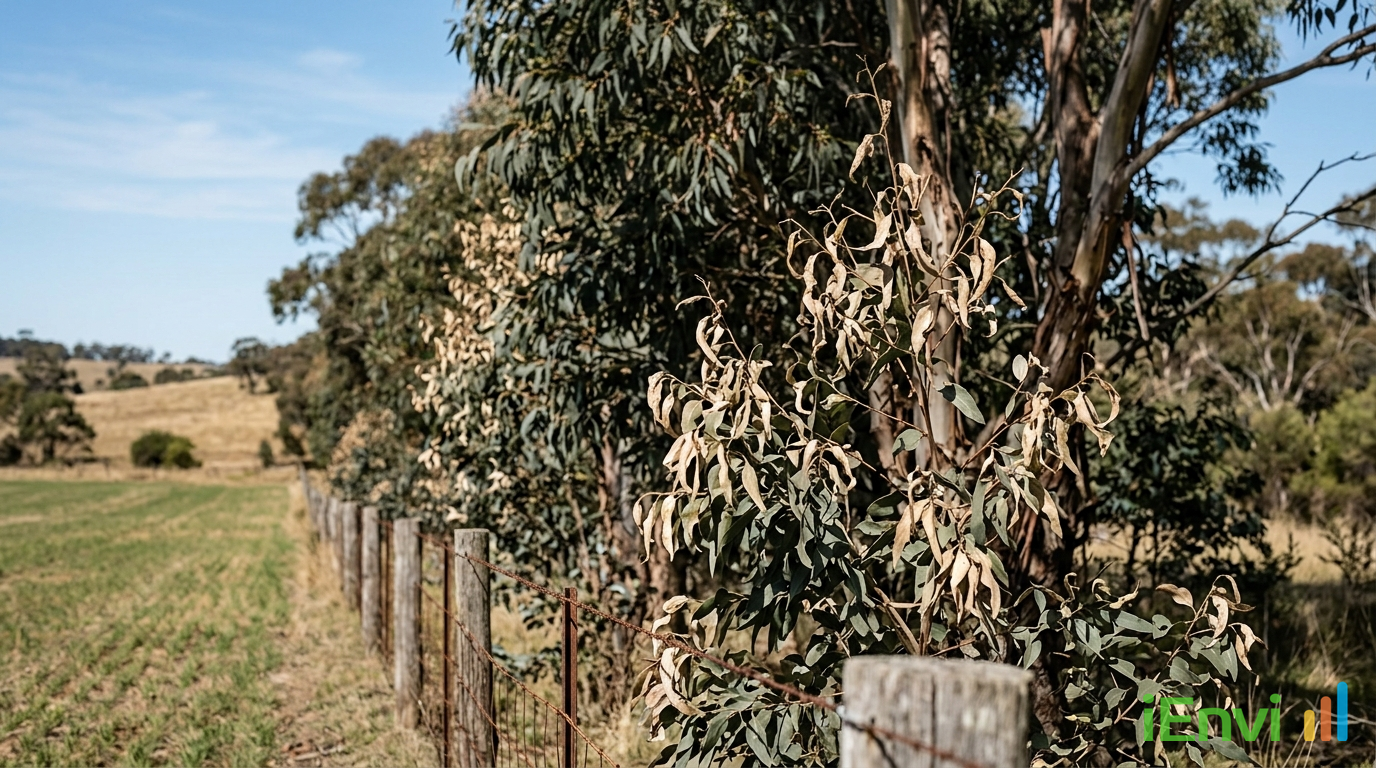
Overview
The NSW Environment Protection Authority has successfully prosecuted aerial applicator Air Precision Pty Ltd, trading as Precision Helicopters, in the Tamworth Local Court after herbicide drift from a helicopter spraying operation damaged non-target eucalyptus trees at Bendemeer, north of Tamworth. On 24 July 2024, Judge Julie Soars ordered the company to pay $72,750, comprising a $12,750 fine for environmental harm and $60,000 in EPA investigation and legal costs.
The case matters well beyond the paddock where it occurred. It confirms that Australian Pesticides and Veterinary Medicines Authority (APVMA) label directions, including buffer distances and application methods, are not advisory guidance but legally enforceable statutory requirements under the Pesticides Act 1999 (NSW). For environmental consultants, land managers, developers and legal advisers who rely on contractors for vegetation control, weed eradication or bushland regeneration, this prosecution is a clear signal that regulators are willing to pursue enforcement action over off-target chemical drift, and that the cost of defending or investigating such incidents can dwarf the underlying penalty.
For councils and developers managing land subject to vegetation management conditions, environmental offset agreements or restoration works, the decision demonstrates that liability for chemical application does not stop at the property boundary. Harm to a neighbour’s trees, verified through vegetation sampling and laboratory analysis, was sufficient to establish an offence and trigger a substantial enforcement cost recovery.
Key details
The incident occurred in February 2023 when the pilot applied the herbicides Grazon Extra and Bow Saw by helicopter to control blackberry and St John’s Wort on a rural property near Bendemeer. According to the EPA, the pilot admitted to applying the chemicals “by eye” and could not produce digital flight path records or evidence of buffer zones around sensitive receptors. EPA officers subsequently collected vegetation samples from an adjoining property, and laboratory analysis confirmed herbicide drift had caused direct harm to two large non-target eucalyptus trees.
The prosecution proceeded under Section 9 of the Pesticides Act 1999 (NSW), which makes it an offence to cause harm to non-target plants or animals through pesticide use. The Act operates alongside the Protection of the Environment Operations Act 1997 (NSW), and both frameworks treat APVMA statutory label directions as legally binding conditions of use rather than best-practice recommendations. Deviating from required buffer distances, wind speed thresholds or application methods specified on the label constitutes a breach capable of supporting prosecution, irrespective of whether harm was intentional.
The court’s cost order is a critical detail for practitioners. Of the total $72,750 penalty, only $12,750 was the fine itself. The remaining $60,000 covered the EPA’s investigation and legal costs, meaning enforcement overheads outweighed the base penalty by close to five to one. This ratio reflects the resource intensity of drift investigations, which typically require site attendance, vegetation and soil sampling, laboratory analysis, meteorological reconstruction and legal preparation. NSW EPA Director of Field Operations Scott Kidd stated that the pilot “was not able to demonstrate flight paths or buffer zones and admitted to spraying the chemicals ‘by eye’,” describing the case as “a timely reminder for anyone applying pesticides to keep comprehensive records and to always stick to the pesticide label instructions.”
No specific concentration thresholds or exceedance values were published in the EPA’s media statement. The offence turned on demonstrated harm to identified non-target vegetation combined with the absence of verifiable compliance records, rather than on a numeric contamination trigger. This is an important distinction from contaminated land frameworks such as the National Environment Protection (Assessment of Site Contamination) Measure 2013, where breach is typically assessed against numeric health investigation levels or ecological screening levels.
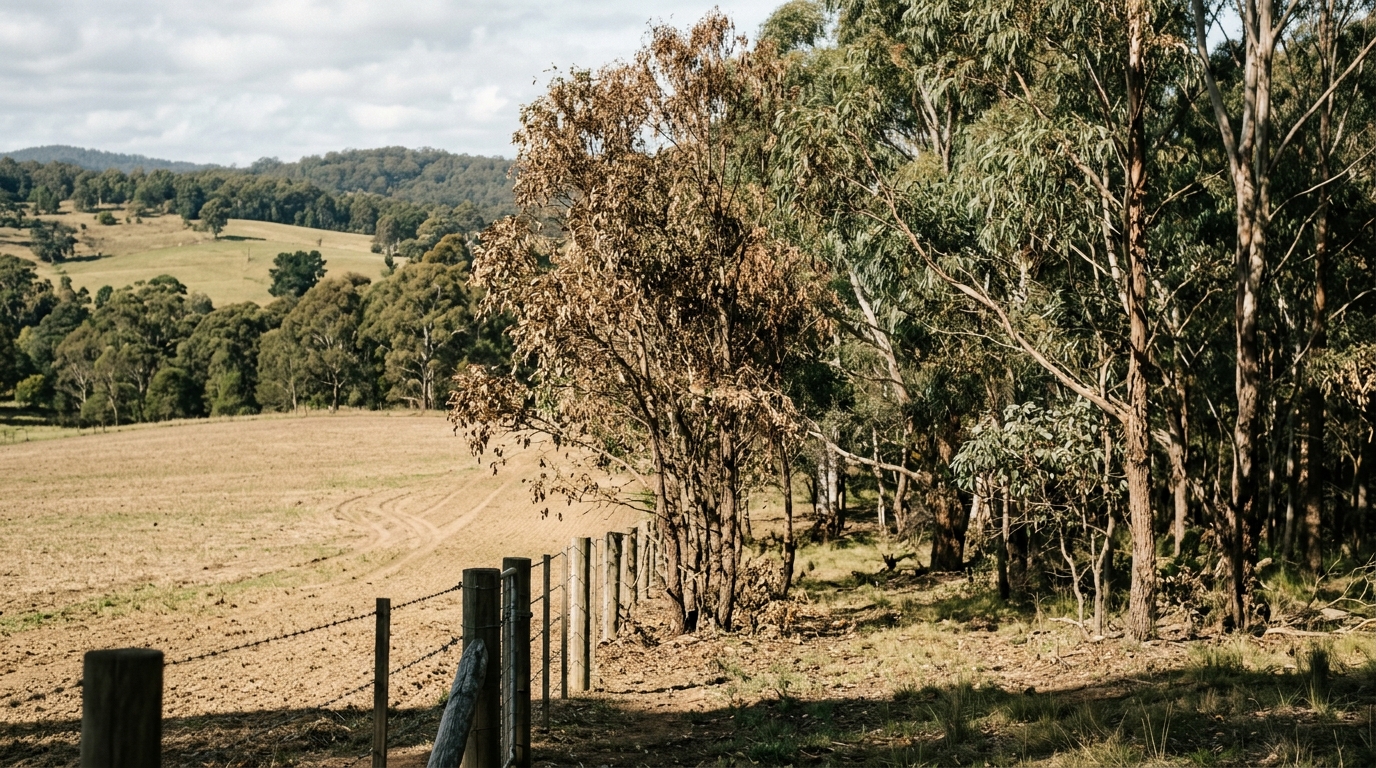
Pesticide application compliance under NSW and national frameworks
While this prosecution sits within pesticide-specific legislation rather than the contaminated land regimes environmental consultants more commonly work under, the compliance logic parallels obligations found across Australian environmental frameworks. Just as the ANZG (Australian and New Zealand Guidelines for Fresh and Marine Water Quality) and NEPM 2013 rely on documented sampling methodology, chain of custody and defensible data to support regulatory decisions, pesticide application compliance now clearly requires equivalent evidentiary rigour: GPS-verified flight or vehicle tracking, on-site meteorological logging, and mapped buffer zones around sensitive receptors and property boundaries.
Every Australian state and territory administers pesticide control legislation that adopts APVMA label conditions as the compliance benchmark, meaning this prosecution’s core finding, that label directions carry statutory force, has practical relevance beyond NSW. Consultants engaged in bushland regeneration, weed eradication or vegetation management works in Queensland, Victoria and South Australia operate under comparable state-based pesticide control acts that similarly criminalise off-target harm and non-compliance with label conditions.
For contaminated land practitioners specifically, the case is a reminder that vegetation management and remediation works involving herbicide application, such as blackberry, lantana or noxious weed control during site rehabilitation, are subject to a parallel and separate compliance regime from soil and groundwater contamination frameworks. A remediation action plan (RAP) that includes herbicide-based weed control should address pesticide compliance obligations directly, covering applicator licensing, label adherence, buffer distances to sensitive receptors, weather monitoring and record keeping. Practitioners engaging spray contractors should verify these controls contractually and retain documentary evidence of compliance, because as this prosecution shows, the investigation and legal costs flowing from an off-target drift incident can far exceed the fine itself.
References and related sources
- Primary source: www.epa.nsw.gov.au
- NSW EPA
How iEnvi can help
iEnvi provides specialist consulting services relevant to this topic. Our team includes CEnvP Site Contamination Specialists with experience across contaminated land, groundwater, remediation, ecology, and regulatory compliance.
- iEnvi contaminated land investigation services
- iEnvi remediation and validation services
- iEnvi expert services and independent review services
This is an iEnvi Machete news summary. Prepared by iEnvi to summarise the source article for contaminated land, groundwater, remediation, approvals and site risk professionals.
Published: 31 Jul 2026
Need advice on this topic? Speak to an iEnvi expert at info@ienvi.com.au or 1300 043 684, or contact us online.
Need advice on this issue? iEnvi provides practical, senior-led environmental consulting across contaminated land, remediation, ecology and environmental risk.
Team credentials Contaminated land services Remediation services Groundwater services Talk to iEnvi