
Overview
The NSW Government has announced a $1 million community fund in the 2026-27 State Budget to support voluntary soil remediation on private residential properties in Captains Flat, a historic mining town in the Southern Tablelands approximately 60 kilometres south of Queanbeyan. Announced by the NSW Environment Protection Authority (EPA) on 3 July 2026, the fund provides direct financial assistance to eligible households whose properties exceed the national health-based screening threshold for lead in residential soil. The initiative covers the cost of excavating and removing lead-contaminated surface soils, transporting those materials to a dedicated containment cell at the former Lake George Mine site, and restoring affected land with clean topsoil and re-turfing.
For environmental professionals, this development is significant on several levels. It establishes a direct government funding mechanism for private orphan site remediation, which is rare in the Australian context. It also demonstrates a coordinated, multi-agency approach to diffuse legacy contamination that goes well beyond the typical regulatory notice-and-response cycle. The NSW EPA, the Department of Primary Industries and Regional Development (DPIRD) Legacy Mines Program, and the Queanbeyan-Palerang Regional Council are all involved in the delivery framework, which provides a working model that other jurisdictions and industries dealing with widespread historical contamination can study.
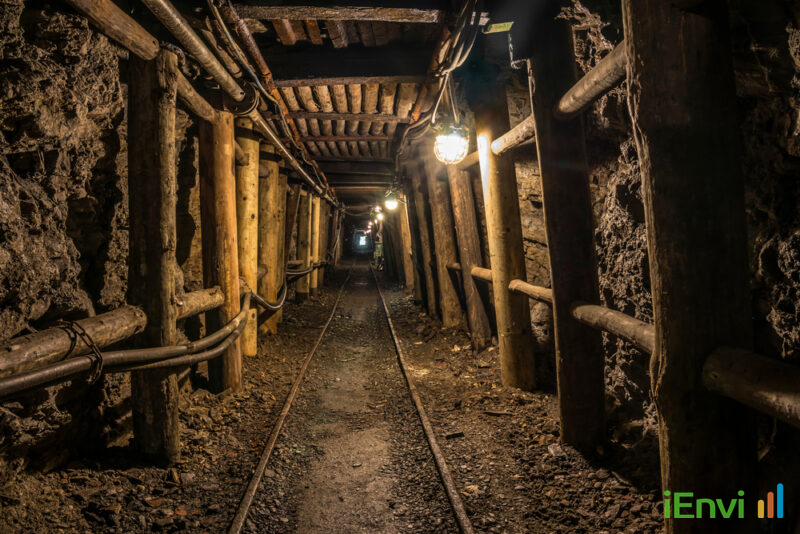
Captains Flat has a long and well-documented contamination history tied to the former Captains Flat copper and lead mine, which operated from the late 1800s through to 1971. Decades of mining, ore processing, and acid mine drainage have left persistent heavy metal contamination across the township, the local waterway network, and surrounding land. Private landowners in the area have for years faced the difficult situation of owning properties with significant lead burdens but without the financial means or legal clarity to remediate them independently. This fund directly addresses that gap.
Key details of the Captains Flat lead remediation fund
Eligibility for the community fund is tied directly to exceedances of the Health Investigation Level A (HIL A) for lead in residential soil under Schedule B1 of the National Environment Protection (Assessment of Site Contamination) Measure 2013 (NEPM 2013). HIL A for lead in residential settings with accessible gardens is set at 300 mg/kg. This is the national benchmark used by contaminated land practitioners across Australia to determine whether lead concentrations in garden soil present an unacceptable health risk to residents, particularly children under seven years of age who are most vulnerable to lead exposure through incidental soil ingestion.
To support the eligibility determination process, the NSW EPA is extending its programme of free surface-soil testing for Captains Flat residents. This allows households to characterise lead concentrations on their land using a consistent, government-funded analytical programme before applying for remediation assistance. The practical remediation works covered by the fund include excavation of contaminated surface soils from residential properties, transportation of those materials to a managed containment cell, and the supply and placement of clean topsoil followed by re-turfing of outdoor areas to eliminate direct exposure pathways, particularly for young children playing in gardens.
The disposal pathway for excavated soils is a particularly important technical detail. Rather than directing high volumes of lead-impacted soil to local municipal solid waste landfills, the programme channels excavated material to a purpose-built containment cell at the adjacent former Lake George Mine site. This facility operates under Environment Protection Licence (EPL) 21721 issued under the Protection of the Environment Operations Act 1997 (NSW), which regulates the receipt, treatment, containment, and long-term management of contaminated soils at the site. This is a critical distinction: lead-contaminated soil from residential properties in Captains Flat is unlikely to be accepted as general solid waste at a standard Class 1 or Class 2 landfill without specific characterisation, waste classification, and potentially higher-cost disposal arrangements. The use of a dedicated, licensed containment cell on the former mine footprint is both a logistically practical and regulatorily appropriate solution.
The broader regulatory context includes the Contaminated Land Management Act 1997 (NSW), under which Section 60 imposes a duty to report contamination. Historical investigations of the railway corridor adjacent to Captains Flat triggered reporting obligations that brought the scale of contamination in the region to the NSW EPA’s attention. The NSW Legacy Mines Program, administered by DPIRD, provides the governance framework for the rehabilitation of historic mine sites that closed prior to the introduction of modern rehabilitation bond and licence requirements. The Captains Flat remediation fund sits at the intersection of these frameworks, drawing on legacy mine rehabilitation infrastructure while delivering outcomes on private residential land not directly covered by the mining tenure.
Australian context: NEPM 2013 lead thresholds, state frameworks, and regional orphan contamination
The Captains Flat programme is directly anchored to the NEPM 2013, which remains the foundational national standard for site contamination assessment in Australia. The HIL A threshold of 300 mg/kg for lead in residential soil with accessible gardens is the most commonly applied screening level for residential lead assessments across all Australian states and territories. Under the NEPM 2013 framework, exceedance of an HIL does not automatically mean a site requires remediation, but it does trigger the need for a site-specific health risk assessment to determine whether further action is warranted.
References and related sources
- Primary source: www.epa.nsw.gov.au
- nsw.gov.au
- centralnews.com.au
- miningmagazine.com.au
- nsw.gov.au
- NSW EPA
How iEnvi can help
iEnvi provides specialist consulting services relevant to this topic. Our team includes CEnvP Site Contamination Specialists with experience across contaminated land, groundwater, remediation, ecology, and regulatory compliance.
- iEnvi remediation services
- iEnvi contaminated land investigation services
- iEnvi expert services and independent review services
This is an iEnvi Machete news summary. Prepared by iEnvi to summarise the source article for contaminated land, groundwater, remediation, approvals and site risk professionals.
Published: 04 Jul 2026
Need advice on this topic? Speak to an iEnvi expert at info@ienvi.com.au or 1300 043 684, or contact us online.
Need advice on this issue? iEnvi provides practical, senior-led environmental consulting across contaminated land, remediation, ecology and environmental risk.
Team credentials Soil remediation Contaminated land services Groundwater services Talk to iEnvi