

Dual Regulatory Milestones for NSW BESS Projects
Two significant Battery Energy Storage System (BESS) developments reached critical regulatory milestones in New South Wales on 13 April 2026, together highlighting the complex dual-jurisdiction approval environment facing large-scale renewable energy infrastructure in Australia. The NSW Independent Planning Commission (IPC) formally approved Foresight Group Australia’s 75MW/150MWh Hume North battery storage facility near Albury, representing a $120 million investment that will connect to existing transmission infrastructure in the region. At the same time, Banpu Energy Australia’s considerably larger 500MW/1,000MWh Pinecrest facility in Lithgow was officially referred for federal environmental assessment under the Environment Protection and Biodiversity Conservation (EPBC) Act 1999 (Cth).
These two milestones, arriving on the same day, are not coincidental in their significance. They represent the two dominant regulatory pathways that proponents of utility-scale BESS projects must now navigate concurrently: state-level planning approval through bodies such as the NSW IPC, and federal environmental assessment triggered when a project potentially affects matters of national environmental significance (MNES) under the EPBC Act. The contrast between the two projects, one approved and one entering federal referral, provides a practical case study in how project scale, site location, and ecological sensitivity interact to determine the regulatory burden a developer will face.
For environmental planners, ecologists, and the developers and lawyers who instruct them, the timing of these decisions signals that gigawatt-scale battery storage is no longer primarily a technology or engineering challenge. The defining constraint is the complexity of managing two regulators operating under different legislative frameworks, different assessment methodologies, and different timeframes, without allowing one process to stall the other. Getting the sequencing right from the outset is essential to commercial viability.
Regulatory Differences Between Large-Scale Storage Projects
The Hume North BESS, developed by Foresight Group Australia, has a rated capacity of 75MW and 150MWh and is located near Albury in southern New South Wales. The $120 million project will connect directly to existing transmission infrastructure, a deliberate siting decision that limits the need for new network augmentation works and reduces the overall development footprint. The NSW IPC’s approval of this project represents the conclusion of the state’s planning assessment process for a project of state significance, which requires independent commission review when the Planning Secretary determines that a project warrants it due to its scale, complexity, or level of community interest.
The Pinecrest facility proposed by Banpu Energy Australia is substantially larger, at 500MW and 1,000MWh. Its referral to the federal Department of Climate Change, Energy, the Environment and Water under the EPBC Act 1999 means the project has been identified as potentially having a significant impact on one or more MNES. These matters can include threatened species and ecological communities listed under the EPBC Act, migratory species protected under international agreements, Ramsar wetlands, and other protected values. The referral process requires the federal minister, or a delegate, to decide whether the action is a controlled action requiring formal assessment and approval, a controlled action that can be assessed through a bilateral agreement with NSW, or not a controlled action at all.
The scale distinction between these two projects is directly relevant to their ecological footprint and the likely EPBC Act triggers. A 1,000MWh facility at the 500MW Pinecrest scale requires substantially more land than the Hume North project. Large BESS facilities of this class typically require cleared, levelled ground for battery modules, inverter stations, transformer yards, access roads, security fencing, and associated infrastructure. The cumulative vegetation disturbance associated with a facility of this size in the Central Tablelands region of New South Wales, where woodland and grassland communities of conservation significance are known to occur, creates a credible basis for EPBC Act triggers relating to threatened ecological communities and listed fauna species.
The Hume North project’s approval pathway was materially assisted by its connection to existing transmission assets. Where a proponent can co-locate with existing grid infrastructure, the additional disturbance footprint is limited to the battery facility itself rather than including new easements, access tracks, and substations across previously undisturbed land. This is a recognised factor in reducing both the ecological impact assessment burden and the likelihood of triggering federal referral thresholds. Developers who locate near existing infrastructure improve their planning outcomes.
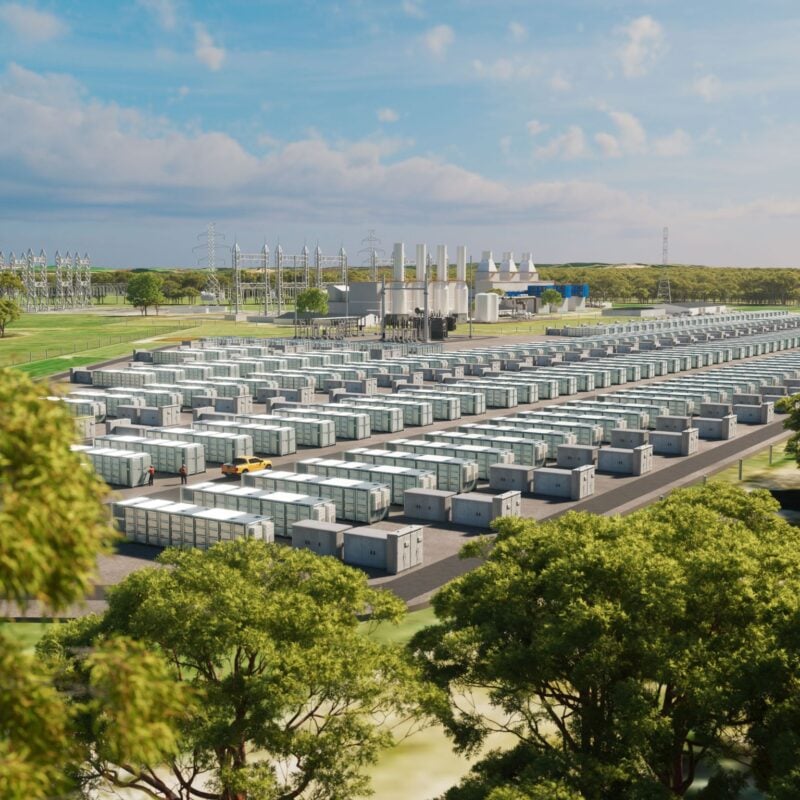
Australian context: dual-jurisdiction approvals for BESS under NSW planning law and the EPBC Act 1999
In New South Wales, utility-scale BESS projects above a certain capital investment or generation threshold are assessed as State Significant Development (SSD) under the Environmental Planning and Assessment Act 1979 (NSW) (EP&A Act). The IPC acts as the consent authority for SSD applications that are called in by the minister or where the Planning Secretary determines that independent assessment is warranted, typically because of the scale of the project or the level of community objection. The IPC’s role is to conduct a merit-based assessment and either approve, approve with conditions, or refuse the application. Conditions of approval routinely include requirements for construction environmental management plans, biodiversity offset strategies, and ongoing compliance monitoring programmes.
References and related sources
- Primary source: www.energy-storage.news
- NEPM Assessment of Site Contamination
- EPBC Act
How iEnvi can help
iEnvi provides specialist consulting services relevant to this topic. Our team includes CEnvP Site Contamination Specialists with experience across contaminated land, groundwater, remediation, ecology, and regulatory compliance.
- iEnvi ecology services
- iEnvi contaminated land investigation services
- iEnvi remediation and validation services
- iEnvi expert services and independent review services
This is an iEnvi Machete news summary. Prepared by iEnvi to summarise the source article for contaminated land, groundwater, remediation, approvals and site risk professionals.
Published: 13 Apr 2026
Need advice on this topic? Speak to an iEnvi expert at info@ienvi.com.au or 1300 043 684, or contact us online.
Need advice on this issue? iEnvi provides practical, senior-led environmental consulting across contaminated land, remediation, ecology and environmental risk.
Team credentials Environmental management plans Contaminated land services Remediation services Talk to iEnvi