
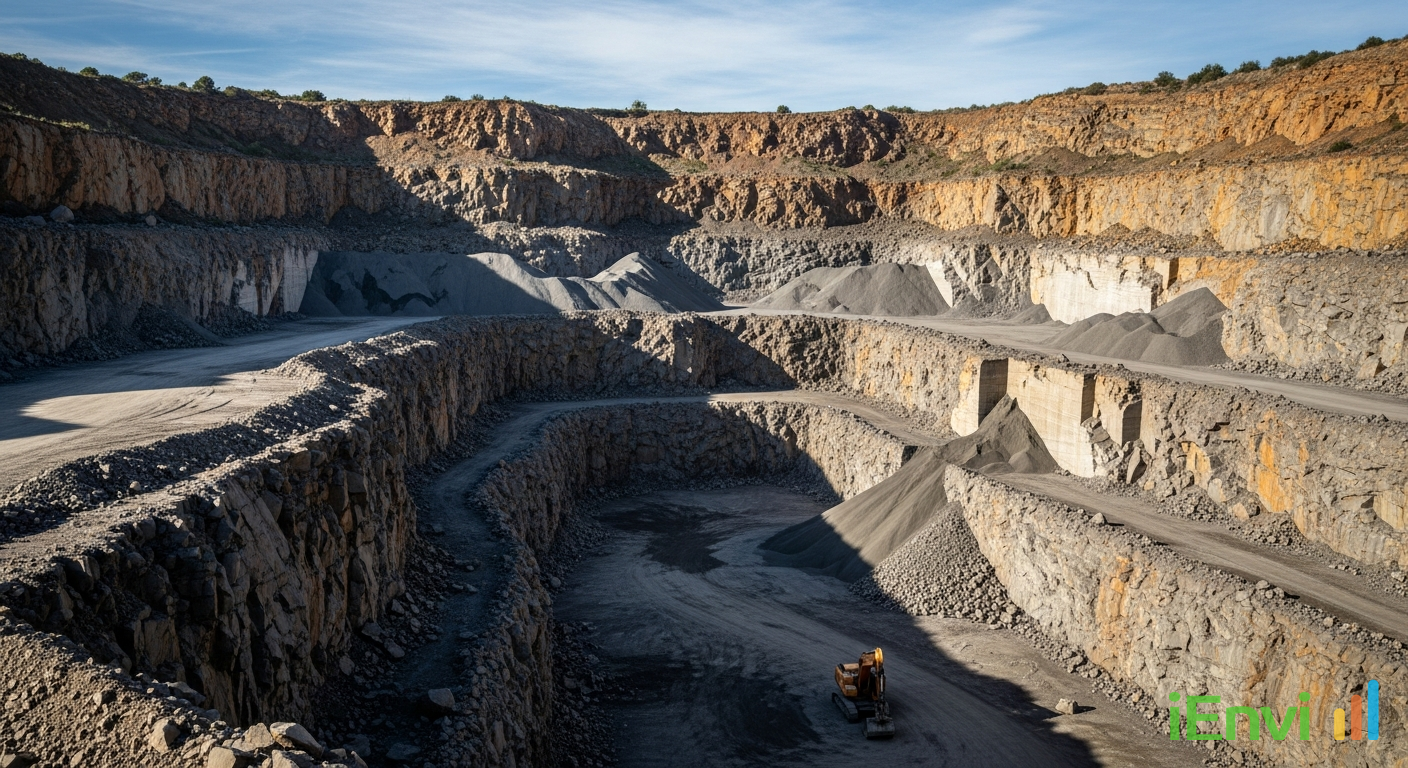
Balala Quarry EPL Breach and Court Ruling
On 16 June 2016, the Armidale Local Court convicted David Patrick Carlon, the owner and operator of a quarry at Balala in Uralla Shire, New South Wales, and ordered him to pay $190,000 comprising $150,000 in fines and $40,000 in legal and investigation costs. The NSW Environment Protection Authority (EPA) brought the prosecution after investigators found that the site had extracted gravel at volumes massively exceeding the statutory threshold that triggers the requirement to hold an Environment Protection Licence (EPL) under the Protection of the Environment Operations Act 1997 (NSW) (POEO Act). This is a notable outcome because the prosecution was not founded on evidence of pollution, harm to human health, or damage to the surrounding environment. The conviction rested entirely on the operator’s failure to obtain the licence required once a scheduled threshold was crossed.
The significance of this case extends well beyond one unlicensed quarry in northern New South Wales. It clarifies, in unambiguous terms, that the licensing framework established under the POEO Act is not a second-tier compliance obligation that can be deferred while operations continue. Courts are prepared to impose substantial financial penalties where an operator has demonstrably bypassed licensing requirements for commercial advantage, even when no measurable environmental degradation has occurred. For developers, quarry operators, landholders running extractive operations, and the consultants and lawyers who advise them, this decision reframes licensing threshold management as a primary compliance risk.
The case also highlights the operational reality for rural and regional extractive operations across New South Wales, Queensland, Victoria, and South Australia, where small to medium-scale quarries routinely supply gravel, fill, and aggregate for road construction, subdivision works, and infrastructure projects. Production volumes at these sites can escalate rapidly in response to contract demand, and without a formal throughput monitoring programme, operators may inadvertently cross a licensing threshold mid-year without realising it. The Balala outcome makes clear that the absence of intent to harm the environment is not a defence, and that recklessness in the face of an obvious licensing obligation will attract meaningful financial consequences.
Key details of the NSW EPA prosecution at Balala quarry
The extraction volumes at the centre of this prosecution are striking. In 2012, the Balala quarry extracted 138,000 tonnes of gravel, representing 4.6 times the 30,000-tonne annual threshold that requires an operator to hold an EPL under Schedule 1 of the POEO Act. In 2013, the site extracted 72,000 tonnes, which is 2.4 times that same threshold. These are not marginal exceedances attributable to measurement uncertainty or seasonal variation. They reflect sustained, large-scale extraction at a site that was operating entirely outside the regulatory framework that applies to scheduled extractive activities in New South Wales.
The mandatory licensing requirement for extractive industries is established under Section 48 of the POEO Act, which prohibits a person from carrying out a scheduled activity unless authorised by an EPL. Schedule 1 of the Act identifies extractive industries as a scheduled activity once the annual volume of extractive materials obtained, processed, or stored reaches 30,000 tonnes per year. The EPL regime that attaches to scheduled extractive activities includes obligations around noise, dust, sediment and erosion control, water quality monitoring, record keeping, and annual returns. By operating without an EPL, Mr. Carlon avoided both the administrative burden and the cost of compliance with these obligations while extracting material at volumes that clearly required them.
The court’s characterisation of the conduct as reckless and motivated by financial gain is legally significant. In sentencing, the court accepted the EPA’s submission that the operator’s actions were not a good-faith error about the applicable threshold, but a deliberate decision to continue operating outside the licensing framework. The financial penalty of $150,000 reflects the seriousness with which the court treated that finding. The additional $40,000 awarded in legal and investigation costs is a reminder that the financial exposure from an unlicensed operation extends beyond the primary fine to include the full cost of the regulator’s enforcement action.
The site’s compliance history also included a Prevention Notice issued under Section 96 of the POEO Act in December 2013, which halted operations and imposed specific conditions including monthly water quality reporting and the installation of erosion and sediment controls. The Prevention Notice was triggered by the site’s proximity to Roumalla Creek and adjacent grazing land, which made sediment mobilisation and potential water quality impacts a foreseeable risk. The fact that a Prevention Notice was issued before any prosecution highlights the EPA’s graduated enforcement approach, but also demonstrates that where an operator has failed to obtain an EPL before reaching the scheduled threshold, the regulator retains the power to act on both the unlicensed operation and any associated environmental risks simultaneously.
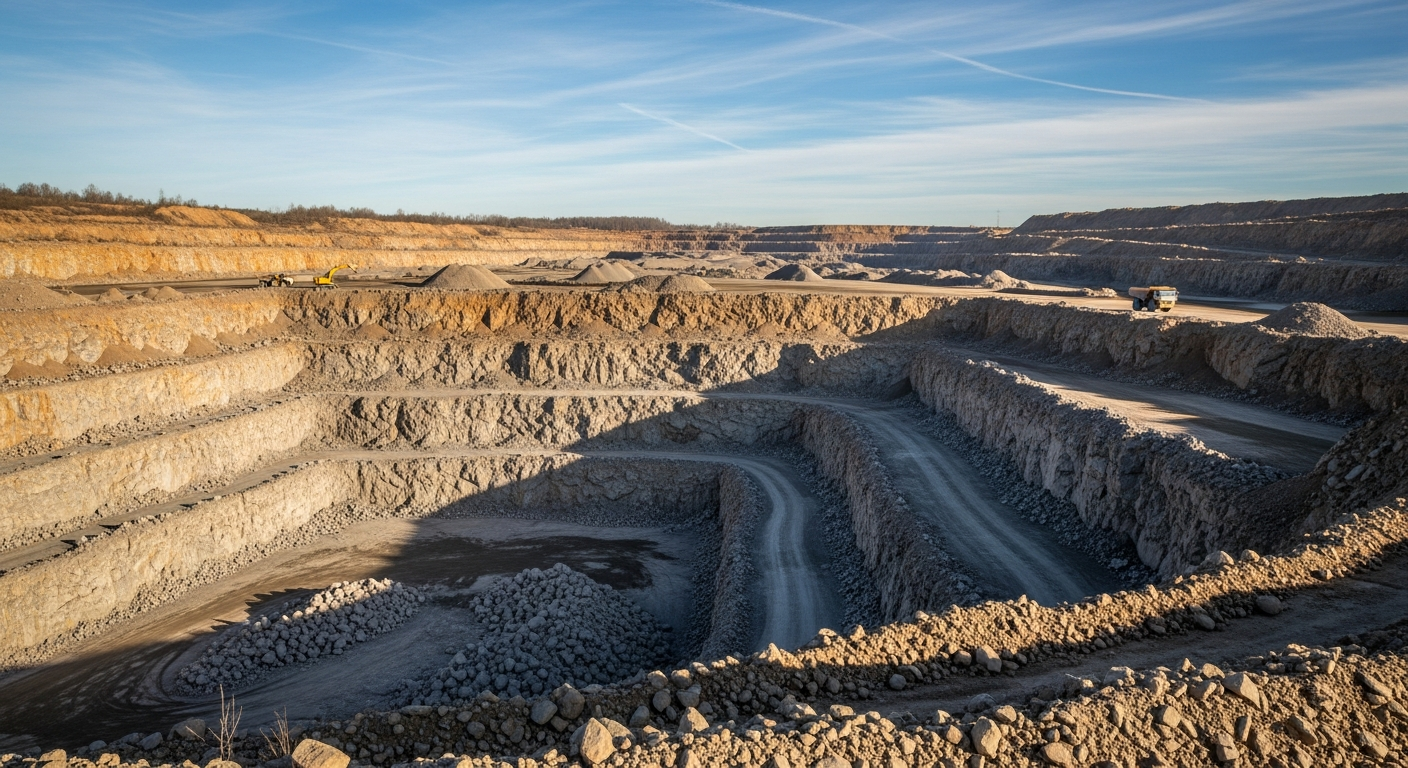
Australian context: POEO Act thresholds and extractive industry licensing across jurisdictions
The POEO Act 1997 (NSW) is the primary instrument for regulating scheduled activities in New South Wales, and the Schedule 1 threshold of 30,000 tonnes per year for extractive industries has been in place for many years. What this prosecution demonstrates is that the EPA is prepared to test the boundaries of that threshold in court, and that the Local Court is willing to impose penalties at the upper end of the available range where the facts support a finding of reckless non-compliance for financial advantage. For operators across New South Wales and other jurisdictions with comparable licensing frameworks, the Balala outcome serves as a clear signal that production volume monitoring is not an administrative formality but a live compliance obligation with direct legal and financial consequences.
References and related sources
- Primary source: www.epa.nsw.gov.au
How iEnvi can help
iEnvi provides specialist consulting services relevant to this topic. Our team includes CEnvP Site Contamination Specialists with experience across contaminated land, groundwater, remediation, ecology, and regulatory compliance.
- iEnvi due diligence services
- iEnvi remediation and validation services
- iEnvi expert services and independent review services
This is an iEnvi Machete news summary. Prepared by iEnvi to summarise the source article for contaminated land, groundwater, remediation, approvals and site risk professionals.
Published: 17 Jun 2026
Need advice on this topic? Speak to an iEnvi expert at info@ienvi.com.au or 1300 043 684, or contact us online.
Need advice on this issue? iEnvi provides practical, senior-led environmental consulting across contaminated land, remediation, ecology and environmental risk.
Team credentials Contaminated land services Remediation services Groundwater services Talk to iEnvi