

Overview of the NT EPA LNG Licence Review
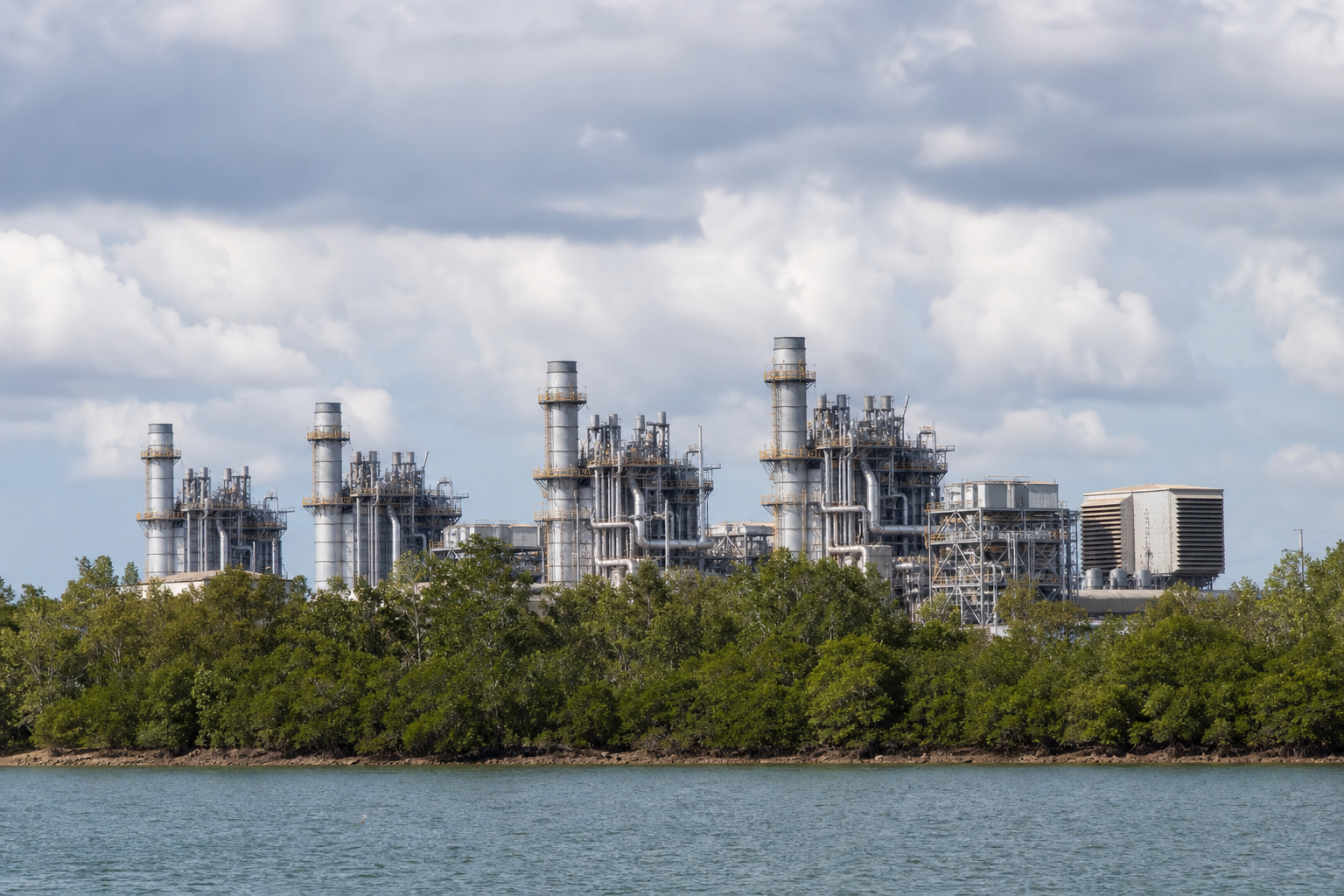
The Northern Territory Environment Protection Authority (NT EPA) released its finalised LNG Licence Review on 31 July 2025, recommending 23 measures to overhaul the Environment Protection Licences held by Santos (EPL 217, Darwin LNG) and Inpex (EPL 228, Ichthys LNG). The review was triggered after Inpex revised its 2023-24 benzene emissions estimate from approximately 4 tonnes to approximately 557 tonnes, a correction attributed to calculation methodology errors rather than a genuine step change in plant operations. Independent audits commissioned as part of the review identified broader non-compliance issues and systemic inaccuracies in historical emissions estimation across both facilities.
For Australian environmental professionals, this is a significant regulatory event well beyond the Northern Territory. It demonstrates how quickly a facility’s reported emissions profile can unravel once desktop emission factor calculations are independently audited, and how regulators are responding by moving away from reliance on theoretical or modelled data towards enforceable limits and continuous monitoring. Developers, industrial licence holders, environmental lawyers and councils dealing with air emissions from industrial, resources or waste facilities should treat this as an early signal of where state and territory air licensing regimes are heading.
The scale of the benzene discrepancy, a difference of roughly 553 tonnes in a single reporting year, is what elevated this from a routine licence review to a landmark regulatory action. Benzene is a known human carcinogen and a compound of concern under Australian air quality frameworks, meaning under-reporting of this magnitude has direct implications for community health risk assessment in the Darwin airshed and for public confidence in industry self-reported emissions data generally.
Key Air Toxics Control Measures
The NT EPA’s 23 recommendations target four main regulatory mechanisms. First, enforceable pollution limits will be established for volatile organic compounds (VOCs), including benzene, toluene, ethylbenzene and xylene (the BTEX group), moving these facilities from largely self-reported emissions estimates to legally binding discharge limits. Second, mandatory operational standards will require key abatement infrastructure, specifically Acid Gas Removal Units (AGRUs) and thermal oxidisers, to remain operational at least 99.5 percent of the time, a stringent uptime threshold that leaves very little tolerance for unplanned outages or bypass events.
Third, the review recommends tighter restrictions on hot venting and flaring practices, which are common pathways for uncontrolled VOC release during upset conditions or maintenance. Fourth, continuous emissions monitoring equipment must be installed at major emission points, including the acid gas stream at Ichthys LNG, with real-time measurement capability for benzene and other pollutants of concern. This represents a shift from periodic stack testing and calculation-based estimation to near-continuous, verifiable data streams, alongside improved public reporting and access to ambient air quality data.
The review also mandates regular statutory environmental audits of emissions estimation methodologies and data quality assurance and quality control (QA/QC) systems. This directly addresses the root cause of the benzene under-reporting, which independent auditors linked to flawed calculation methodologies rather than a single measurement error. The recommendations sit under the Waste Management and Pollution Control Act 1998 (NT) and the Environment Protection Act 2019 (NT), which together govern the terms and enforcement of EPL 217 and EPL 228.
The scale of the reporting error is worth stating plainly. Inpex’s original 2023-24 benzene emissions estimate of approximately 4.12 tonnes was revised upward to approximately 556.9 tonnes, an increase of more than 130 times the original figure. This was not identified through routine compliance reporting but emerged through independent audit scrutiny, demonstrating why the NT EPA has prioritised third-party verification of emissions calculation methods as a standing licence condition rather than a one-off review exercise.
Australian context
While this review is specific to the Northern Territory’s Waste Management and Pollution Control Act 1998 framework, its implications extend across Australian jurisdictions that regulate industrial air emissions, including facilities assessed under state EPA licensing regimes in Queensland, New South Wales, Victoria and South Australia. The National Environment Protection (Ambient Air Quality) Measure (Air NEPM) sets the national framework for ambient air quality standards that airshed-level monitoring, such as that now proposed for Darwin, is designed to support and inform.
Australian contaminated land and air quality practitioners will recognise the parallel with NEPM 2013 investigation frameworks, which similarly moved practice away from generic assumptions towards site-specific, verifiable data with defined detection limits and QA/QC protocols. The NT EPA’s emphasis on auditing emissions calculation methodologies mirrors the data quality objectives embedded in NEPM guidance for contaminated site assessment, where unverified modelled or theoretical values are increasingly unacceptable to regulators and site auditors alike.
Facilities operating under state-based air licensing regimes, particularly those with BTEX or VOC emission sources such as gas processing, petrochemical, waste treatment or fuel storage operations, should expect similar scrutiny of their emissions estimation methods. Where a jurisdiction’s EPA identifies that calculation-based reporting has materially understated actual emissions, as occurred here, other regulators are likely to follow the NT EPA’s lead in mandating continuous monitoring and independent audits.
References and related sources
- Primary source: ntepa.nt.gov.au
- nt.gov.au
- ozarab.media
- caha.org.au
- aap.com.au
How iEnvi can help
iEnvi provides specialist consulting services relevant to this topic. Our team includes CEnvP Site Contamination Specialists with experience across contaminated land, groundwater, remediation, ecology, and regulatory compliance.
- iEnvi contaminated land investigation services
- iEnvi remediation and validation services
- iEnvi expert services and independent review services
This is an iEnvi Machete news summary. Prepared by iEnvi to summarise the source article for contaminated land, groundwater, remediation, approvals and site risk professionals.
Published: 02 Aug 2026
Need advice on this topic? Speak to an iEnvi expert at info@ienvi.com.au or 1300 043 684, or contact us online.
Need advice on this issue? iEnvi provides practical, senior-led environmental consulting across contaminated land, remediation, ecology and environmental risk.
Team credentials Contaminated land services Remediation services Groundwater services Talk to iEnvi