
Overview
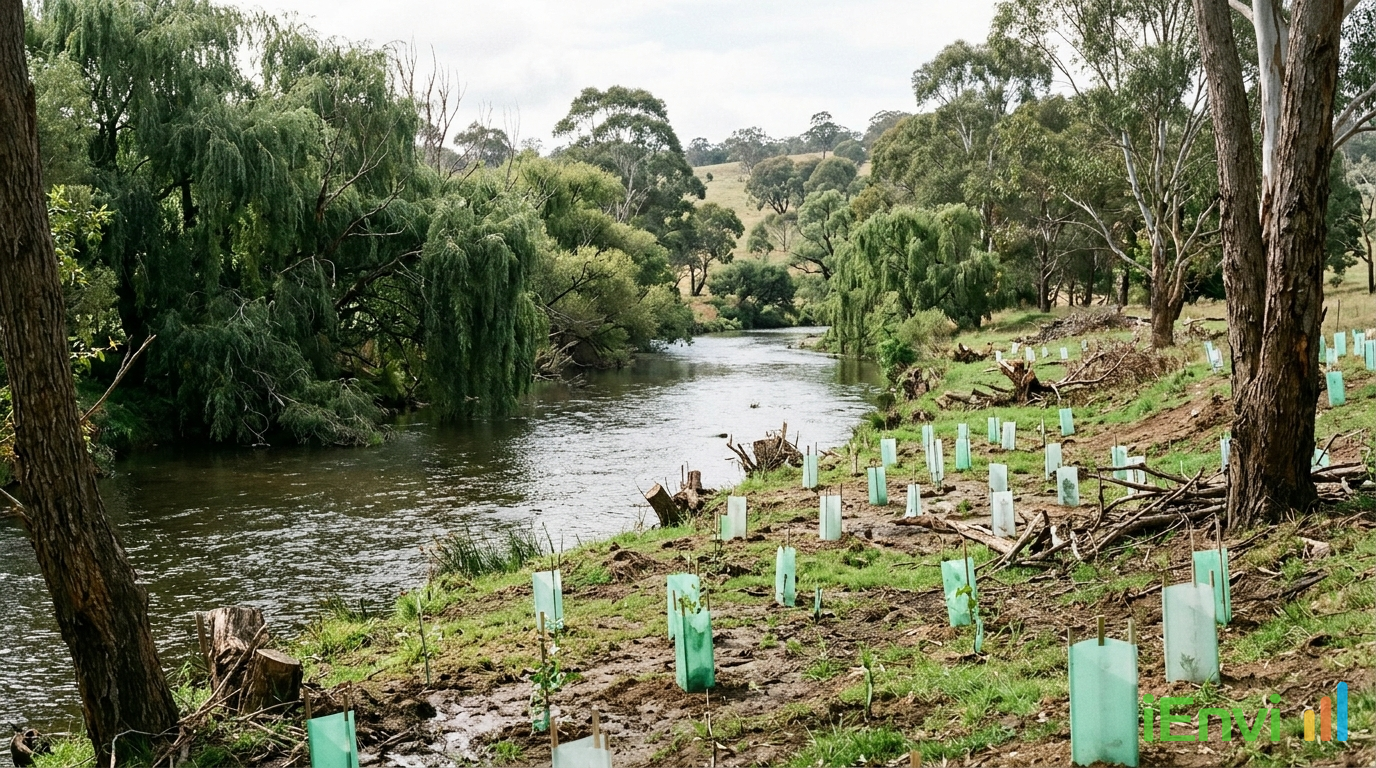
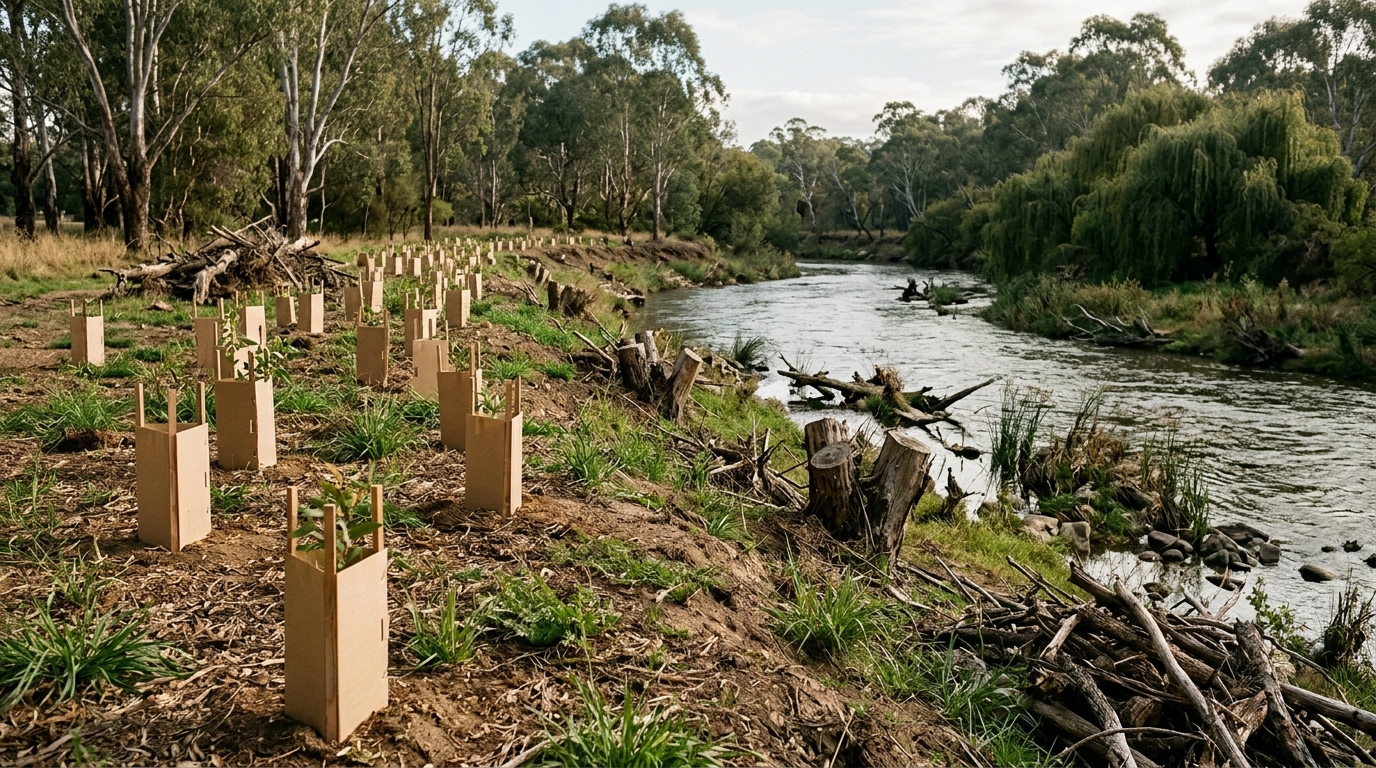
The NSW Environment Protection Authority (EPA) has resolved a sewage discharge into the Fish River without a prosecution. The remedy is ecological rather than purely financial. Oberon Council has entered a statutory Enforceable Undertaking with the NSW EPA after an investigation into untreated sewage effluent released from a pump station linked to the Oberon Sewage Treatment Works. Under the undertaking, published on 12 November 2026, the council has committed $60,000 over three years to willow eradication and native riparian revegetation along the Fish River. It has upgraded its pumping infrastructure and agreed to pay $15,000 towards the EPA’s legal, investigation and compliance monitoring costs.
The outcome shows how NSW EPA uses enforceable undertakings under section 253A of the Protection of the Environment Operations Act 1997 (NSW) (POEO Act) as an alternative to prosecution for water pollution under section 120. An enforceable undertaking is negotiated, but it is negotiated from a position of evidence. In this matter the evidence included water sampling that confirmed acute ecotoxicity to two aquatic test species, with elevated ammonia, high biochemical oxygen demand (BOD), elevated faecal indicator bacteria and visible gross solids.
For councils, water utilities and industrial operators that own or run pump stations, this is a case study in what happens after an overflow reaches a waterway. Environmental lawyers will want to read it as a guide to how NSW EPA builds a water pollution case. Environmental consultants should read it as a guide to the standard of sampling and testing that regulators now treat as normal when a discharge is investigated.
Key details
NSW EPA’s evidence combined chemistry, microbiology and direct toxicity testing. According to the council’s announcement, environmental water sampling confirmed acute ecotoxicity to two aquatic test species. The announcement attributes the toxicity to elevated ammonia concentrations, high BOD and severe pathogen loading, with elevated E. coli, faecal coliforms and Enterococci. Gross solids were also visible in the receiving water. The announcement does not name the test species or report individual concentrations, so the specific exceedance values are not on the public record in the source material.
Each line of evidence establishes a different element of harm. Ammonia is directly toxic to aquatic organisms, and its toxicity depends on pH and temperature because both control the proportion present as un-ionised ammonia (NH3), which is the more toxic form. High BOD indicates a load of organic matter that consumes dissolved oxygen as it breaks down, placing stress on fish and invertebrates. E. coli, faecal coliforms and Enterococci are standard faecal indicators that point to a sewage source and to a risk for people using the water for primary contact recreation. Gross solids give visual corroboration that is easy for a regulator or court to understand. The bioassay results go one step further than any guideline comparison. They show that the water itself was toxic to living organisms, rather than relying on inference from a concentration exceeding a guideline value.
The enforceable undertaking has three core components:
- $60,000 over three years for a willow tree eradication and native riparian revegetation project to restore aquatic and stream bank ecosystem health along the Fish River.
- Upgrades to the council’s pumping infrastructure.
- A $15,000 contribution to the EPA’s legal, investigation and ongoing compliance monitoring costs.
Section 120 of the POEO Act prohibits the pollution of waters and operates as a strict liability offence, meaning the prosecution does not need to prove intent or negligence. Section 253A allows the EPA to accept a written undertaking in connection with a matter in relation to which it has a function under the Act. If an undertaking is breached, the EPA can apply to the Land and Environment Court for orders, including orders directing compliance. Sewage treatment systems are a scheduled activity under Schedule 1 of the POEO Act and typically operate under an Environment Protection Licence, with operational detail supported by the Protection of the Environment Operations (General) Regulation 2022 (NSW).
The choice of willow removal as the restoration project is technically coherent. Most willows (Salix spp.) are listed as a Weed of National Significance, with the exceptions of weeping willow and two pussy willow taxa. Willows colonise and narrow stream channels, shade out native vegetation and drop leaves en masse in autumn. That leaf drop delivers a pulse of organic matter that adds to oxygen demand in the waterway. Replacing willows with native riparian species should ease some of the same oxygen-demand pressure that the sewage discharge intensified, although the source material does not report any monitoring or modelling of that benefit.
Australian context
The Australian and New Zealand Guidelines for Fresh and Marine Water Quality (ANZG 2018) are the reference framework for assessing harm to freshwater ecosystems across all Australian jurisdictions. ANZG 2018 supports a weight-of-evidence approach that draws on multiple lines of evidence, including physical and chemical stressors such as dissolved oxygen, toxicants such as ammonia, biological indicators and direct toxicity assessment. The Oberon matter shows that line of thinking applied in an enforcement setting. Ammonia guideline values in ANZG 2018 are expressed with reference to pH, so a total ammonia result reported without field pH and temperature is difficult to interpret against the guideline value and easier to challenge.
The same water quality framework flows into contaminated land practice. The groundwater investigation levels for ecological protection in the National Environment Protection (Assessment of Site Contamination) Measure 1999, as amended in 2013 (ASC NEPM), are drawn from the national freshwater and marine water quality guidelines that ANZG 2018 now carries forward. Where groundwater from a contaminated site discharges to a creek or river, the assessment questions match those raised in the Oberon matter: which stressors are present, at what concentrations, under what pH and temperature conditions, and whether the receiving water is toxic to aquatic life. Consultants who collect field pH and temperature alongside every ammonia sample, and who consider direct toxicity testing where the receiving environment is sensitive, will produce data that holds up whether it ends up in a site assessment report or in front of a regulator.
References and related sources
- Primary source: www.oberon.nsw.gov.au
- ANZG Water Quality Guidelines
- NSW EPA
How iEnvi can help
iEnvi provides specialist consulting services relevant to this topic. Our team includes CEnvP Site Contamination Specialists with experience across contaminated land, groundwater, remediation, ecology, and regulatory compliance.
- iEnvi contaminated land investigation services
- iEnvi remediation and validation services
- iEnvi expert services and independent review services
This is an iEnvi Machete news summary. Prepared by iEnvi to summarise the source article for contaminated land, groundwater, remediation, approvals and site risk professionals.
Published: 13 Nov 2026
Need advice on this topic? Speak to an iEnvi expert at info@ienvi.com.au or 1300 043 684, or contact us online.
Need advice on this issue? iEnvi provides practical, senior-led environmental consulting across contaminated land, remediation, ecology and environmental risk.
Team credentials Contaminated land services Remediation services Groundwater services Talk to iEnvi