
Overview
The Queensland Department of the Environment, Tourism, Science and Innovation has initiated a comprehensive public consultation process to modernise the state Environmental Offsets Framework. This regulatory review marks the first major overhaul of the system since its inception over a decade ago under the Environmental Offsets Act 2014. For property developers, infrastructure providers, local councils, and environmental lawyers operating in Queensland, this development represents a critical shift in how project liabilities, land values, and development approvals will be managed moving forward. The consultation seeks to address systemic issues within the existing framework, ensuring that when significant residual impacts on environmental matters cannot be avoided or mitigated, the resulting offset obligations are calculated and delivered in a transparent, timely, and ecologically effective manner.
Under the current decade-old system, project proponents face a highly complex and often slow administrative pathway when trying to resolve their environmental offset obligations. The review aims to streamline these processes, reduce regulatory red tape, and ensure that offset funds are deployed efficiently to secure real, measurable conservation outcomes. Historically, a significant portion of developer payments has remained unspent in financial holding accounts due to a lack of available offset sites and administrative bottlenecks. By modernising the administrative and financial mechanisms of the framework, the Queensland Government intends to unlock private landholder participation and create a more functional offsets market that aligns with modern environmental standards and spatial planning technologies.
This state-level reform does not occur in a vacuum; it directly coincides with a broader national transformation of environmental policy across Australia. The federal government is currently advancing major reforms to the Environment Protection and Biodiversity Conservation Act 1999 and has established the Nature Repair Market under the Nature Repair Market Act 2023. As national biodiversity credit systems and nature-positive reporting requirements gain traction, Queensland’s modernisation effort is designed to harmonise state offset requirements with federal expectations. This alignment is vital for developers who must navigate overlapping regulatory jurisdictions, as inconsistent standards between state and federal authorities frequently lead to project delays, increased compliance costs, and protracted litigation.
Key details
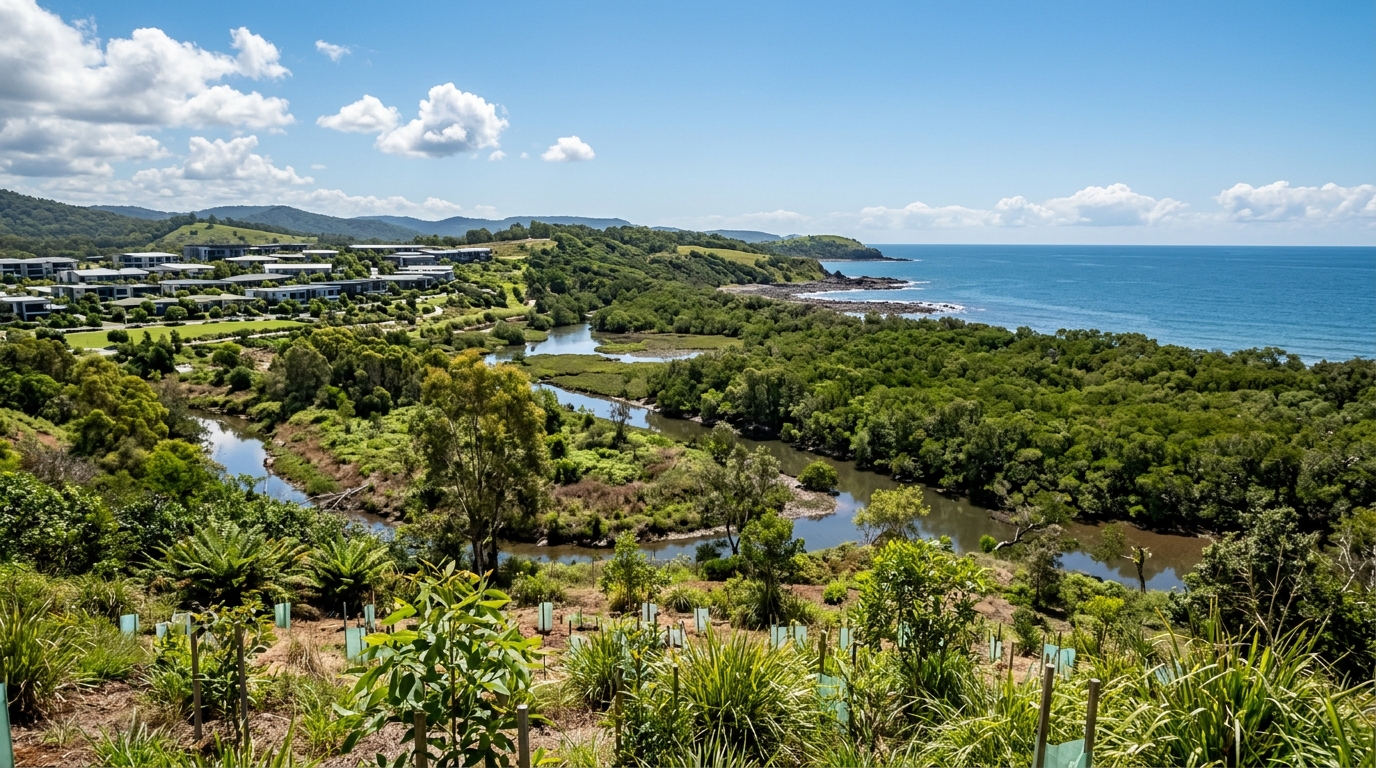
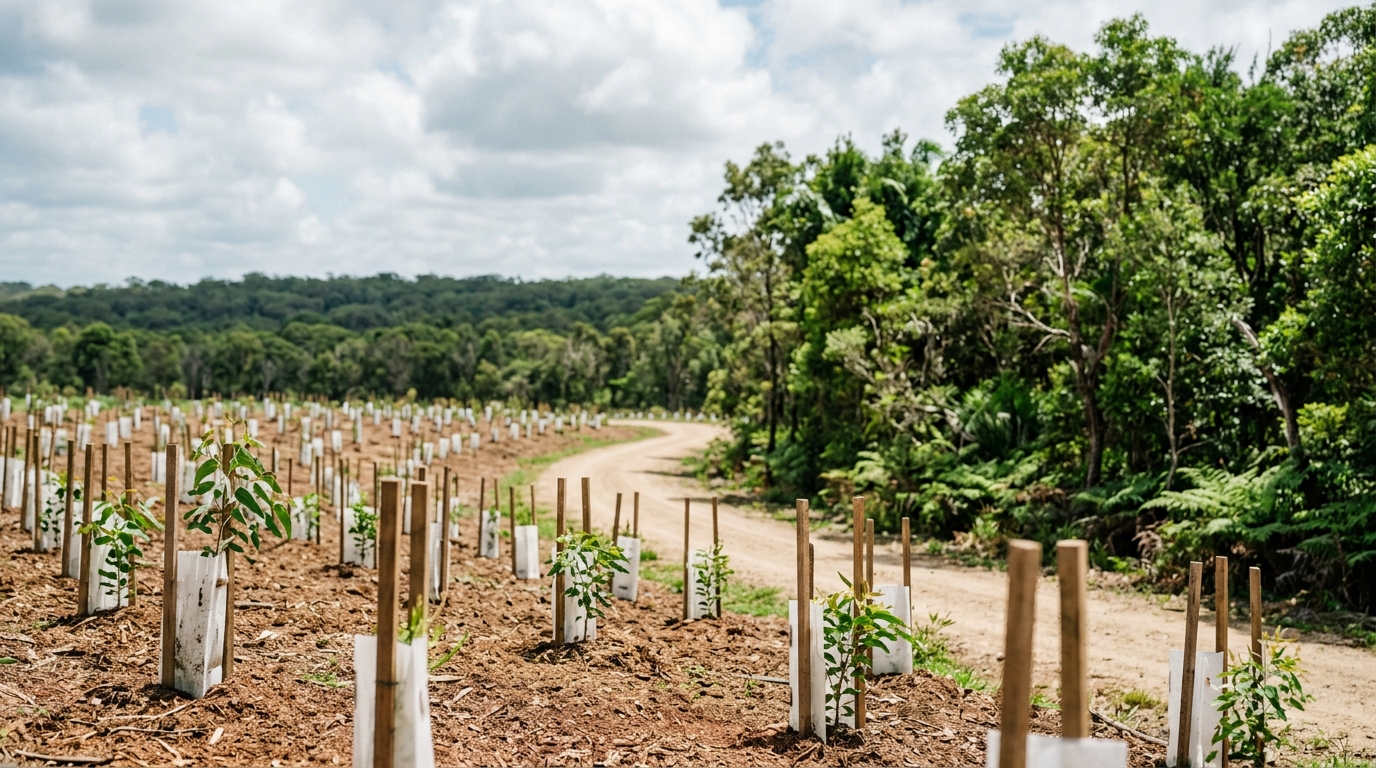
The technical core of the Queensland Environmental Offsets Framework review focuses heavily on the financial settlement offset calculator and the delivery mechanisms for direct offsets. Under the current Environmental Offsets Regulation 2014, developers who generate a significant residual impact on prescribed environmental matters, such as protected wildlife habitat, marine parks, or regulated vegetation, must provide an environmental offset. This can be achieved through a proponent-driven direct offset, where the developer secures and manages a specific parcel of land, or via a financial settlement payment calculated using a standardised state-managed formula. The review aims to recalibrate this calculator, which has historically underrepresented the actual market cost of purchasing, securing, and managing conservation land in Queensland, leading to a shortage of actual conservation outcomes on the ground.
One of the primary scientific and administrative adjustments proposed is the introduction of more rigorous verification protocols for biodiversity gains. Historically, developers and their consultants have often relied on high-level desktop ecological assessments to determine the presence of prescribed environmental matters and to estimate offset obligations. The revised framework is expected to mandate higher-quality baseline ecological surveys that must be conducted over multiple seasons to ensure scientific accuracy. Additionally, the Queensland Government is seeking to standardise the long-term monitoring programmes required for direct offset sites. This means that instead of passive land management, landowners and developers who manage offset sites will be held to strict performance metrics, ensuring that the ecological values of the site are actively improved over the life of the offset.
The consultation process led by the Department of the Environment, Tourism, Science and Innovation addresses several core operational elements of the current framework, including:
- The financial settlement offset calculator and the pricing methodology for environmental credits.
- The delivery pathways and administrative processes for securing direct, proponent-driven offsets.
- The alignment of state environmental metrics with federal regulatory requirements.
- The administrative and legal mechanisms for declaring and registering offset sites on private land.
- The governance and disbursement of funds held within the Queensland Offsets Fund.
Under the current land tenure system, securing a direct offset requires complex legal mechanisms such as voluntary declaration agreements or statutory covenants registered under the Land Title Act 1994 or the Land Act 1994. These legal instruments can be restrictive and costly, discouraging private landholders from participating in the offsets market. The proposed reforms seek to simplify these pathways, making it easier for agricultural landowners and conservation organisations to register offset sites and sell biodiversity credits directly to developers. This market-based approach is intended to resolve the current undersupply of direct offset land, particularly in rapidly developing regions such as South East Queensland, the Surat Basin, and the Fitzroy Basin.
Furthermore, the governance and disbursement of money held in the Queensland Offsets Fund is set for review. Under the current arrangements, financial settlement payments collected from developers are pooled and used by the state to deliver conservation works, but the slow rate of expenditure has drawn criticism from both industry and environmental groups. The consultation is expected to examine how funds can be released more quickly to on-ground projects, how priorities are set for fund allocation across Queensland’s bioregions, and how reporting on conservation outcomes is made publicly available. Stakeholders are encouraged to lodge submissions during the consultation period to help shape the final reforms.
References and related sources
- Primary source: www.detsi.qld.gov.au
- Queensland Department of Environment
- EPBC Act
How iEnvi can help
iEnvi provides specialist consulting services relevant to this topic. Our team includes CEnvP Site Contamination Specialists with experience across contaminated land, groundwater, remediation, ecology, and regulatory compliance.
- iEnvi contaminated land investigation services
- iEnvi remediation and validation services
- iEnvi expert services and independent review services
This is an iEnvi Machete news summary. Prepared by iEnvi to summarise the source article for contaminated land, groundwater, remediation, approvals and site risk professionals.
Published: 21 May 2026
Need advice on this topic? Speak to an iEnvi expert at info@ienvi.com.au or 1300 043 684, or contact us online.
Need advice on this issue? iEnvi provides practical, senior-led environmental consulting across contaminated land, remediation, ecology and environmental risk.
Team credentials Contaminated land services Remediation services Groundwater services Talk to iEnvi