
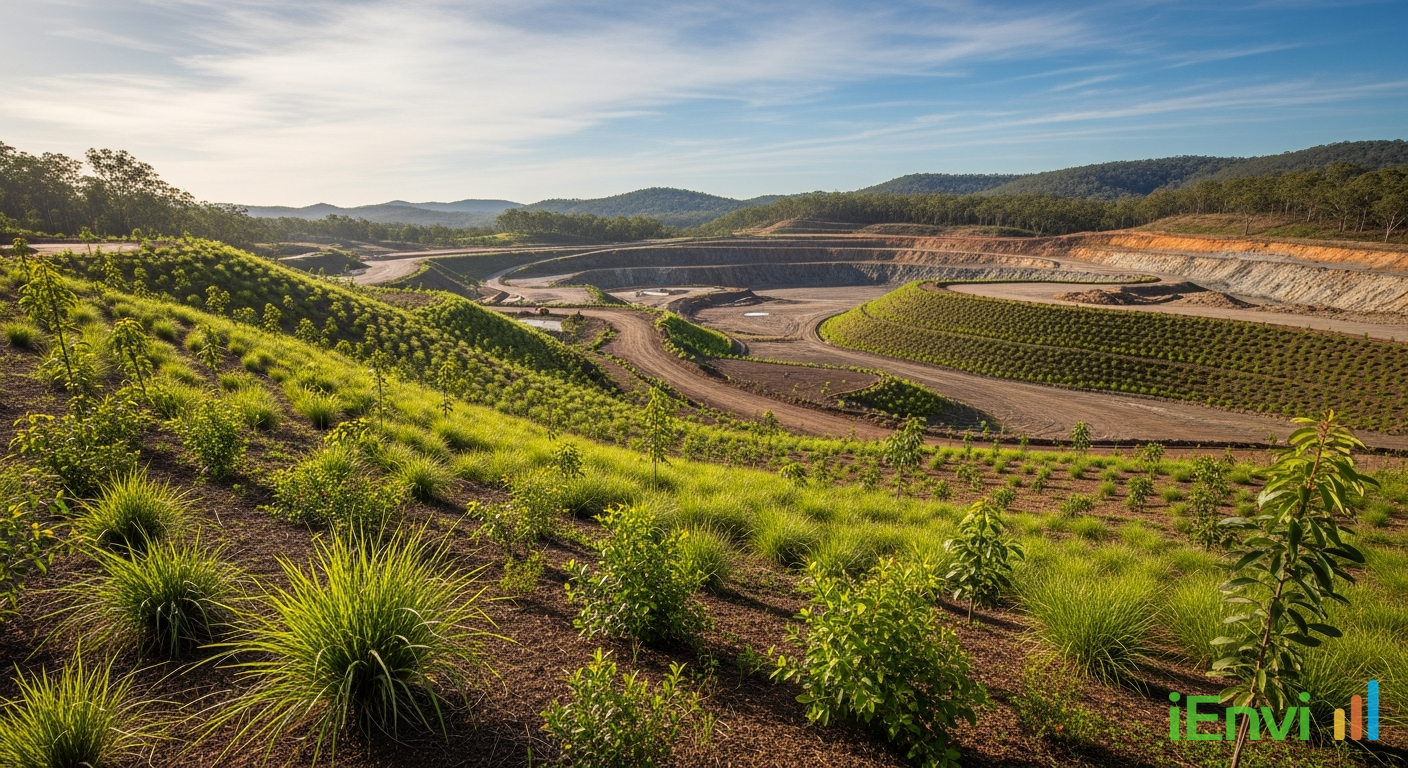
Overview of Queensland’s EPOLA Act 2026 Reforms
Queensland’s most significant environmental legislative reform in a generation received Royal Assent on 16 June 2026. The Environmental Protection (Efficiency and Streamlining) and Other Legislation Amendment Act 2026 (EPOLA Act 2026) fundamentally restructures how major projects, mining operations, and lower-risk businesses interact with the state’s environmental approval and compliance framework. The Queensland Environment Department published the formal operational update on 17 June 2026, confirming that the first tranche of amendments commenced immediately on assent.
The EPOLA Act 2026 amends several pieces of primary legislation simultaneously, including the Environmental Protection Act 1994 (EP Act), the State Development and Public Works Organisation Act 1971 (SDPWO Act), the Water Act 2000, and the Nature Conservation Act 1992. For environmental practitioners, developers, legal advisers, and resource proponents operating in Queensland, this reform touches virtually every stage of the project lifecycle, from initial environmental impact assessment through to mine closure and residual risk management. It is not a single-issue amendment; it is a staged legislative overhaul with immediate and future-commencing components that require careful navigation.
The reform sits within a broader Queensland government agenda to reduce regulatory duplication and approval delays without sacrificing environmental accountability. Critically, while the Act removes certain procedural requirements, it simultaneously tightens the enforcement framework. The regulator now has an extended window to initiate prosecutions for environmental offences, and courts have been granted stronger forfeiture powers. This combination of streamlined approvals and sharper enforcement teeth defines the EPOLA Act 2026 as a compliance reform just as much as a red tape reduction measure.
Key details of the EPOLA Act 2026 amendments
The amendments that commenced immediately on assent on 16 June 2026 cover five substantive areas. The most commercially significant is the formal recognition of Impact Assessment Reports (IARs) conducted under the SDPWO Act as satisfying the Environmental Impact Statement (EIS) requirements under the EP Act. Previously, major projects assessed through the SDPWO Act process could still face a separate or parallel EIS requirement under the EP Act, creating genuine duplication of effort, cost, and timeframes. The EPOLA Act 2026 removes this overlap entirely for eligible projects, meaning proponents who have completed an IAR under the SDPWO Act process will not be required to produce a separate EIS under the EP Act for the same project.
The second immediate amendment addresses Progressive Rehabilitation and Closure (PRC) plans, which are a statutory requirement for resource authorities under the EP Act. The EPOLA Act 2026 refines and clarifies the PRC plan requirements, targeting what the Queensland Environment Department has acknowledged as long-standing operational bottlenecks in mine closure planning. The residual risk framework, which governs the management of environmental liabilities that persist after a mining operation has formally closed or transitioned, has also been amended to establish clearer and more structured timeframes for residual risk obligations and associated financial payments on transitioned sites. This is particularly relevant for operators moving through the later stages of the mine closure process, where uncertainty around residual risk obligations has historically delayed the finalisation of closure plans and the release of financial assurance.
The enforcement framework has been materially strengthened under the immediate amendments. The statutory timeframes within which the regulator can commence summary proceedings for environmental offences under the EP Act have been extended. The Queensland courts have also been granted expanded powers to order the forfeiture of property in connection with prosecutions. These are not minor procedural changes. Extended prosecution windows mean that operators cannot assume a breach has been administratively resolved simply because time has passed without formal action. The Waste Reduction and Recycling Act 2011 was also amended on assent to align its summary proceedings timeframes and property seizure provisions with the updated EP Act framework, ensuring consistency across the two Acts.
The future-commencing amendments, which will take effect on proclamation at a date yet to be announced, introduce two further structural changes. First, standardised regulatory codes, referred to as ERA codes, will be introduced for environmentally relevant activities (ERAs) that fall into lower-risk categories. These ERA codes will entirely replace the requirement for individual Environmental Authorities (EAs) for up to 30 per cent of eligible operations. Second, a new risk-based framework of Significant Environmental Values (SEVs) will be established to guide regulatory oversight based on the actual environmental risk profile of a site or activity, rather than applying uniform scrutiny regardless of risk level. The Water Act 2000 and Nature Conservation Act 1992 amendments, also commencing immediately, streamline underground water impact management processes and refine the definition of protected areas respectively.

Australian context: How the EPOLA Act 2026 fits within national environmental reform trends
The EPOLA Act 2026 reflects a reform trajectory that is visible across multiple Australian jurisdictions, where state and territory governments are grappling with the tension between project approval efficiency and the integrity of environmental assessment processes. The Commonwealth’s own environmental assessment framework, primarily governed by the Environment Protection and Biodiversity Conservation Act 1999 (EPBC Act), has itself been the subject of sustained reform debate, with ongoing discussion about the appropriate role of bilateral agreements in reducing duplication between Commonwealth and state assessment processes. Queensland’s approach under the EPOLA Act 2026 — resolving intra-state duplication while maintaining accountability through a strengthened enforcement regime — offers a practical model for how jurisdictions can pursue efficiency without simply lowering the bar for environmental scrutiny.
References and related sources
- Primary source: environment.qld.gov.au
- capitalmonitor.com.au
- minterellison.com
- legislation.qld.gov.au
How iEnvi can help
iEnvi provides specialist consulting services relevant to this topic. Our team includes CEnvP Site Contamination Specialists with experience across contaminated land, groundwater, remediation, ecology, and regulatory compliance.
- iEnvi contaminated land investigation services
- iEnvi remediation and validation services
- iEnvi expert services and independent review services
This is an iEnvi Machete news summary. Prepared by iEnvi to summarise the source article for contaminated land, groundwater, remediation, approvals and site risk professionals.
Published: 19 Jun 2026
Need advice on this topic? Speak to an iEnvi expert at info@ienvi.com.au or 1300 043 684, or contact us online.
Need advice on this issue? iEnvi provides practical, senior-led environmental consulting across contaminated land, remediation, ecology and environmental risk.
Team credentials Contaminated land services Remediation services Groundwater services Talk to iEnvi