
Overview
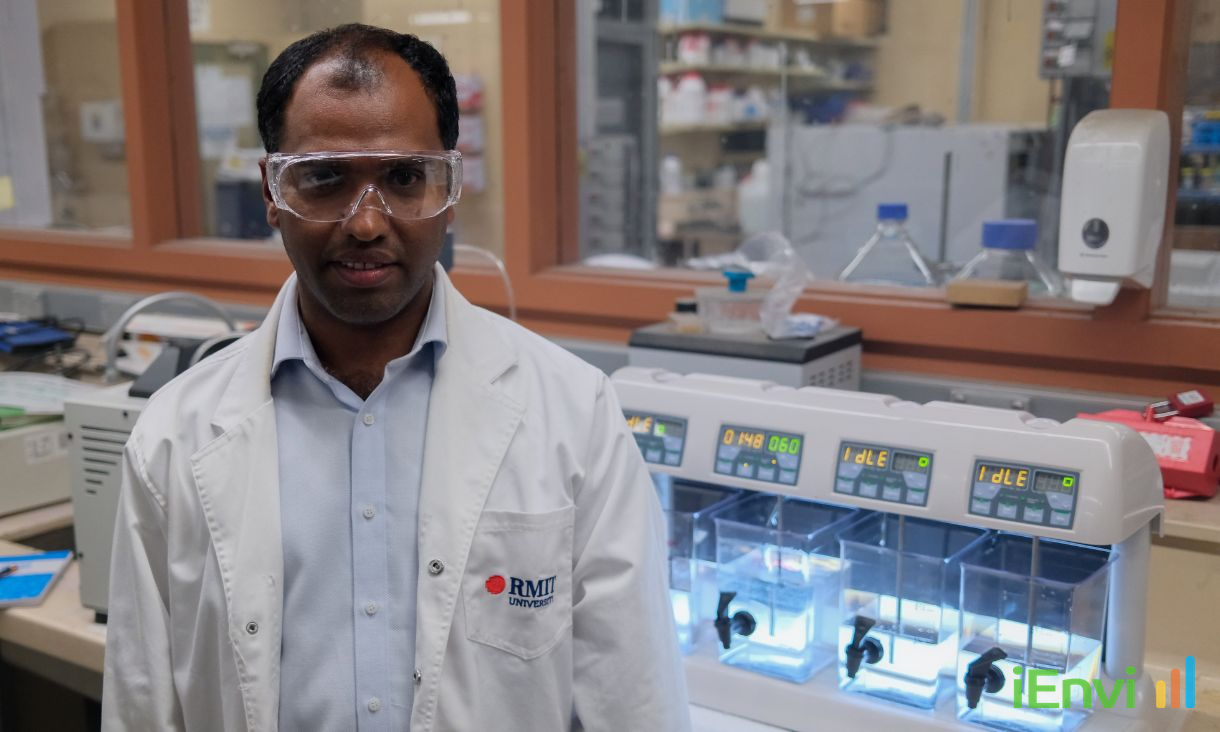
Researchers at RMIT University have published a study demonstrating that an enhanced version of Dissolved Air Flotation (DAF) can remove more than 90 per cent of microplastics from wastewater before they are discharged into the environment. The research, led by Associate Professor Biplob Kumar Pramanik, Director of RMIT’s Water Effective Technology and Tools Research Centre, and Dr. Sirajum Monira, was published in July 2026 in the peer-reviewed journal ACS ES&T Water under the title “Micro-Nanobubble Integrated Dissolved Air Flotation: A High-Efficiency Strategy for Microplastic Mitigation in Wastewater.” The significance of this finding lies not only in the removal rate achieved, but in the method used to achieve it: the system works within existing DAF infrastructure rather than requiring new plant construction or capital-intensive retrofits.
Microplastics have become one of the more intractable emerging contaminants in wastewater management. Conventional treatment processes, including screening, sedimentation, and standard filtration, are poorly suited to capturing particles in the micro and nanoscale size range, meaning a substantial fraction passes through treatment plants and enters receiving waterways, estuaries, and coastal systems. For water utilities, industrial dischargers, and the consultants advising them, this creates a growing gap between existing treatment performance and the trajectory of regulatory expectations. The RMIT study addresses that gap with a technically credible, scalable solution that has clear implications for Australian environmental compliance obligations.
Beyond the immediate treatment performance data, the research has practical consequences for how wastewater-derived biosolids are classified and managed. Microplastics that are not captured in the liquid stream tend to concentrate in sewage sludge. When that sludge is applied to agricultural land as biosolids, those synthetic polymers enter the terrestrial environment. This creates compounding liability for utilities, land owners, and regulators already navigating a complex and evolving biosolids management landscape in Australia.
Key details of the micro-nanobubble DAF technology and removal performance
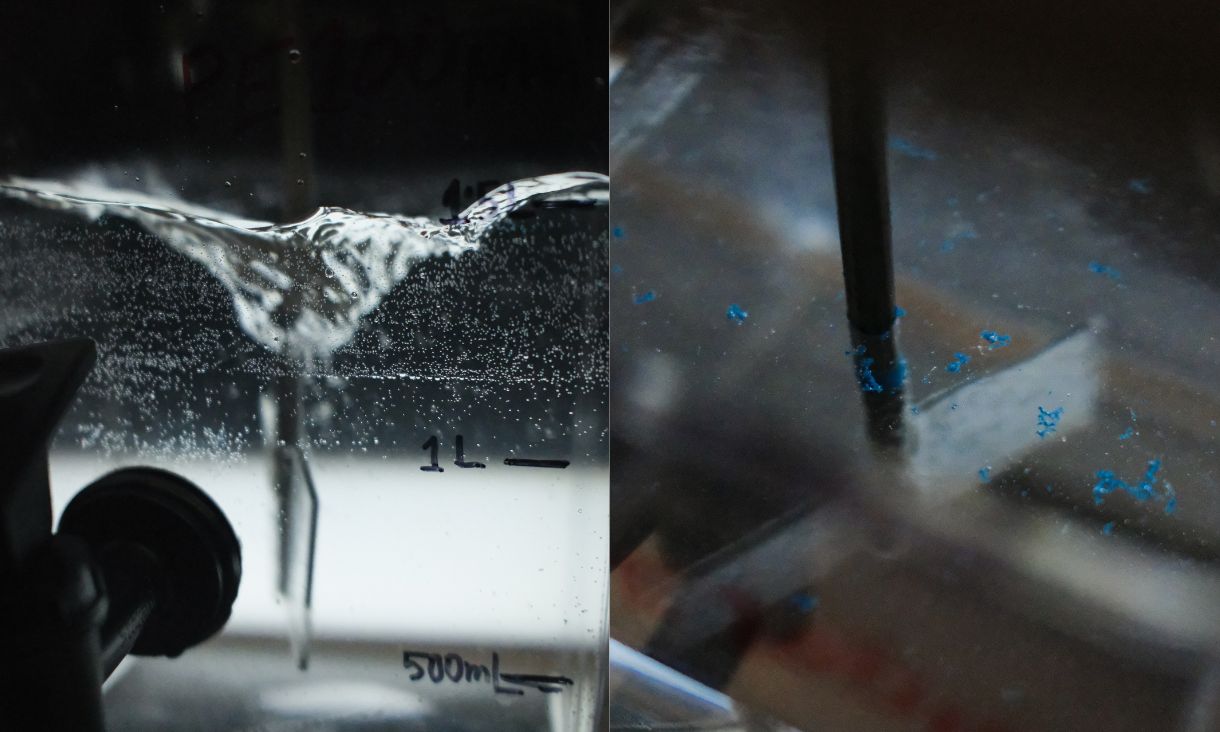
The published study by Monira and Pramanik (DOI: 10.1021/acsestwater.6c00127) describes a dual-bubble approach that integrates two distinct bubble size classes within a single DAF process train. Standard DAF systems rely on microbubbles to generate the upward buoyancy force that carries suspended particles to the surface of the flotation tank. The RMIT system incorporates nanobubbles alongside these microbubbles. Nanobubbles are substantially smaller than microbubbles and possess a much higher surface-area-to-volume ratio, which dramatically increases the probability of collision and attachment between bubbles and microplastic particles. This overcomes a fundamental limitation of conventional DAF: that fine, low-density synthetic polymer fragments have insufficient collision probability with microbubbles alone to be reliably captured.
The result of combining both bubble classes is a microplastic removal efficiency exceeding 90 per cent. This is a quantitatively significant improvement over standard wastewater treatment performance. It is well established in the literature that conventional activated sludge and primary treatment processes typically remove between 70 and 80 per cent of microplastics at best, with many studies reporting substantially lower figures for fine fibres and fragments smaller than 100 micrometres. The dual-bubble DAF system closes that performance gap in a single process step. Critically, the research demonstrated that performance is maintained under realistic wastewater conditions, including the presence of organic matter, fats, oils, and grease (FOG). Rather than inhibiting flotation, as might be expected, these organic compounds acted in concert with standard coagulants to promote aggregation of microplastic particles into larger clusters, which are more readily captured by the flotation mechanism.
From an operational standpoint, the technology does not require the installation of new treatment units. The improvements are achieved by optimising existing DAF operating parameters, specifically air pressure, saturation time, and the introduction of nanobubble generation into the recycle stream. This positions the dual-bubble approach as a low-capital upgrade pathway for municipal wastewater treatment plants and industrial effluent facilities that already operate DAF systems. The research team notes that the separated microplastics are concentrated in the float fraction, the layer of material skimmed from the surface of the flotation tank, rather than being destroyed or mineralised. This is an important operational consideration: the float fraction containing the captured microplastics must be managed appropriately as a waste stream, and operators will need to determine the appropriate waste classification and disposal or treatment pathway for that fraction.
The peer-reviewed publication in ACS ES&T Water provides methodological transparency that is important for practitioners evaluating the technology’s reliability. The journal is published by the American Chemical Society and is a recognised outlet for applied environmental science and water treatment research. The involvement of RMIT’s Water Effective Technology and Tools Research Centre, a dedicated applied research body, adds further weight to the practical transferability of the findings beyond laboratory conditions.
Australian context: microplastics regulation, biosolids, and the General Environmental Duty
Australia does not yet have a nationally consistent regulatory framework specifically governing microplastic concentrations in wastewater discharges or receiving waters. However, this does not mean that dischargers operate without obligation. Each state and territory maintains its own environmental protection legislation, and most impose a General Environmental Duty (GED) or equivalent provision requiring persons conducting activities to take all reasonable and practicable measures to prevent or minimise environmental harm. In Victoria, for example, the Environment Protection Act 2017 places an explicit GED on duty holders that extends to emerging contaminants where the potential for harm is reasonably foreseeable. Similar provisions exist under Queensland’s Environmental Protection Act 1994 and New South Wales’s Protection of the Environment Operations Act 1997.
For wastewater utilities and industrial dischargers, the practical consequence is that a documented and commercially available technology capable of removing more than 90 per cent of microplastics changes the baseline for what constitutes “reasonable and practicable” mitigation. Once such a technology enters the mainstream, regulators and courts interpreting GED obligations may take the view that failure to adopt it, or at minimum to assess its suitability, represents a shortfall in duty of care. The trajectory of regulation in the European Union, where microplastic discharge limits are under active development, is also influencing the expectations of Australian regulators and investors who monitor international standards as a leading indicator of domestic policy direction. Water utilities, environmental consultants, and industrial operators would be prudent to assess their current DAF operations and evaluate whether the micro-nanobubble upgrade pathway is applicable to their treatment trains.
References and related sources
- Primary source: www.rmit.edu.au
- envirotecmagazine.com
- epa.vic.gov.au
- eurekalert.org
- rmit.edu.au
- EPA Victoria
How iEnvi can help
iEnvi provides specialist consulting services relevant to this topic. Our team includes CEnvP Site Contamination Specialists with experience across contaminated land, groundwater, remediation, ecology, and regulatory compliance.
- iEnvi contaminated land investigation services
- iEnvi remediation and validation services
- iEnvi expert services and independent review services
This is an iEnvi Machete news summary. Prepared by iEnvi to summarise the source article for contaminated land, groundwater, remediation, approvals and site risk professionals.
Published: 10 Jul 2026
Need advice on this topic? Speak to an iEnvi expert at info@ienvi.com.au or 1300 043 684, or contact us online.
Need advice on this issue? iEnvi provides practical, senior-led environmental consulting across contaminated land, remediation, ecology and environmental risk.
Team credentials Contaminated land services Remediation services Groundwater services Talk to iEnvi