
Rapid PFAS Detection: A New Paradigm for Site Contamination Testing
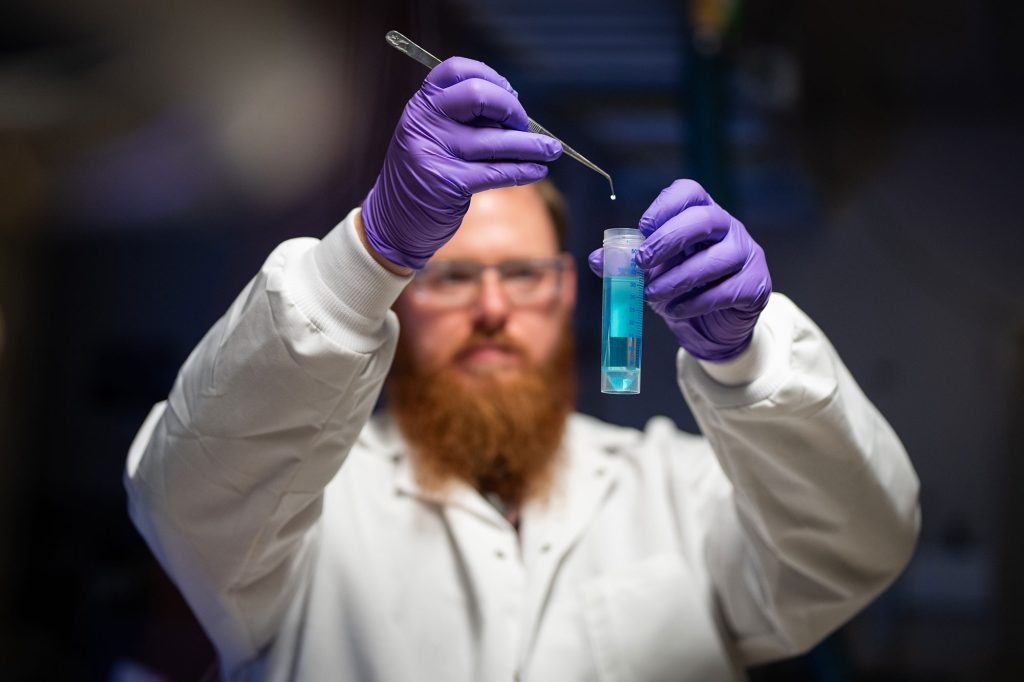
Groundwater and soil contamination by per- and polyfluoroalkyl substances, widely known as PFAS, represents one of the most persistent and costly challenges facing the Australian environmental sector today. Because these chemicals possess exceptionally strong carbon-fluorine bonds, they do not break down naturally in the environment, easily migrating through soil and water pathways to bioaccumulate in wildlife and human populations. Addressing this contamination has historically been a slow and capital-intensive exercise, largely due to the prolonged turnaround times associated with sending physical samples to analytical laboratories. However, a major technological breakthrough announced in March 2026 by researchers Ryan Davis and Nathan Bays at Sandia National Laboratories in the United States offers a potential paradigm shift, introducing a portable detection system that can identify the presence of PFAS in water in just five minutes.
For environmental professionals in Australia, including property developers, environmental lawyers, local government planners, and contamination consultants, this rapid detection capability addresses a critical operational bottleneck. Traditional methodologies often leave field teams waiting days, or even weeks, to receive laboratory validation of PFAS concentrations. During high-stakes property transactions or fast-tracked infrastructure developments, these delays translate directly into idle plant machinery, escalated project costs, and prolonged regulatory uncertainty. By bypassing standard, highly structured laboratory workflows, the Sandia National Laboratories system introduces a level of agility previously unavailable to site contamination practitioners.
The importance of this innovation lies in its potential to transition high-sensitivity mass spectrometry analysis from central commercial laboratories directly to the field. Rather than relying on a static sampling design where decisions are delayed until laboratory reports are published, practitioners can now envision a scenario where real-time screening guides site investigations dynamically. As regulators across Australia enforce increasingly strict guidelines around the management of these forever chemicals, having immediate access to analytical data allows stakeholders to mitigate environmental liabilities swiftly and make more informed risk management decisions.
The Science of ISA-DESI and Ambient Mass Spectrometry
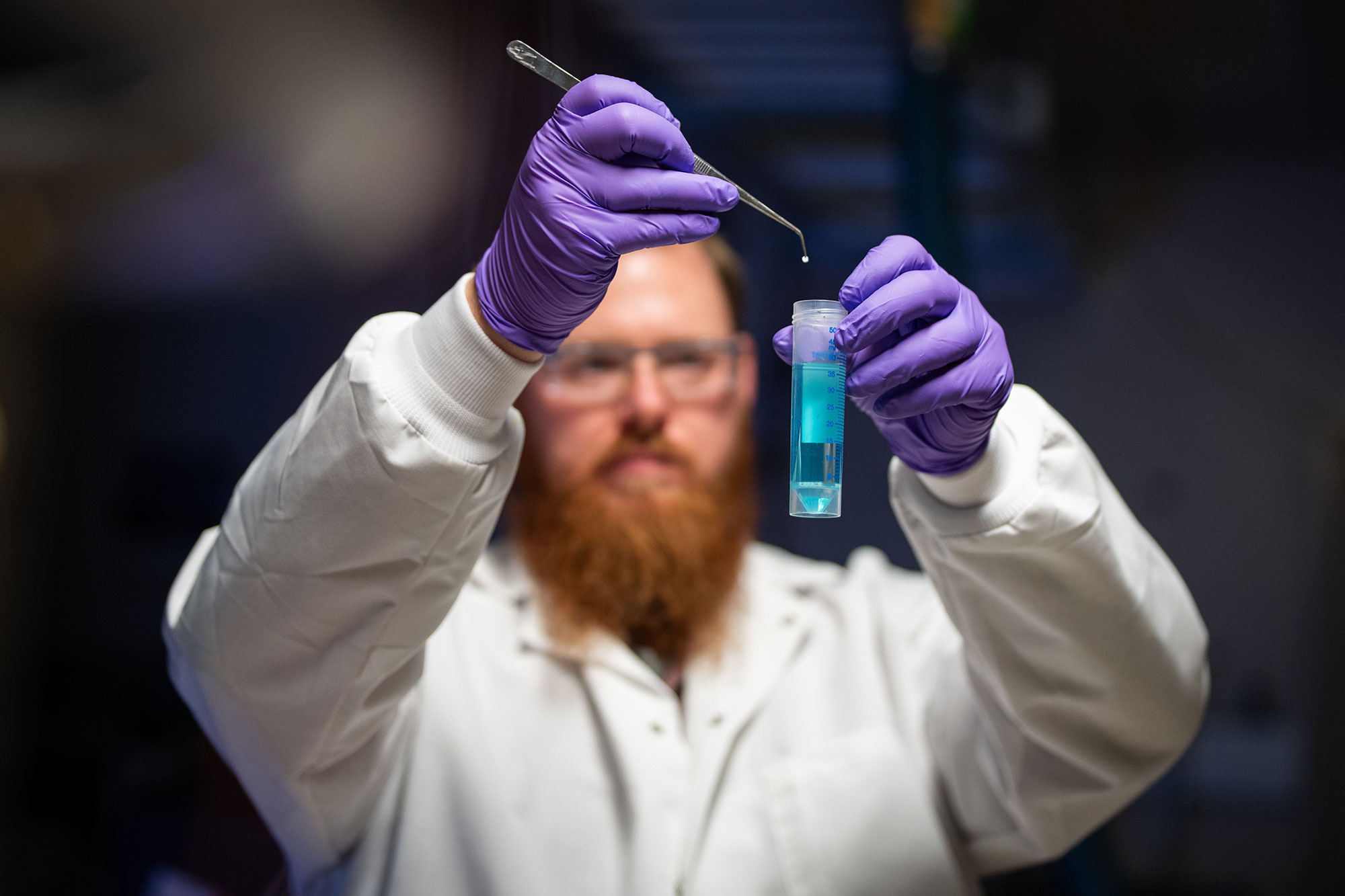
The technical foundation of the rapid detection system developed by Sandia National Laboratories centres on an innovative sample introduction and ionisation technique known as ISA-DESI. This method, engineered by chemist Ryan Davis and postdoctoral researcher Nathan Bays, utilises desorption electrospray ionisation to bypass the extensive chromatography stages that typically define PFAS analysis. In the ISA-DESI workflow, a tiny, specialised adsorbent particle is introduced directly into the water sample containing the target analyte. This adsorbent particle is designed to rapidly capture and concentrate the target PFAS compounds from the liquid matrix onto its solid surface, effectively consolidating the analyte.
Once the PFAS molecules are bound to the surface of the adsorbent particle, the particle is subjected to a high-velocity spray of charged solvent droplets. When these charged droplets impact the surface of the adsorbent particle, they cause a physical and chemical phenomenon where the droplets splash off the surface, desorbing the targeted PFAS molecules and converting them into gas-phase ions. These liberated ions are immediately captured by an adjacent metal transfer tube, which conducts them directly into the inlet of a mass spectrometer for rapid mass-to-charge analysis. By utilising this ambient desorption electrospray ionisation interface, the researchers have eliminated the need for complex, time-consuming sample preparation steps.
To appreciate the efficiency of this system, it is useful to contrast it with standard commercial laboratory protocols. Conventional analysis of PFAS in water typically relies on Solid-Phase Extraction followed by Liquid Chromatography-Tandem Mass Spectrometry, a process that is highly sensitive but inherently slow. Standard sample preparation involves passing large volumes of water through extraction cartridges, followed by solvent elution, concentration under nitrogen gas, and reconstitution. This preparation alone can take several hours per batch. Subsequently, the sample must be injected into a liquid chromatograph, where compounds are separated temporally along a column before entering the mass spectrometer, a sequence that requires meticulous system calibration and column equilibration. The ISA-DESI technique bypasses these steps entirely, delivering a qualitative and quantitative screening result in approximately five minutes.
A key objective of the Sandia research team was to design this ionisation interface with field portability in mind. While traditional mass spectrometers are large, delicate, and restricted to climate-controlled laboratory environments, recent advancements in analytical chemistry have seen the development of miniature, field-portable mass spectrometers. By simplifying the front-end ionisation process and eliminating the liquid chromatography column, the ISA-DESI interface is uniquely suited for integration with these portable mass spectrometry units. This integration allows environmental field technicians to achieve laboratory-grade sensitivity on-site, a capability that represents a substantial departure from historical field-screening methods which often suffered from high detection limits and poor chemical specificity.
Applying Rapid PFAS Testing to Australian Environmental Regulations
The introduction of a rapid, five-minute PFAS detection technology has profound implications for environmental practice under Australian regulatory frameworks. In Australia, the management of PFAS is governed nationally by the PFAS National Environmental Management Plan (PFAS NEMP), administered through the Heads of EPAs Australia and New Zealand (HEPA). The PFAS NEMP sets out a consistent national framework for the prevention, monitoring, and remediation of PFAS contamination, with successive versions tightening guideline values for soil and water and refining expectations for site characterisation. State environmental regulators, including the NSW EPA, Victorian EPA, and Queensland’s Department of Environment, Science and Innovation, apply these principles through their own contaminated land and water quality instruments.
For contamination consultants and auditors operating under regimes such as the National Environment Protection (Assessment of Site Contamination) Measure, the ability to obtain near-instant PFAS readings on-site could meaningfully reshape the conceptual site model process. Sampling plans traditionally rely on a sequential approach, where initial laboratory results inform later rounds of investigation. Rapid in-field screening allows investigators to adapt their sampling grid in real time, target hotspots more efficiently, and reduce the number of mobilisations required to delineate a plume. This is particularly relevant at legacy sites such as Defence bases, airports, and firefighting training grounds, where aqueous film-forming foam use has produced complex and widespread PFAS signatures.
The technology also has clear application in drinking water catchment monitoring, biosolids management, and landfill leachate assessment, all of which are subject to growing regulatory scrutiny. For property developers and local councils navigating due diligence on potentially impacted land, faster screening data shortens the window between site identification and informed decision-making, helping to manage transactional risk and community expectations. While the ISA-DESI platform will still need to be validated against NATA-accredited laboratory methods before it can support formal regulatory reporting in Australia, its emergence signals a clear direction of travel for PFAS investigation: from the laboratory bench to the field, and from delayed reports to live decisions.
References and related sources
- Primary source: www.sandia.gov
- PFAS National Environmental Management Plan (NEMP)
How iEnvi can help
iEnvi provides specialist consulting services relevant to this topic. Our team includes CEnvP Site Contamination Specialists with experience across contaminated land, groundwater, remediation, ecology, and regulatory compliance.
- iEnvi PFAS services
- iEnvi remediation and validation services
- iEnvi expert services and independent review services
This is an iEnvi Machete news summary. Prepared by iEnvi to summarise the source article for contaminated land, groundwater, remediation, approvals and site risk professionals.
Published: 17 Jun 2026
Need advice on this topic? Speak to an iEnvi expert at info@ienvi.com.au or 1300 043 684, or contact us online.
Need advice on this issue? iEnvi provides practical, senior-led environmental consulting across contaminated land, remediation, ecology and environmental risk.
Team credentials Environmental management plans Contaminated land advice Remediation services Talk to iEnvi